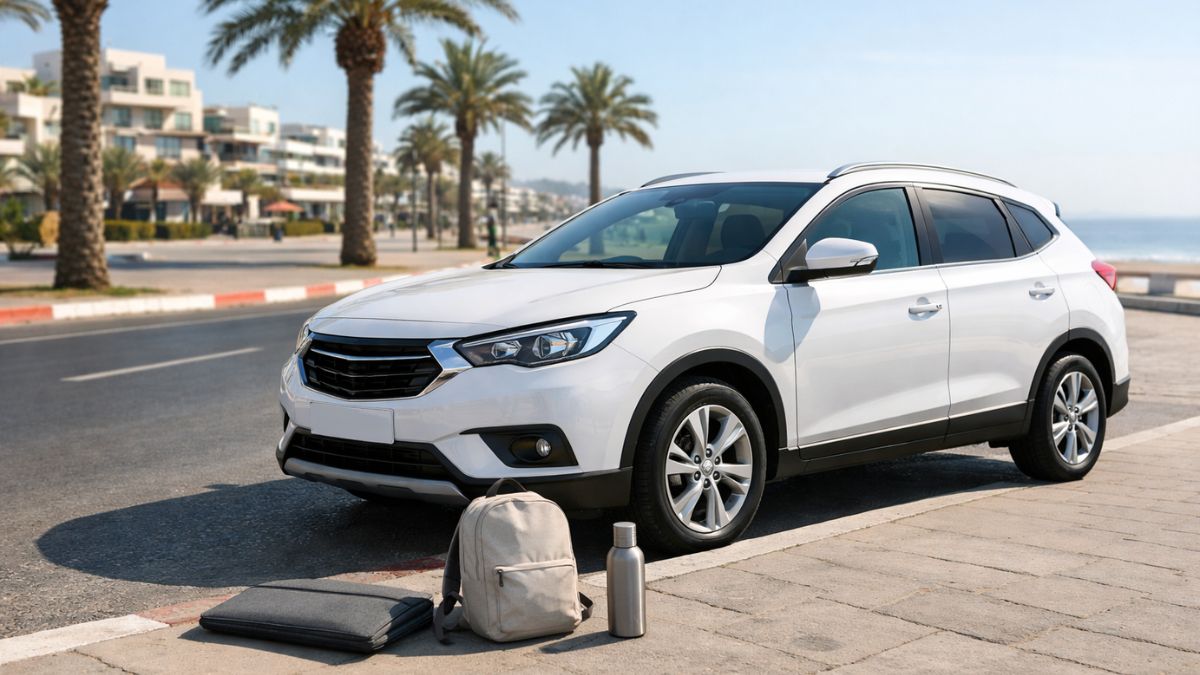
Remote work in Agadir is perfect until your calendar turns into “one more coastal café” followed by a 2–4 hour drive. The good news: most roads around Agadir are very doable. The not-so-good news: the wrong car choice can turn an easy day into back pain, heat stress, and that tired feeling that kills productivity.
This guide is built for remote workers who want comfortable long drives, strong A/C, and a car that feels calm at speed, without overpaying for features you’ll never use.
Table of contents
- What remote-work trips from Agadir really look like
- Comfort-first car picks (what to rent and why)
- A/C performance in warm weather (what matters)
- Cabin setup for laptop days and long drives
- Driving fatigue: the hidden productivity killer
- When upgrading (or hiring a driver) is smarter
- FAQ
1. What remote-work trips from Agadir really look like
If you’re working remotely, your drives usually fall into two categories:
- Short “work-and-return” loops: Agadir ↔ Taghazout / Tamraght, beach cafés, coworking spots, quick errands.
- Longer “change of scene” days: Agadir ↔ Essaouira, Taroudant, Paradise Valley, Tafraoute, or even Marrakech.
The best car for this lifestyle isn’t the cheapest option, it’s the one that keeps you fresh enough to actually work after you arrive. Prioritize seat comfort, quiet cabin, stable highway feel, and dependable cooling.
2. Comfort-first car picks (what to rent and why)
Best all-around: Compact automatic (newer model)
If you want easy parking, low fuel stress, and simple driving, a newer compact automatic is often the sweet spot. Look for:
- Smooth automatic gearbox (less fatigue in traffic)
- Decent sound insulation (less “buzz” at highway speed)
- Steering that doesn’t feel twitchy
Ideal for: daily Agadir life + moderate day trips.
Best for long drives: Midsize sedan
For remote workers, sedans shine because they’re usually:
- Quieter on the highway
- More stable in crosswinds
- Better for posture (seat base + back support)
Ideal for: you drive 2+ hours often and want to arrive calm.
Best for comfort + rougher roads: Compact crossover
A compact crossover gives you:
- Higher seating position (less neck strain for many drivers)
- Easier entry/exit (nice if you’re in and out all day)
- More ground clearance for uneven side roads
Ideal for: mixed routes, countryside cafés, and comfort without “big SUV” fuel use.
Only if you truly need it: Full SUV
A full SUV can be great, but it’s not automatically the best remote-work choice. It’s worth it if you:
- Have 3–5 passengers often
- Carry larger gear (camera kit, boards, lots of luggage)
- Want maximum highway stability and space
If it’s just you (or two people), a midsize sedan or compact crossover often feels “easier” and more efficient.
Comfort features that matter more than “luxury”:
- Strong A/C and good airflow to the back
- Cruise control (reduces fatigue on long stretches)
- Bluetooth / CarPlay / Android Auto (hands-free calls + navigation)
- Supportive seats (even basic ones can be excellent if they fit you)
3. A/C performance in warm weather (what matters)
Agadir can feel mild compared to inland cities, but your car cabin can still heat up fast, especially if you park in the sun between work sessions. Two practical rules:
- Choose a newer car when possible
Newer models generally cool faster and maintain temperature better. - Use simple cooling habits
A few minutes of the right routine can make the cabin comfortable quickly. AAA has a clear, practical guide to improving car A/C performance here: How to get the most out of car air conditioning.
Quick A/C checklist before you accept the car:
- Turn A/C on and confirm it cools within a minute or two
- Check airflow from multiple vents (not just one strong vent)
- Listen for unusual noises when A/C engages
- Make sure fan speeds work properly
If A/C feels weak at pickup, ask to switch cars. Remote-work trips are all about consistency, fighting the heat ruins the day.
4. Cabin setup for laptop days and long drives
If you’re carrying your work with you, your car becomes a moving “base.” Small setup choices help a lot:
- Charging: bring a reliable car charger and cable that actually fits your phone.
- Organization: keep a small bag within reach (water, sunglasses, wipes, snacks).
- Work breaks: plan a short stop before a long final stretch so you arrive ready to focus.
- Posture: adjust your seat so your hips are slightly higher than your knees, and your shoulders rest naturally against the seatback.
Noise matters more than you think. A quiet cabin reduces fatigue and keeps calls clearer. If you do frequent calls while parked, look for a car with a calm idle and decent insulation.
5. Driving fatigue: the hidden productivity killer
Remote workers often underestimate fatigue because the drive “doesn’t feel hard” until later. Drowsiness can show up as:
- missing exits
- drifting within the lane
- heavy blinking
- feeling impatient or zoning out
For long-drive safety habits, NHTSA’s guidance on staying alert is solid and easy to follow: Drowsy driving: avoid falling asleep behind the wheel.
Remote-work friendly rule:
If you notice fatigue signs, stop for 10–15 minutes, hydrate, and reset. You’ll gain time back in better focus later.
6. When upgrading (or hiring a driver) is smarter
Sometimes the “best” choice isn’t a different car, it’s a different plan.
Upgrade your car if:
- You’re driving 2–4 hours several times a week
- You arrive tense or sore after long highway stretches
- You need a quieter cabin for calls
- You’re carrying more gear and want more stability
Consider a driver if:
- You must arrive fresh for meetings or filming
- You’re doing a long day (drive + work + drive back)
- You’re driving at night and want low stress
- Your schedule is tight and delays would cost you money
A driver day can feel like buying back energy, and for remote work, energy is the real currency.
FAQ
1) What’s the best car type for remote work trips from Agadir?
A newer compact automatic is great for daily flexibility, but a midsize sedan is often best for long drives because it’s quieter and more stable.
2) Do I really need an automatic in Agadir?
Not mandatory, but automatic reduces fatigue, especially if your day includes city traffic plus a long drive.
3) How can I tell if the A/C is strong enough at pickup?
It should cool quickly, blow evenly from multiple vents, and not make unusual noises when engaged. Test it before you leave the lot.
4) What comfort features matter most for long drives?
Supportive seats, cruise control, good A/C airflow, and a quiet cabin. These beat “premium badges” every time.
5) Is a compact crossover better than a sedan for comfort?
It depends on your body and routes. Crossovers can feel easier to enter/exit and give a higher view, while sedans often feel calmer at highway speed.
6) When should I consider a driver instead of renting?
If you’re doing a long day with work responsibilities, arriving late, or you need to be fresh for meetings, having a driver can be the smarter option.