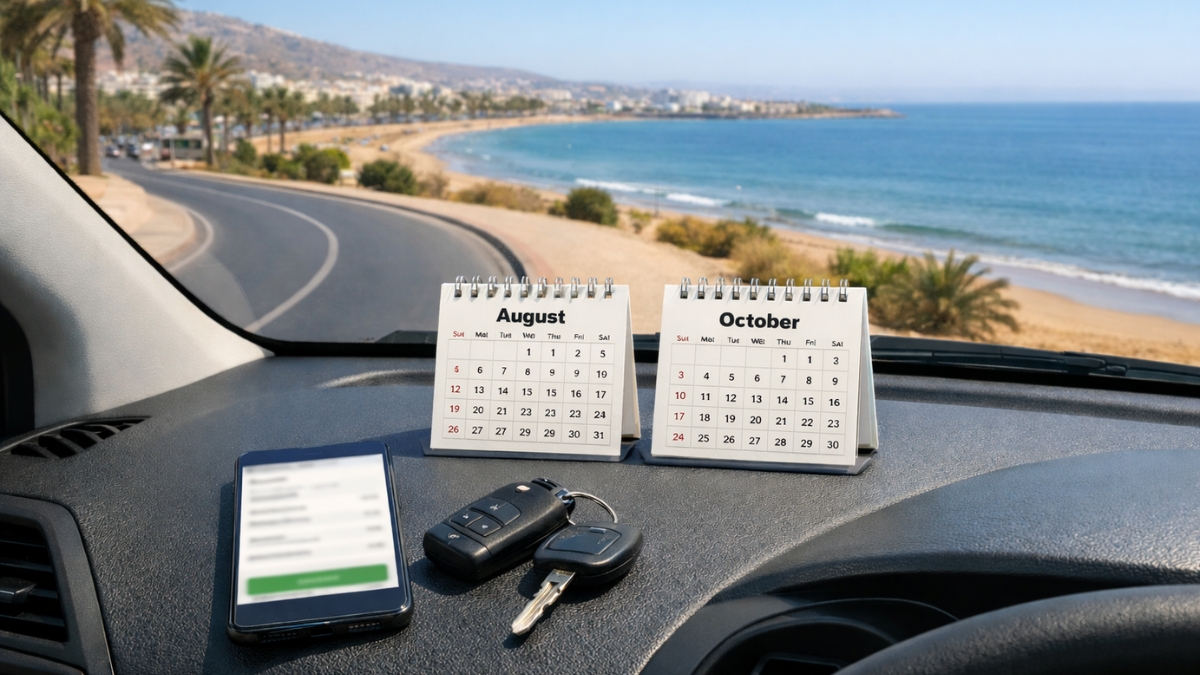
If you’re choosing between August and October for an Agadir trip, car rental is one of the biggest “quiet” differences. Both months can be sunny and enjoyable, but they behave like two different markets:
- August = peak demand + limited supply + higher risk of “only what’s left.”
- October = shoulder season + better selection + calmer pickup/return.
This guide explains the real price difference, what actually sells out, and how to book so you don’t pay peak rates for a car that doesn’t fit your trip.
Table of Contents
- August vs October in one sentence
- Why August costs more (the 3 spike triggers)
- October pricing: why it drops (and when it doesn’t)
- Real price difference: what “higher” usually means
- Availability: what sells out first in August
- Best booking windows (August vs October)
- Airport pickup vs city pickup (availability impact)
- Deposits, “no deposit,” and why August changes the rules
- Fuel policy + receipts: why peak season increases disputes
- Quick answers
1) August vs October in one sentence
August punishes late bookings. October rewards planning.
In August, the same “normal” car can cost meaningfully more simply because fewer units are available, and demand is high all day, every day. In October, fleets breathe again, more choices, fewer rush pickups, and better odds of getting the exact model/class you booked.
2) Why August costs more (the 3 spike triggers)
August pricing is driven by predictable pressure points:
Trigger A: Summer travel demand
August is high season for family travel and beach towns. Agadir is a major leisure base (city beach, Taghazout, Paradise Valley, coastal drives), so the rental market heats up fast.
Trigger B: “Long rental” behavior
In peak season, many renters keep cars longer (week+ bookings), which reduces turnover and makes availability tighter for last-minute arrivals.
Trigger C: Vehicle mix gets squeezed
When demand spikes, the cheapest categories empty first. Once economy cars are gone, the “entry price” shifts upward because you’re forced into a higher class.
This is why a quote can jump even if your dates only moved by one day.
3) October pricing: why it drops (and when it doesn’t)
October is usually shoulder season: fewer families traveling, less “must-travel-now” pressure, and more inventory sitting between bookings. That typically lowers prices and increases choice.
But October isn’t always cheap. You can still see higher prices if:
- your dates overlap a school break week, a long weekend, or a big event
- you’re booking a scarce category (automatic, 7-seater, SUV)
- you book too late for a specific car type
So October is “easier,” but it’s not magic, scarce categories can still sell out.
4) Real price difference: what “higher” usually means
Instead of random numbers, use realistic planning ranges.
Typical pattern (same car class, same rental length)
- August vs October: expect ~25% to 70% higher in August for popular classes (economy/compact), depending on how early you book and how tight supply is.
- If you book late in August (within 7–10 days), the difference can feel even bigger because you’re no longer comparing the same car class, you’re comparing “normal October economy” to “August leftover category.”
Translation: the “real price difference” is not only the rate. It’s the cost of being pushed into a higher category.
5) Availability: what sells out first in August
If you’re traveling in August, these are the categories that disappear first:
1) Automatic cars
Automatic inventory is usually smaller than manual inventory. In peak season, automatics can go from “available” to “gone” quickly.
2) 7-seaters and family cars
Families traveling together need space. Once these sell out, people try to “force” luggage into smaller cars, and that’s how comfort (and safety) drops.
3) “No deposit / no hold” style offers
When demand is extreme, agencies often tighten payment rules. Availability of truly no-hold options can shrink because risk is higher and cars are turning fast.
4) Clean, newer economy cars
The cheapest “good” cars disappear first. What’s left might be:
- higher class cars
- older cars
- cars with stricter conditions (mileage limits, bigger deposits)
6) Best booking windows (August vs October)
Here’s the practical timing that consistently works:
Booking for August (peak season)
- Best: 4–8 weeks ahead (earlier if you need automatic/7-seater)
- Acceptable: 2–4 weeks ahead (still okay, but choices narrow)
- Risky: <2 weeks (you’ll often pay more and compromise on car type)
Booking for October (shoulder season)
- Best: 2–4 weeks ahead for good selection
- Often fine: 7–14 days (except scarce categories)
- Still risky for automatics/7-seaters: last minute
If you only remember one rule:
In August, book the car class you need. In October, you can often shop the deal.
7) Airport pickup vs city pickup (availability impact)
In peak months, airport inventory can feel tighter because many travelers want “land → drive.” That can push rates up and shorten availability for popular categories.
City pickup can sometimes offer:
- slightly more flexibility
- calmer handover timing
- better odds of a specific class (depending on fleet distribution)
But the “better deal” only counts if city pickup doesn’t add friction (extra taxis, time lost, delivery fees). For August, prioritize certainty over tiny savings.
8) Deposits, “no deposit,” and why August changes the rules
In high season, agencies deal with:
- faster turnover
- more last-minute renters
- more wear-and-tear and schedule pressure
So you may see stricter policies in August:
- higher deposits/holds
- less flexibility on debit cards
- tighter inspection rules
- stronger enforcement of fuel/return timing
In October, policies often feel more relaxed simply because the pace is calmer.
Pro tip: Whatever month you book, always confirm (in writing):
- deposit/hold amount and method (hold vs cash vs charge)
- fuel policy
- mileage rules
- what counts as a billable scratch (wheels, bumpers, glass)
9) Fuel policy + receipts: why peak season increases disputes
Peak season increases disputes because staff are busy and returns happen back-to-back.
If your rental is full-to-full, protect yourself:
- refuel close to return (but not so close you’re stressed)
- take a photo of the pump screen
- take a photo of the receipt
- take a photo of the dashboard fuel gauge
If you want a simple official reference for fuel/weather planning before road days, Morocco’s national weather service vigilance portal is worth bookmarking (especially for wind or unusual conditions):
https://vigilance.marocmeteo.ma/ (official site)
And if you want to sanity-check “seasonality” interest for Agadir rentals (useful for understanding why August spikes), Google Trends is a quick, famous, non-travel-agency tool:
https://trends.google.com/ (search “car rental Agadir” or “location voiture Agadir”)
10) Quick answers
Is car rental more expensive in Agadir in August than October?
Yes, August is peak demand, so rates are typically higher and the cheapest categories sell out earlier.
How much more expensive is August?
Commonly ~25% to 70% higher for the same car class, and sometimes more if you’re forced into a higher category due to sellouts.
What sells out first in August?
Automatics, 7-seaters, and “easy payment” offers (low deposit/no hold).
Is October always cheap?
Usually cheaper than August, but prices rise for scarce categories and around school breaks or busy weekends.
What’s the best strategy for August?
Book early and book the exact class you need (automatic/space), then focus on smooth pickup and clear documentation.