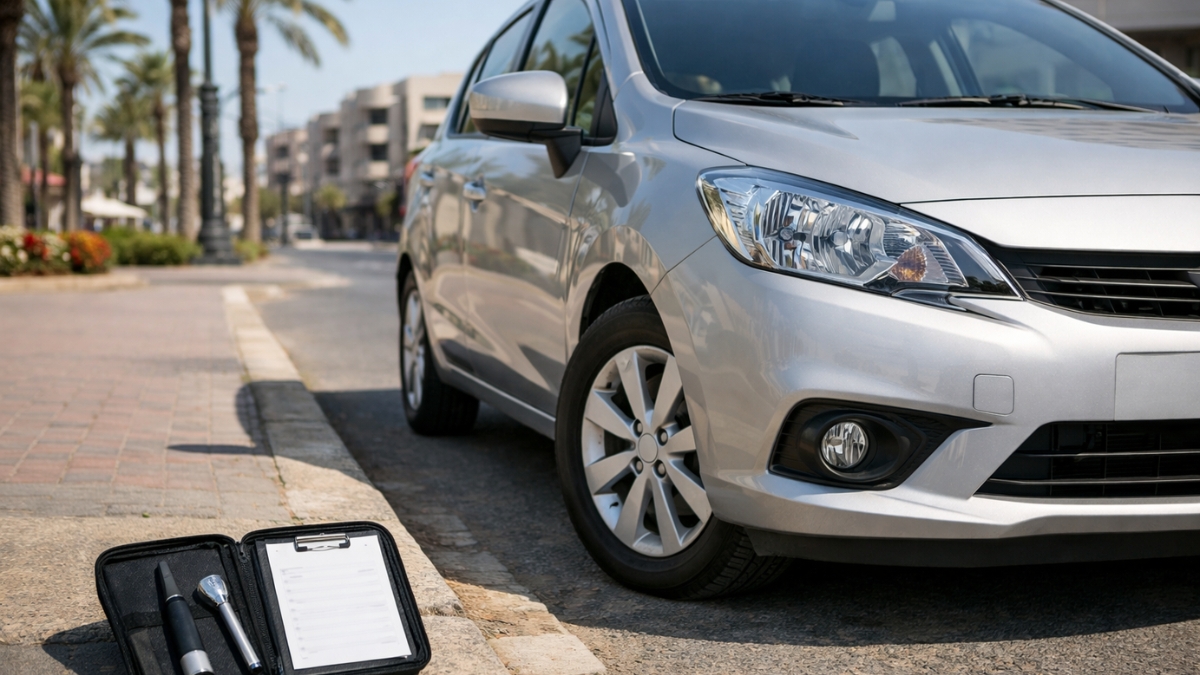
Landing in Agadir and grabbing your rental car should feel like the start of a smooth trip, not the beginning of a “damage debate” at drop-off. The good news is you don’t need a long checklist or a mechanic’s eye to protect yourself. You need a repeatable 3-minute walkaround that catches the common issues and documents them clearly.
This guide gives you a simple routine you can do in any parking lot (airport pickup, hotel delivery, city office). It’s designed to help you avoid surprise charges, reduce arguments, and spot problems that could make the drive uncomfortable or unsafe.
Table of contents
- Why the first 3 minutes matter
- Before you move the car: the two “must-do” items
- The 3-minute walkaround (step-by-step)
- The photo plan that wins disputes
- Quick checks inside the cabin
- Red flags: when to request another car
- Return-day mini routine
- FAQ
Why the first 3 minutes matter
Most rental disagreements happen for one of two reasons:
- Pre-existing marks weren’t recorded (small scratches, rim scuffs, bumper corner scrapes).
- A real issue existed at pickup (low tire pressure, cracked windshield, missing equipment), and it turned into your responsibility later.
Your goal isn’t to be suspicious, it’s to be clear. A short, consistent routine creates a “before” record that’s hard to argue with. It also helps you notice problems early enough to swap cars before your plans begin.
Before you move the car: the two “must-do” items
Do these first, every time:
1) Match the paperwork to the car
Check the license plate (or vehicle ID on the agreement), vehicle model/class, and fuel policy noted on the contract. If anything looks different, stop and fix it before you drive.
2) Do a 10-second dashboard photo
With the car on (or accessory power), take one photo that shows:
- Fuel level
- Warning lights (if any)
- Odometer (if visible)
This single image can prevent “fuel level” confusion and proves what lights were present at pickup.
The 3-minute walkaround step-by-step
Use this order so you don’t miss anything.
Step 1: Front bumper and headlights (30 seconds)
Stand 2–3 meters back and look for:
- Cracks, misaligned bumper corners, missing clips
- Fog light surrounds that look pushed in
- Headlight lens chips or haze
Then move closer and snap one wide photo of the full front, and one close photo of each headlight.
Step 2: Driver side panels and mirrors (40 seconds)
Walk slowly along the driver side:
- Scratches along doors (often from keys, bags, or tight parking)
- Dents near door edges
- Mirror housing cracks or looseness
Take one wide shot of the whole side, then quick close-ups of anything questionable.
Step 3: Wheels and tires (40 seconds)
This is the part people skip, and it can cost you.
- Check each wheel for rim scuffs (very common charge item)
- Look at tire condition: uneven wear, cuts, bubbles
- Quick visual on tread depth
For general tire safety basics, like why tread and pressure matter, this NHTSA tire safety page is a solid reference: NHTSA tires: tread and safety basics.
If a tire looks low, don’t assume it’s “fine.” Ask for it to be corrected before you leave.
Step 4: Rear bumper and trunk area (30 seconds)
Rear corners get scraped the most, especially in city parking.
- Look for paint transfer, cracked reflectors, misalignment
- Open the trunk: check for spare tire kit location (if present) and any loose items
Snap one wide rear photo, and close-ups of both rear corners if they show wear.
Step 5: Passenger side panels and glass (40 seconds)
Repeat the same side scan:
- Door scratches and dings
- Mirror condition
- Window chips or cracks
Pay attention to the windshield edges. Small chips can grow on highway drives.
The photo plan that wins disputes
You don’t need 80 photos. You need smart coverage:
Take these 8 “standard” shots:
- Front wide
- Rear wide
- Driver side wide
- Passenger side wide
5–8. One photo of each wheel (close enough to show rim + tire)
Then add close-ups of anything you see: scratches, dents, chips, cracked trim.
Two tips that make photos more useful:
- Use good light (turn on your phone flashlight at night)
- Keep photos steady and wide enough to show location on the car, not just the damage
If there’s a dispute later and you need to challenge a charge on a card, this official CFPB explainer covers the basic process: CFPB: dispute a credit card charge.
Quick checks inside the cabin (30–45 seconds)
Before you drive off, check:
- Windows go up/down normally (listen for struggling motors)
- AC blows cold (important in warmer months)
- Seat belts click and retract properly
- Phone charging port works (if you’ll rely on navigation)
Also check for strong smoke smell or heavy fragrance, those issues are much harder to fix after you leave.
Red flags: when to request another car
If you see any of these, it’s often better to swap cars immediately:
- Cracked windshield in the driver’s line of sight
- Very low tire or visible sidewall bubble
- Warning light that suggests a safety issue (brakes, engine overheating, etc.)
- Door won’t lock properly
- Wipers smear badly (surprisingly common and dangerous at night or in coastal mist)
It’s easier to change cars at pickup than to solve it later on the road.
Return-day mini routine (60 seconds)
Before you hand the keys back:
- Take four quick wide photos (front, rear, both sides)
- Take a fuel gauge photo
- If it’s dark, use flash so panel edges and bumpers are visible
This “after” set is your protection if marks appear in the handover discussion.
FAQ
How many photos should I take at pickup?
Aim for 8 standard shots (front, rear, both sides, four wheels) plus close-ups of anything you spot.
What’s the most common damage people get charged for?
Small bumper corner scrapes and rim scuffs are very common because they’re easy to miss and easy to claim.
Should I inspect the car even if it looks clean and new?
Yes. Newer cars still get wheel scuffs and tiny windshield chips, often the things that cause return arguments.
What if the agent says “it’s fine, don’t worry”?
Do the walkaround anyway. Keep it calm and quick. A clean record protects both sides.
If I find a scratch, what should I do?
Photograph it clearly and ask for it to be noted on the condition report before you drive off.
Do I need to check tire tread and pressure?
A quick visual check is worth it. Tires affect safety and can also signal if a car hasn’t been maintained well.