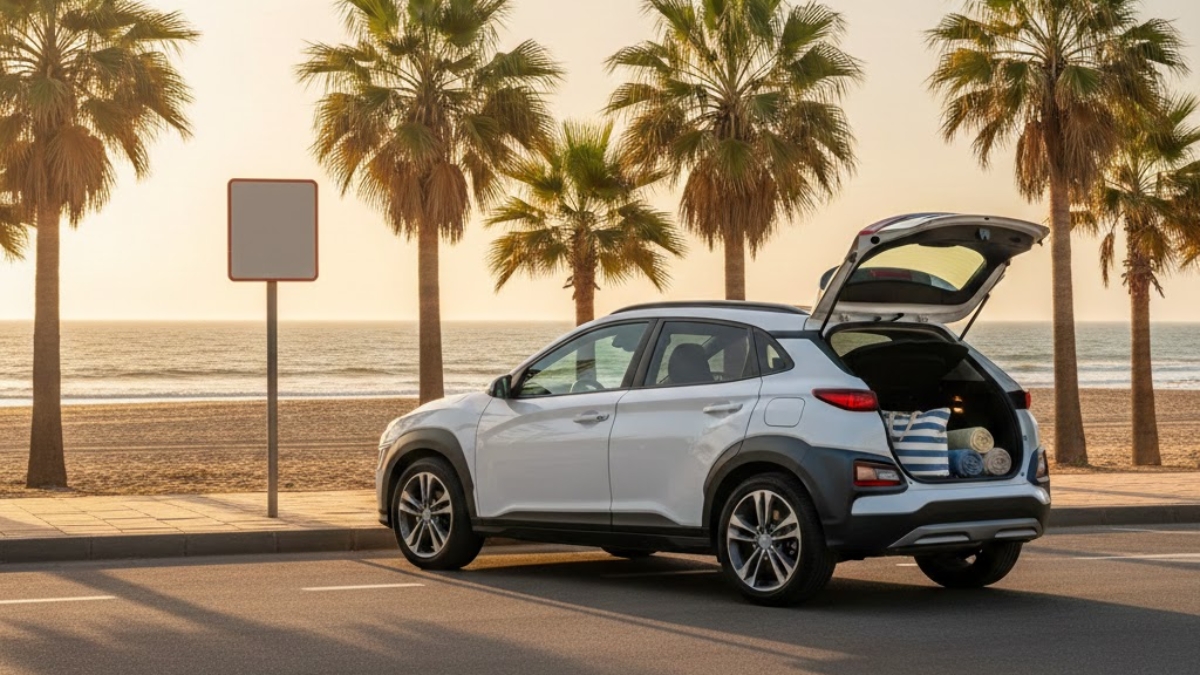
Agadir is built for beach days. Whether you’re cruising the Corniche, heading to Taghazout, stopping at Tamraght, or chasing quieter beaches north and south of the city, having your own car makes everything easier: you can time sunsets, carry towels and boards, and avoid stacking taxis every time you move.
But beach driving creates three practical issues that tourists don’t always plan for: sand, salt air, and cleaning. The “best car” for Agadir’s beach roads isn’t the fanciest, it’s the one that handles coastal conditions comfortably, parks easily, and cleans fast at the end of the trip.
This guide explains what to choose (hatchback, sedan, compact SUV, 4×4), what to avoid, and simple habits that keep your rental clean and stress-free.
Table of contents
- What makes Agadir beach driving different
- Best car types for Agadir beach roads
- Do you need an SUV or 4×4 near Agadir?
- Sand rules: where you should not drive
- Salt air protection: simple habits that help
- Easy cleaning tips that prevent fees
- What to pack for beach driving
- FAQs
What makes Agadir beach driving different
Agadir’s main coastal roads are generally easy. The challenge isn’t “road difficulty.” It’s what comes with beach life:
- Sand follows you everywhere (shoes, towels, seats, trunk)
- Salt air can leave a fine film on windows and bodywork
- Wet gear (swimsuits, surf tops, towels) adds moisture and smell if not handled well
- Parking near popular beaches can be tight at peak hours
- Some tempting beach access tracks are soft sand or uneven surfaces where normal cars can get stuck
So your goal is simple: choose a car that’s easy to load, easy to park, and easy to clean.
If you want a quick way to see beach access roads and where paved streets end (to avoid accidental sand tracks), Google Maps satellite view is your best friend: https://www.google.com/maps
Best car types for Agadir beach roads
1) Compact hatchback (best for most couples and small families)
A hatchback is often the best “Agadir beach car” because:
- easy parking near the Corniche and beach zones
- low fuel use for short coastal hops
- trunk is accessible for towels and coolers
- quick rinse-and-clean at the end of the trip
Best for: 2–4 people with normal beach gear.
Beach comfort tip: choose a hatchback with decent trunk height so you can store a folded beach umbrella or small board bag.
2) Compact sedan (best for suitcase + beach gear separation)
Sedans are underrated for coastal trips. The trunk helps keep sand away from the cabin:
- you can separate wet towels and sandy shoes
- the cabin stays cleaner
- highway ride is stable if you do longer drives
Best for: travelers who are mixing beach time with city-to-city driving.
Watch-out: sedan trunks can be less flexible for bulky items (big coolers, larger strollers).
3) Compact SUV (best “easy mode” for families, strollers, and surf gear)
A compact SUV is the comfort upgrade for beach routes because:
- higher seat height (easier with kids)
- easier loading for heavier bags
- slightly more forgiving on uneven parking areas and rough edges near beach lots
- better visibility in busy coastal traffic
Best for: families, surfers with extra gear, people who want comfort and confidence.
4) 7-seater / van (best for groups, not for “beach parking”)
If you’re a group with coolers, boards, and multiple bags, a larger vehicle makes sense, but beach parking can become harder.
Best for: groups who prioritize space and are okay parking a bit farther and walking.
Do you need an SUV or 4×4 near Agadir?
Most visitors do not need a 4×4 for normal Agadir beach driving. The main coastal roads and access to popular areas are paved and easy.
You might prefer an SUV if:
- you’re carrying heavy gear (surfboards, stroller, cooler)
- you want a higher seating position
- you’ll park in busy beach zones and want better visibility
A true 4×4 is mainly useful if you have a specific plan that includes:
- rough rural tracks (not standard beach parking areas)
- remote viewpoints where roads are uneven
For most tourists, the smarter choice is compact SUV rather than “full 4×4.”
Sand rules: where you should not drive
The fastest way to ruin a beach day is driving onto soft sand because it “looks firm.” On coastal areas:
- sand can be packed on top and soft underneath
- tide and wind change firmness quickly
- once you sink, recovery can become expensive and stressful
Simple rule: If you can’t see clear paved access or a proper parking zone, don’t drive onto the sand.
Instead:
- park on the paved road or official lot
- walk the last few minutes
- keep your car safe and your rental agreement happy
Salt air protection: simple habits that help
Salt air is normal near the ocean. You don’t need to panic, but a few small habits make life easier:
1) Quick fresh-water rinse (especially after windy beach days)
If you’ve parked close to the ocean with sea spray or strong wind, a simple rinse helps remove salty film.
2) Wipe windows more often
Salt film builds up on glass, especially at night. A quick wipe improves visibility and comfort.
3) Don’t leave wet items inside overnight
Wet towels + salty air = smell. Air-dry gear when possible.
For basic vehicle maintenance and corrosion awareness (useful context for coastal environments), you can reference a general explanation from an authoritative source like the U.S. National Park Service on salt air and corrosion effects in coastal areas: https://www.nps.gov/articles/
Easy cleaning tips that prevent fees
Cleaning is the biggest beach-rental issue, because sand becomes “hidden” in places you don’t expect. These tips keep your car return simple:
1) Create a “sand zone”
Use one bag (or a large plastic tote) for:
- sandy shoes
- wet towels
- beach toys
Keep it in the trunk, not the cabin.
2) Shake towels outside the car, not inside
Do it before you sit down. It sounds obvious, but it saves your seats.
3) Keep a small brush and wipes
A tiny brush helps clean:
- floor mats
- seat seams
- trunk edges
Wipes help with salty residue on steering wheel and door handles.
4) Use floor mats properly
If mats are removable, lift and shake them outside. Don’t grind sand into carpets.
5) Quick vacuum before return (5 minutes)
Most of the time, a fast vacuum is enough. Pay attention to:
- under seats
- trunk lip
- door pockets
- the space between rear seats and trunk
Result: you return a clean car, you avoid arguments, and you travel calm.
What to pack for Agadir beach driving
- microfiber towel (dries fast, reduces damp smell)
- small brush or handheld mini-vac (if you have one)
- trash bag for wet gear
- spare flip-flops (keep sand out of the cabin)
- water bottle (for rinsing feet or salty hands before entering)
These small items do more for your comfort than “upgrading” the car category.
FAQs (AEO-friendly)
What is the best car type for Agadir beach roads?
For most travelers, a compact hatchback or compact SUV is best: easy parking, easy cleaning, comfortable for coastal driving.
Do I need a 4×4 for beach areas near Agadir?
Usually no. Stick to paved roads and official lots. A compact SUV is enough for most visitors.
How do I stop sand from ruining the interior?
Use a “sand bag” in the trunk, shake towels outside, and do a quick vacuum before return.
Does salt air damage a rental car?
Salt air can leave a film and contribute to corrosion over time, but for short rentals, simple rinsing and keeping the interior dry is usually enough.