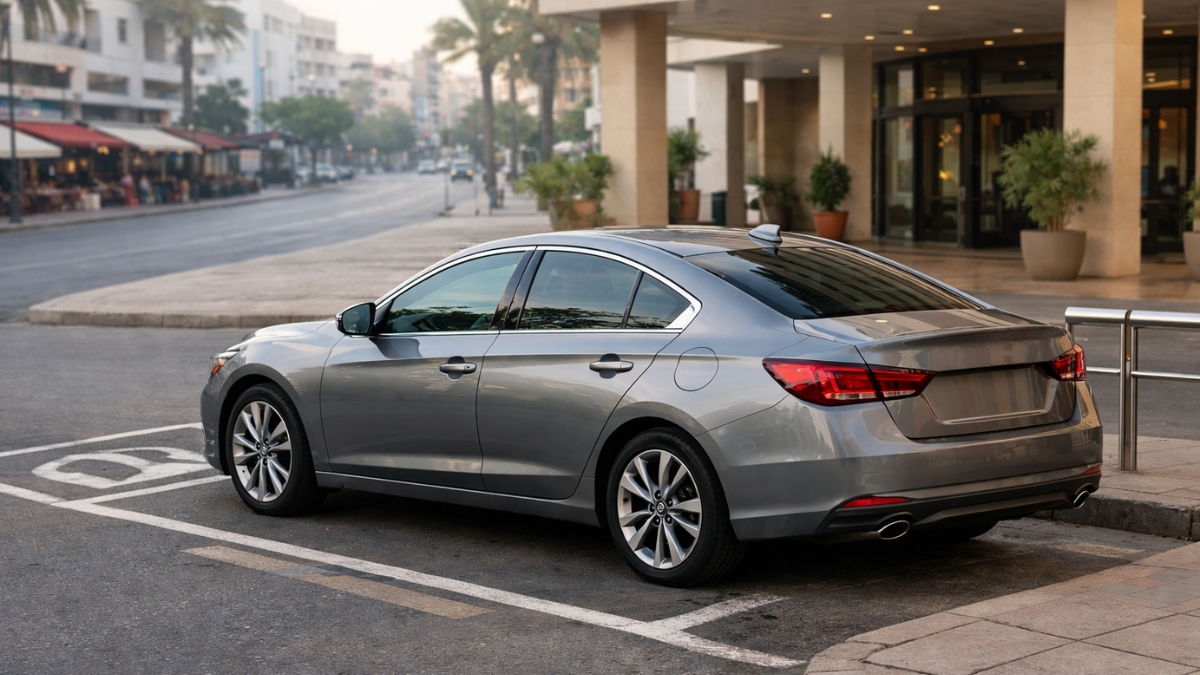
Taghazout and Tamraght look close to Agadir on a map, but the driving experience can be very different from flat city roads. You’ve got short climbs, tight turns, roadside pull-offs that fill quickly, and that classic surf-travel problem: your gear is long, wet, sandy, and always “one item too many.”
So what’s the best car for Taghazout & Tamraght? It depends on three real-world needs:
- Hills and short steep ramps (especially when you’re loaded with people + bags)
- Parking reality (narrow spots, crowded beach times, quick drop-offs)
- Surf gear space (boards, wetsuits, day bags, sometimes two boards per person)
This guide helps you pick the right vehicle category, avoid the common “small car regret,” and keep your coastal days smooth.
Table of Contents
- What driving is actually like in Taghazout & Tamraght
- The 4 car categories that work best (and who they’re for)
- Surf gear space: inside vs roof vs “board bag strategy”
- Hills + handling: what matters more than horsepower
- Parking strategies that save time (and dents)
- Quick picks by traveler type
- Quick FAQ
1) What driving is actually like in Taghazout & Tamraght
These coastal towns are easy to reach, but the last part of the drive often includes:
- Short climbs and stop-start movement
- Narrow edges where two cars can pass, but it feels tight
- Busy beach hours when drivers circle looking for a space
- Quick roadside stops (surf shops, cafés, viewpoints) where you need easy pull-in/pull-out
That means your car doesn’t just need to be “nice.” It needs to be comfortable at low speeds, stable on curves, and easy to park when places are busy.
2) The 4 car categories that work best (and who they’re for)
A) Compact crossover (best all-round choice)
Think “small SUV” size. This is the best balance for most surf trips:
- seat height is comfortable for getting in/out
- enough ground clearance for rougher shoulders
- easy to park compared to big SUVs
- good cargo flexibility for day bags and wet gear bins
Best for: couples, 2–4 people, 1–2 boards, mixed driving + easy parking.
Watch-outs: some compact crossovers have smaller trunks than they look. If you have 4 people + luggage + boards, you may need the next category.
B) Mid-size SUV (best for comfort + space)
If you’re carrying more gear, a mid-size SUV gives you:
- more trunk depth and height
- easier stacking for coolers, wetsuits, extra water
- better “everything fits without stress” feel
Best for: 3–5 people, multiple boards, longer stays, day trips plus shopping.
Watch-outs: bigger size can make tight parking more annoying near busy beach areas.
C) 7-seater MPV/people carrier (best for groups + gear)
A 7-seater MPV often beats an SUV for pure practicality:
- wide doors
- flexible seating (fold the third row for cargo)
- easy loading for longer items
- great when you’re a group but still want gear inside the car
Best for: families, groups, 5–6 people, lots of bags + boards.
Watch-outs: with all 7 seats in use, cargo space shrinks fast, plan to fold seats or use roof carrying.
D) Small hatchback (only if you’re light and flexible)
A hatchback can work if:
- you’re 1–2 people
- you’re traveling with one board or you’re renting boards locally
- you don’t have big suitcases
Best for: budget trips, short stays, minimal luggage.
Watch-outs: hills feel harder when the car is packed. Also, long boards inside can block visibility and comfort.
3) Surf gear space: inside vs roof vs “board bag strategy”
This is the part that decides whether your trip feels easy or annoying.
Option 1: Boards inside the car (works for short boards / fewer passengers)
If you’re carrying:
- shortboard(s)
- one or two travelers
you can often fold rear seats and slide boards inside.
Pro: secure, no wind noise, no strap worries.
Con: sand and salt in the cabin (bring a towel/liner), and boards can block rear visibility.
Option 2: Boards on the roof (best for longer boards, more passengers)
Roof carrying is usually the cleanest solution for longboards or multiple boards, if it’s done correctly.
Two key rules:
- use proper straps and pads
- double-check after 10 minutes of driving
For a reliable safety reminder on securing loads (straps, tie-downs, and not overloading), use Drive Safe: Secure Your Load.
Option 3: The “board bag + soft gear” strategy (the quiet winner)
Even without a roof rack, you can reduce stress by:
- using a board bag (protects waxed board from rubbing)
- keeping wetsuits in a waterproof tote/bin
- placing sandy items in the trunk only
This keeps your car cleaner and reduces the “wet gear smell problem” after day 2.
If your rental includes roof bars (or you’re choosing a category where it’s more likely), this guide is helpful for understanding rack choices, fit, and load considerations: How to Choose the Right Roof Rack to Carry All Your Gear.
4) Hills + handling: what matters more than horsepower
People often think hills require “a big engine.” In this area, what matters more is:
- Not overloading the car (too many bags + passengers makes any car feel weak)
- Transmission comfort in stop-and-go (automatic can feel easier if you’re not used to hill starts)
- Good brakes + predictable steering for downhill curves
- Tire condition (worn tires feel worse on turns and sandy shoulders)
If your plan includes early-morning surf sessions + late returns, choose comfort over “cheapest.” Fatigue is real, and the wrong car makes it worse.
5) Parking strategies that save time (and dents)
Parking is where Taghazout and Tamraght can feel stressful, especially around busy hours.
Park once, walk a little
If you try to park “front row” near the beach, you’ll waste time circling. It’s often faster to:
- park slightly inland
- walk 5–10 minutes
- enjoy the day without moving the car again
Avoid tight beach-edge spots with a big SUV
If you pick a mid-size SUV, accept that:
- some tight spots are not worth it
- backing in slowly is safer than squeezing front-first
- the best space is the one you can exit easily when everyone leaves at the same time
Keep valuables out of sight
Surf towns are generally relaxed, but a simple rule is:
- clean cabin look
- bags and electronics hidden
- nothing visible on seats
6) Quick picks by traveler type
Solo surfer / couple (light luggage)
Best: compact crossover or hatchback
Why: easy parking + enough flexibility for boards with folded seats.
Two surfers + two boards + luggage
Best: compact crossover (or mid-size SUV if bags are large)
Why: trunk + seat folding without turning the cabin into a storage unit.
Family trip (4–5 people) with beach gear
Best: mid-size SUV or 7-seater MPV (third row folded)
Why: comfort + controlled loading + fewer compromises.
Group (5–7 people) with boards
Best: 7-seater MPV or minivan
Why: passenger comfort + cargo flexibility. Consider roof carrying if boards are long.
7) Quick FAQ
What’s the best “one car” choice for Taghazout & Tamraght?
A compact crossover is the best balance for hills, parking, and surf gear for most travelers.
Do I need a 4×4?
Usually no for normal coastal driving. A crossover/SUV is more about comfort and clearance than true off-road use.
Can I fit a longboard inside a normal car?
Sometimes, but it can block visibility and get messy. Roof carrying is usually easier for long boards.
Is a bigger SUV always better for surfers?
Not always, bigger can be harder to park. Choose size based on people + luggage + board length.