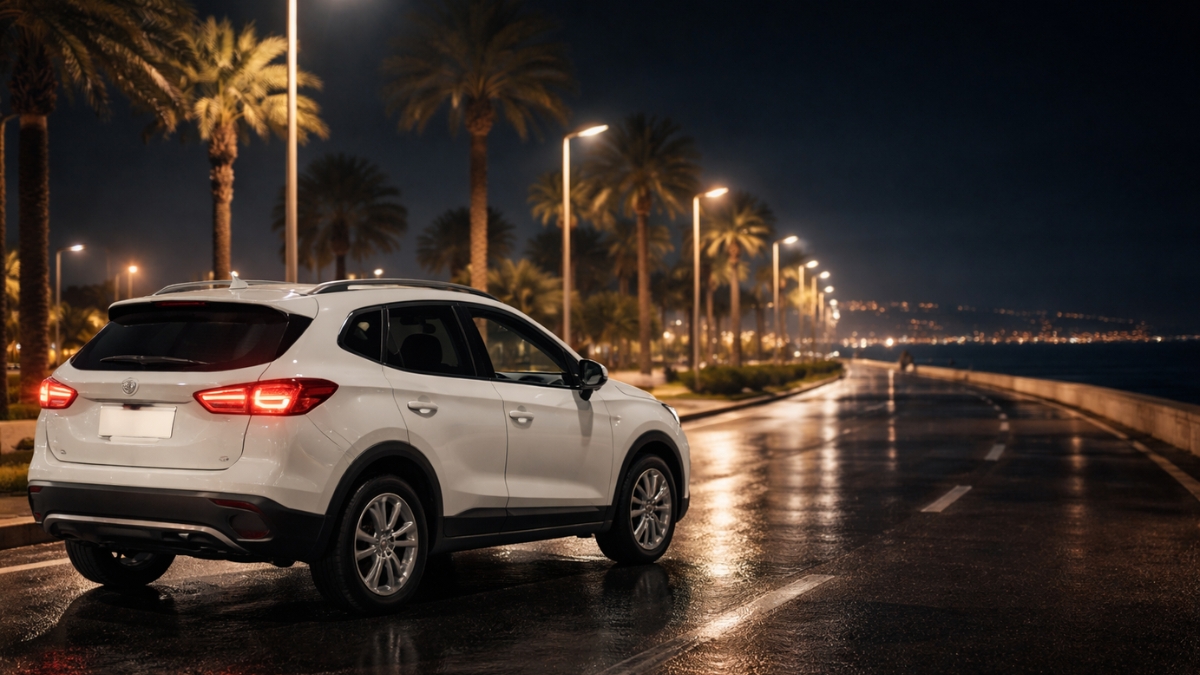
Agadir is one of the easier Moroccan cities to drive at night, wide boulevards, modern neighborhoods, and generally clear road layouts. Still, “easy” doesn’t mean “automatic.” The biggest difference between a relaxed night drive and a stressful one usually comes down to three things: where you drive, how you handle lighting changes, and the habits you use at intersections, roundabouts, and parking.
This guide is written for visitors who want to move around Agadir after dark with confidence, whether you’re heading to the marina, the seaside corniche, a restaurant inland, or simply returning to your hotel without second-guessing every turn.
Table of contents
- What night driving in Agadir feels like
- Areas that feel easiest after dark
- Areas where tourists usually slow down (and why)
- Lighting: what changes from street to street
- Roundabouts and intersections: the night-time “gotchas”
- Parking habits tourists use to avoid hassle
- Smart safety habits that actually work
- When a private driver is a better choice
- FAQ
1) What night driving in Agadir feels like
Compared with older, denser cities, Agadir’s main roads tend to be broader and more structured. But at night you’ll notice a few common patterns:
- Lighting can shift quickly between well-lit boulevards and dimmer side streets.
- Roundabouts are frequent, and traffic flow can change fast as people merge.
- Scooters and pedestrians can appear near shopping and beachfront zones, especially on warm evenings.
- Parking is the main stress point, not the driving itself.
If you plan your route around the best-lit roads and keep your driving “smooth and predictable,” you’ll feel comfortable quickly.
2) Areas that feel easiest after dark
These are the zones most visitors find simplest for night driving because roads are wider, signage is clearer, and lighting is typically stronger.
Seafront / Corniche zone
Good visibility, more predictable traffic, and straightforward navigation. It’s popular at night, so expect more cars turning in/out of parking.
Marina approach roads
Usually easy to follow, but slow down near entrances and parking areas, lots of short stops, pedestrians, and taxis.
Central boulevards and modern neighborhoods
Agadir’s newer layout helps at night: cleaner lanes, larger junctions, and less “surprise” traffic coming from narrow alleys.
Tip that helps: if you’re unsure, stay on the main boulevard network even if the map shows a “faster” shortcut through small streets. The extra 4 minutes is worth the calmer driving.
3) Areas where tourists usually slow down (and why)
Not because they’re “dangerous,” but because they’re more unpredictable after dark.
Busy restaurant strips and shopping pockets
You’ll see sudden stops, U-turns, double-parking, and pedestrians stepping off curbs.
Tighter side streets behind popular zones
Lighting may be weaker, and parked cars can narrow the lane. Your stress rises because your margin for error shrinks.
Any area where you feel rushed
Night driving is easier when you drive like you have time. If the road feels chaotic, reduce speed and give yourself space.
4) Lighting: what changes from street to street
Agadir can feel “bright” on main axes and “surprisingly dim” one street later. Here’s how to adapt without overthinking it:
- Clean windshield inside + out (glare drops a lot when glass is clean).
- Use low beams correctly, high beams in the city often create more glare and annoy other drivers.
- Watch for dark patches near trees, medians, or construction areas where lane markings can fade.
- Assume pedestrians are less visible than you think, especially in dark clothing.
If you want broader road-safety guidance used nationally in Morocco, the official road safety authority is NARSA, their reminders align with the “predictable, defensive driving” approach that works best at night.
5) Roundabouts and intersections: the night-time “gotchas”
Roundabouts are where tourists most often feel uncertain after dark. What helps is treating them like a system, not a surprise:
The habits that reduce stress
- Slow down early and approach “ready to yield.”
- Don’t enter fast just because your lane looks open, cars can appear quickly.
- Signal clearly on exit (it helps everyone around you).
- Expect scooters to filter through gaps.
At intersections, be extra cautious with:
- Cars turning without much warning
- Quick lane changes near junctions
- People crossing late at night when traffic feels lighter
6) Parking habits tourists use to avoid hassle
Parking is where most “small problems” happen, confusion, minor scrapes, or awkward interactions. These habits keep it simple:
Choose easy parking over perfect parking
A slightly longer walk is better than squeezing into a tight slot on a dim side street.
Prefer brighter areas and visible entrances/exits
You want to see the lane edges, curb height, and other cars clearly.
Reverse into the spot when possible
It makes leaving safer and easier, especially at night.
Do a 15-second check before locking up
- Windows up
- Nothing visible on seats
- Mirrors folded if the street is narrow
- Photos of the car’s condition if you’re in a rental (quick, calm, no drama)
7) Smart safety habits that actually work
You don’t need to be paranoid, just consistent.
- Drive smoother, not faster. Smooth braking and steady speed helps you spot hazards earlier.
- Keep extra distance. Night reaction time is different, even when you feel alert.
- Avoid phone handling. Set navigation before moving; pull over if you must change something.
- Use “main-road routing.” At night, main roads are usually safer and easier, even if the ETA is slightly longer.
- Stay calm at mistakes. If you miss a turn, keep going and reroute, don’t do sudden stops or sharp cuts.
For context on why defensive driving matters everywhere, the World Health Organization’s road-safety overview is here: road traffic injuries. The takeaway for travelers is simple: predictable driving and attention to vulnerable road users reduce risk.
8) When a private driver is a better choice
There are nights when driving yourself is fine, and nights when a driver just makes more sense.
Consider a driver if:
- You’re arriving late after a long day (fatigue is the real risk).
- Your plan includes multiple stops (parking + navigation becomes a mental load).
- You’re traveling with family or a group and want everyone relaxed.
- You’re not comfortable with roundabouts in busy evening flow.
- You want to enjoy dinner without thinking about the drive back.
A driver isn’t only about comfort, it’s about arriving calm, on time, and without friction.
FAQ
Is Agadir safe to drive at night for tourists?
In most main areas, yes, especially on wide, well-lit boulevards. The key is staying on major roads and using calm, defensive habits.
Which parts of Agadir feel easiest after dark?
The seafront/corniche routes, marina approaches, and modern boulevard networks usually feel the most straightforward.
What’s the biggest challenge for visitors at night?
Parking and roundabouts. Plan your parking, slow down early at roundabouts, and avoid last-second lane changes.
Should I avoid small side streets at night?
Not always, but if you’re unfamiliar, main roads are typically better lit and more predictable.
Do I need high beams in Agadir at night?
Usually no in the city. Low beams are enough on lit streets; use high beams only where appropriate and safe.
When should I choose a private driver instead of self-driving?
Late-night arrivals, fatigue, multi-stop evenings, family travel, or anytime you want a stress-free night out.