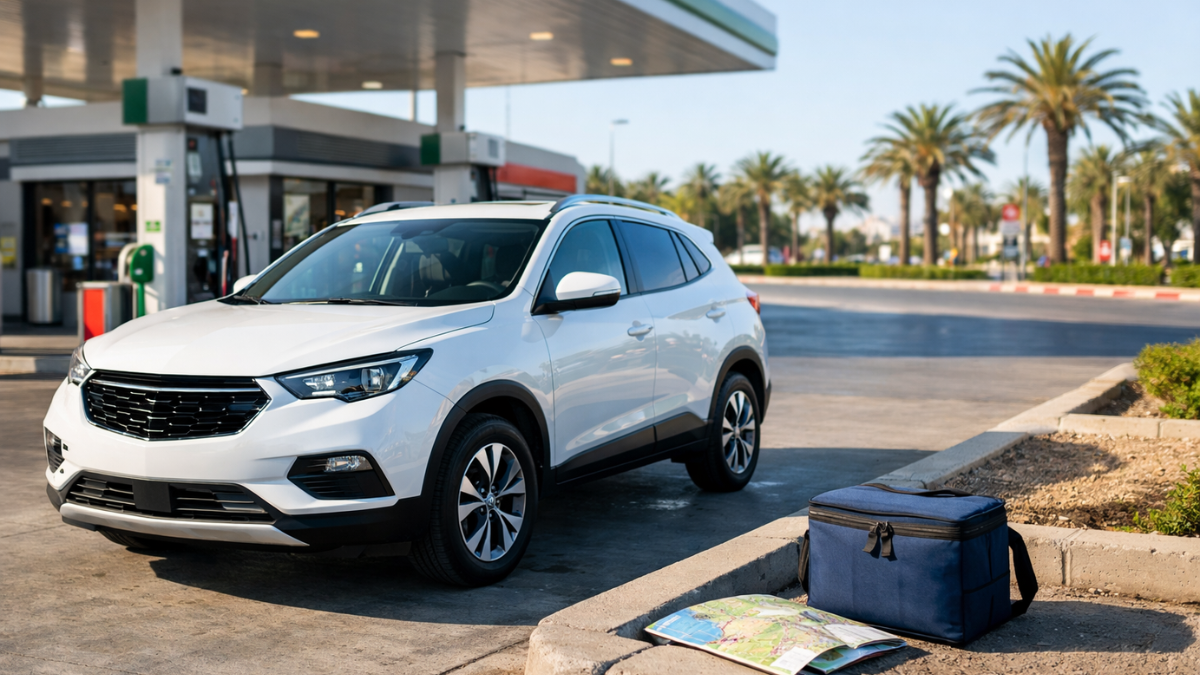
Fueling up in Agadir looks simple, wide roads, plenty of stations, and helpful attendants, but timing and payment can still catch visitors off guard. The “problem” usually isn’t finding a station. It’s arriving at the wrong moment (queues), stopping at a location that’s busy for local reasons (school runs, beach traffic, souk flow), or assuming card payment will always be smooth.
This guide gives you the practical rhythm: when to stop, where fueling feels easiest, how payment usually works in real life, and a few habits that make every stop faster.
Table of contents
- The Agadir fueling map in one minute
- Best times to stop (and the worst times)
- Card vs cash reality: what usually happens at the pump
- Station types: big-service vs neighborhood pumps
- Smart fuel strategy for day trips (Taghazout, Paradise Valley, Aourir)
- What to check before you leave the station
- FAQ
1) The Agadir fueling map in one minute
Agadir has “clusters” where fuel stops feel easiest:
- Main boulevards and ring roads: faster in/out access, more pumps, less awkward parking.
- Tourist corridors (beach zone, marina direction): convenient, but can get busy at peak hours.
- Outskirts toward Aït Melloul / industrial stretches: often spacious and efficient, especially if you’re leaving town.
If you like planning ahead, using official brand station networks can help you pick a reliable stop on your route. For example, you can browse Afriquia’s station network page here: Afriquia stations services.
And if you prefer TotalEnergies locations and services, their Morocco station page is here: TotalEnergies Morocco stations.
2) Best times to stop (and the worst times)
In Agadir, queues are more about local movement than distance. A station can be empty at 10:30 and packed at 12:15, same day, same pumps.
Best times (usually fastest)
- Early morning (7:00–9:00): attendants are ready, traffic is lighter, and you’re not competing with beach or shopping flow.
- Late morning (10:00–11:30): a sweet spot before lunch movement.
- Mid-afternoon (15:00–17:00): often calmer than early evening, especially outside beach zones.
- Later evening (after 20:30): great if you want to avoid crowds and just reset for tomorrow.
Times that often create queues
- Lunch window (12:00–14:30): mixed errands + deliveries + people topping up before heading out.
- Beach / promenade peak (late afternoon to sunset): stations near popular corridors can slow down.
- Friday late afternoon: movement patterns change and some places get unexpectedly busy.
- Sunday evening: people preparing for the work week can cause “last-minute fuel” lines.
A simple rule: if you’re leaving Agadir for a day trip, fuel up before you hit the busy window. Ten minutes earlier can save twenty minutes later.
3) Card vs cash reality: what usually happens at the pump
Here’s the honest version: card often works, but cash is still the fastest “no-surprises” option.
What to expect with card
- Many stations have terminals, but the terminal may be in the kiosk, not at the pump. That means a small extra step.
- Sometimes the line slows because one terminal is handling multiple pumps.
- If the network is slow, the transaction can take longer than you expect.
Best practice: if you plan to pay by card, tell the attendant early so they guide you smoothly (and you’re not switching plans at the end).
What to expect with cash
- Cash usually means the quickest finish, especially at busy times.
- Small notes help. Handing over a large bill during peak queues can slow things down while change is arranged.
Best practice: keep a small “fuel cash” stash separate from everything else so you’re not searching in a wallet while cars line up behind you.
The simplest rule to follow
If you’re doing a longer day (Taghazout, Tamraght, Paradise Valley, or a loop with multiple stops), carry both:
- Card for normal situations
- Cash as the reliable backup when you want speed or when terminals are slow
4) Station types: big-service vs neighborhood pumps
Not all stations feel the same, even if they sell the same fuel.
Big-service stations
You’ll notice these because they have:
- More pump lanes
- Better entry/exit flow
- Often a small shop, air/water, sometimes a café corner
When they’re best:
- Before road trips
- When you need a quick, organized stop
- When you want predictable access and less “tight parking”
Smaller neighborhood stations
These can be convenient, but:
- Fewer pumps can mean a sudden queue
- Entry/exit can be tighter if the station sits on a busy corner
When they’re best:
- Quick top-ups at calm hours
- When you’re staying nearby and want the shortest detour
5) Smart fuel strategy for day trips
Agadir day trips are common, and fuel strategy should match the terrain.
Taghazout / Tamraght / Aourir (coastal)
- Fuel up in Agadir before late afternoon if you plan to return around sunset.
- Coastal traffic can make a “quick fuel stop” feel longer than it should.
Paradise Valley direction
- Fuel before leaving, then treat your return as “no rush.”
- Don’t assume you’ll find a convenient station exactly when you want one after a long day.
Longer loops
If your day includes multiple points, top up earlier than you think you need. It keeps your choices flexible and prevents you from stopping at the busiest station at the busiest moment.
6) What to check before you leave the station
These tiny checks prevent annoying problems later:
- Confirm the fuel type before pumping (especially if you’re switching cars or driving a diesel).
- Check the cap is closed properly after the attendant finishes.
- Glance at your range so you know you’re good for the next segment.
- If paying by card, wait for a clear confirmation before you pull away.
- If you used cash, collect change/receipt immediately (busy stations move fast).
Also, if you’re renting a car, it helps to know your “return fuel plan” from day one: full-to-full, same level, or another rule, so your final day isn’t a rushed, last-minute fuel hunt.
FAQ
1) Do fuel stations in Agadir accept card payments?
Often yes, especially at larger stations, but cash remains the most consistent option when you want a fast, no-surprises stop.
2) What’s the best time to fuel up in Agadir?
Early morning (7:00–9:00) and late morning (10:00–11:30) are usually the smoothest windows.
3) When do stations get the longest lines?
Lunch hours (12:00–14:30) and late afternoon near beach corridors often create queues.
4) Should I refuel before going to Taghazout?
Yes—fuel in Agadir before peak hours so you don’t waste time later when traffic builds on the coast.
5) Is it better to fill the tank or just top up?
For short city driving, topping up is fine. For day trips, a fuller tank gives flexibility and reduces stress.
6) What should I keep in the car for easier fuel stops?
A small cash stash for fuel, your payment card, and a phone charger, so you’re never stuck dealing with low battery during navigation or payment.