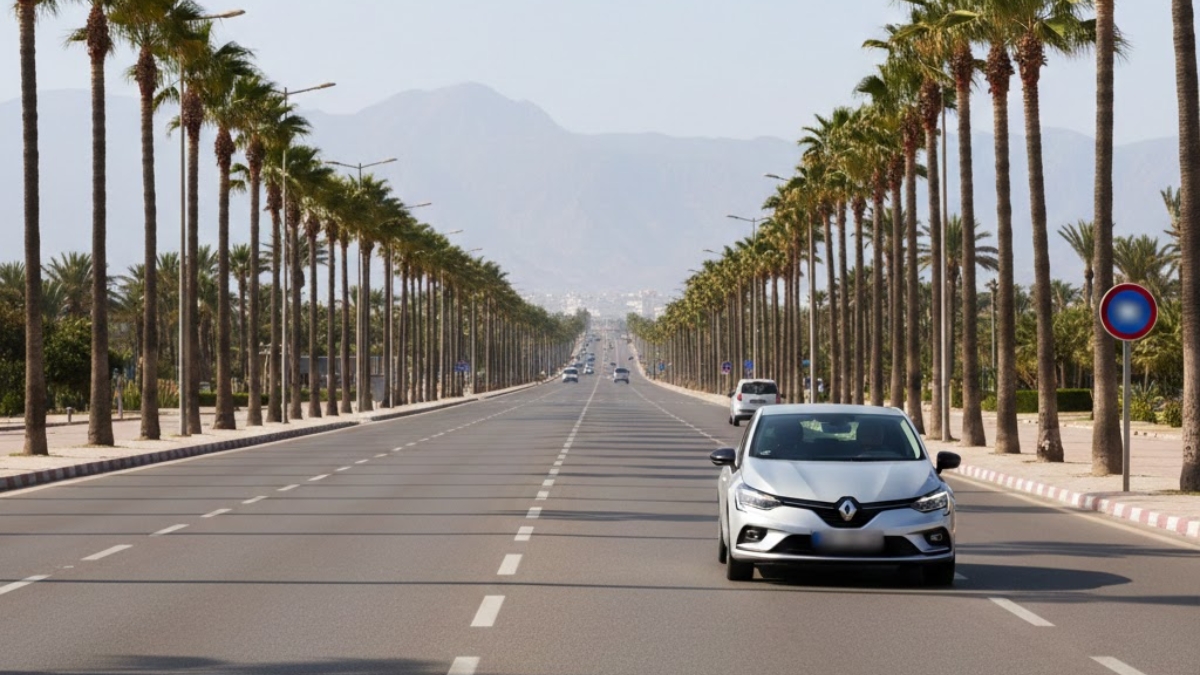
Agadir is one of the easiest Moroccan cities to drive in: wide boulevards, smooth coastal routes, and simple day trips to Taghazout, Paradise Valley, or the airport. The downside is that it’s too easy to drive a little faster than you think, especially on long straight roads where the limit changes quickly. That’s exactly where speed enforcement catches tourists most often.
At MarHire Car Agadir, most speeding tickets don’t happen because someone is driving “crazy fast.” They happen because drivers (1) follow the flow instead of the signs, (2) miss a speed-drop after a roundabout, or (3) keep “fast-road speed” while already back inside an urban zone.
Table of Contents
- Quick Overview
- Speed Limits Near Agadir That Catch Tourists
- Where Drivers Get Fined Most Often Around Agadir
- The 7 Triggers That Make Speed Cameras Feel Invisible
- How Speeding Fines Work and How to Pay
- Night Driving and Weekend Traps
- A Simple No-Fine Driving Routine for Agadir
- FAQ
Quick Overview
- Most fines happen on airport approach roads, city entrances, long straight boulevards, and fast connectors where limits drop suddenly.
- Don’t copy local speed, copy the posted speed signs.
- For Morocco’s general guidance on speed, penalties, and why small over-speeding is risky, use NARSA’s official overview here: https://www.narsa-securiteroutiere.ma/fr/la-vitesse-excessive/
- If you need to pay an “ATF” radar fine online, the official Treasury portal used for payment is here: https://www.tgr.gov.ma/wps/portal/erecouvrement
Speed Limits Near Agadir That Catch Tourists
Tourists usually get fined for small over-speeding, not extreme speeding. The classic pattern is “+10 km/h” on a road that looks like it should be faster.
These are the limit situations that catch visitors most:
- Urban boulevards that feel like highways
Wide lanes, smooth asphalt, and fewer pedestrians… but still an urban speed zone. - Limit drops after roundabouts or entrances
You exit a faster stretch, you accelerate naturally, and the sign changes right when you’re focused on navigation. - Fast connectors between districts
These roads are built for traffic flow, so drivers assume higher speeds, even when the posted signs say otherwise.
Simple rule: the sign is the truth, not the road quality.
Where Drivers Get Fined Most Often Around Agadir
There isn’t a “forever map” of every camera that stays identical year-round, placements and enforcement focus can change. But the high-risk zones are very consistent, and if you drive with these patterns in mind, you avoid most tickets.
1) Airport approach roads and city-entry stretches
Between Agadir Al Massira Airport and the city, you’ll pass through sections where the environment changes quickly (more junctions, more signage, more built-up areas). That’s where drivers get caught: they keep a high cruising speed for “just a bit longer.”
How to avoid it: the moment you see denser signs, junctions, and more lighting, reduce speed early, don’t wait until after you’ve passed the speed sign.
2) Long straight boulevards inside Agadir
These are the biggest “silent ticket” zones:
- you hit a green-light rhythm and drift up
- you accelerate between lights
- you feel safe because visibility is good
- you match the flow and forget your own speed
How to avoid it: treat every long straight boulevard as “camera territory” even if you don’t see a device.
3) Fast connectors and bypass-style roads around the city
Agadir has roads that behave like mini-expressways when traffic is light. They invite higher speeds and create the perfect conditions for enforcement.
How to avoid it: if it feels like a bypass, drive like enforcement is possible.
4) Entrance/transition zones (especially when the road “looks empty”)
When you move from open road into an area with more crossings, businesses, or denser traffic, speed enforcement tends to be stricter.
How to avoid it: drive the environment, not the asphalt.
5) Coastal runs toward Taghazout and nearby surf areas
Coastal driving feels relaxed, but the trap is passing through small built-up pockets and junction-heavy areas at the same speed you were cruising outside them.
How to avoid it: slow down near villages, busy turnoffs, and anywhere you see more pedestrians or frequent side-road entrances.
6) Motorway driving when coming from other cities
Motorway sections are easy to speed on, especially downhill or late at night. People also get caught accelerating right after toll or “open” sections because it feels safe.
How to avoid it: pick a steady cruising speed and stick to it. Don’t “chase the road.”
The 7 Triggers That Make Speed Cameras Feel Invisible
These are the exact moments tourists get flashed:
- Downhill sections (speed rises without you noticing)
- Following a confident local driver (they know the road; you don’t)
- Overtaking a slow vehicle and not settling back down
- Right after a roundabout (you accelerate and miss the sign)
- Late-night empty-road confidence
- Phone navigation stress (eyes on the map, not the speedometer)
- Switching road types (motorway → national road → urban) too quickly
How Speeding Fines Work and How to Pay
What usually happens
If speed is measured by radar, you might not find out immediately in the moment, especially with automated enforcement. That’s why the best strategy is prevention.
If you need to pay online
For radar-related “ATF” fines (amendes transactionnelles forfaitaires), the official online payment channel is the Trésorerie Générale du Royaume portal here:
https://www.tgr.gov.ma/wps/portal/erecouvrement
Practical tips so you don’t waste time:
- keep your rental paperwork tidy
- take note of the vehicle plate and your rental contract details
- don’t leave it to the last day of your trip (because timing windows can matter)
Night Driving and Weekend Traps
- Night: roads feel faster, and you drift above limits without realizing.
- Weekends/holidays: more enforcement attention on leisure routes and high-flow connectors.
- Rental reality: even a small ticket becomes annoying when discovered late, so it’s better to stay clean all trip.
A Simple No-Fine Driving Routine for Agadir
Use this routine and you’ll avoid most camera tickets:
- Say the speed sign out loud when you pass it (works instantly)
- After every roundabout: check speed + scan for the next sign
- On long straights: choose a steady number and hold it
- At city entrances: slow down early
- Don’t chase locals (they’re not paying your fine)
- Leave 10 minutes earlier so you never feel rushed
- If unsure, assume enforcement and drive calmly
FAQ
Are speed cameras common around Agadir?
Yes, especially on fast boulevards, connectors, and transition zones where limits change.
Why do tourists get fined so often in Agadir?
Because the roads feel smooth and open, so drivers drift above the limit without noticing.
Can I pay a radar fine online?
Yes, online payment is available via the official TGR portal: https://www.tgr.gov.ma/wps/portal/erecouvrement
Is Waze enough to avoid cameras?
It can help, but it’s not a guarantee. Signs and consistent speed habits are more reliable.
What’s the #1 habit to avoid tickets?
Treat every limit change seriously, especially after roundabouts and at city entrances.