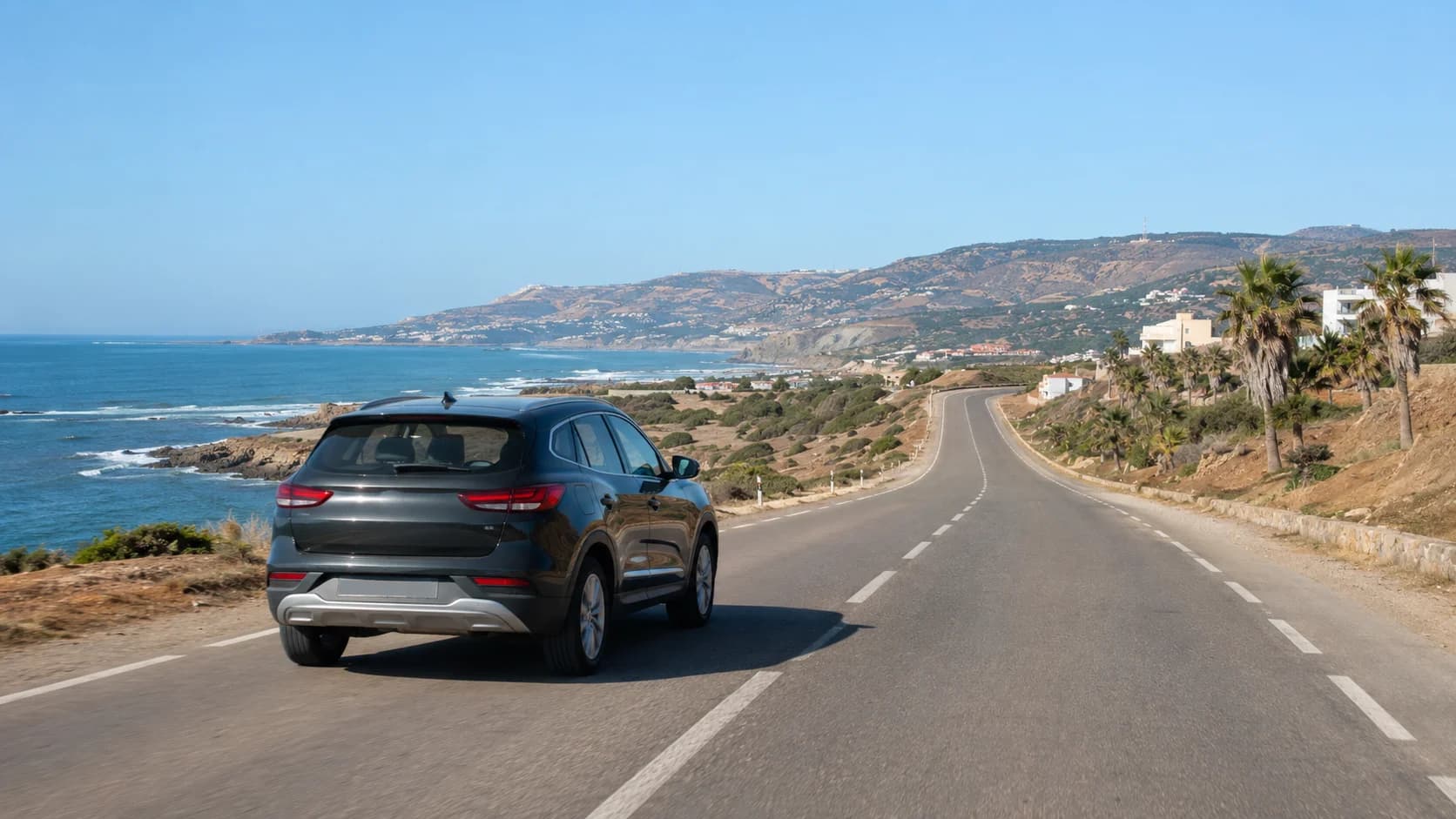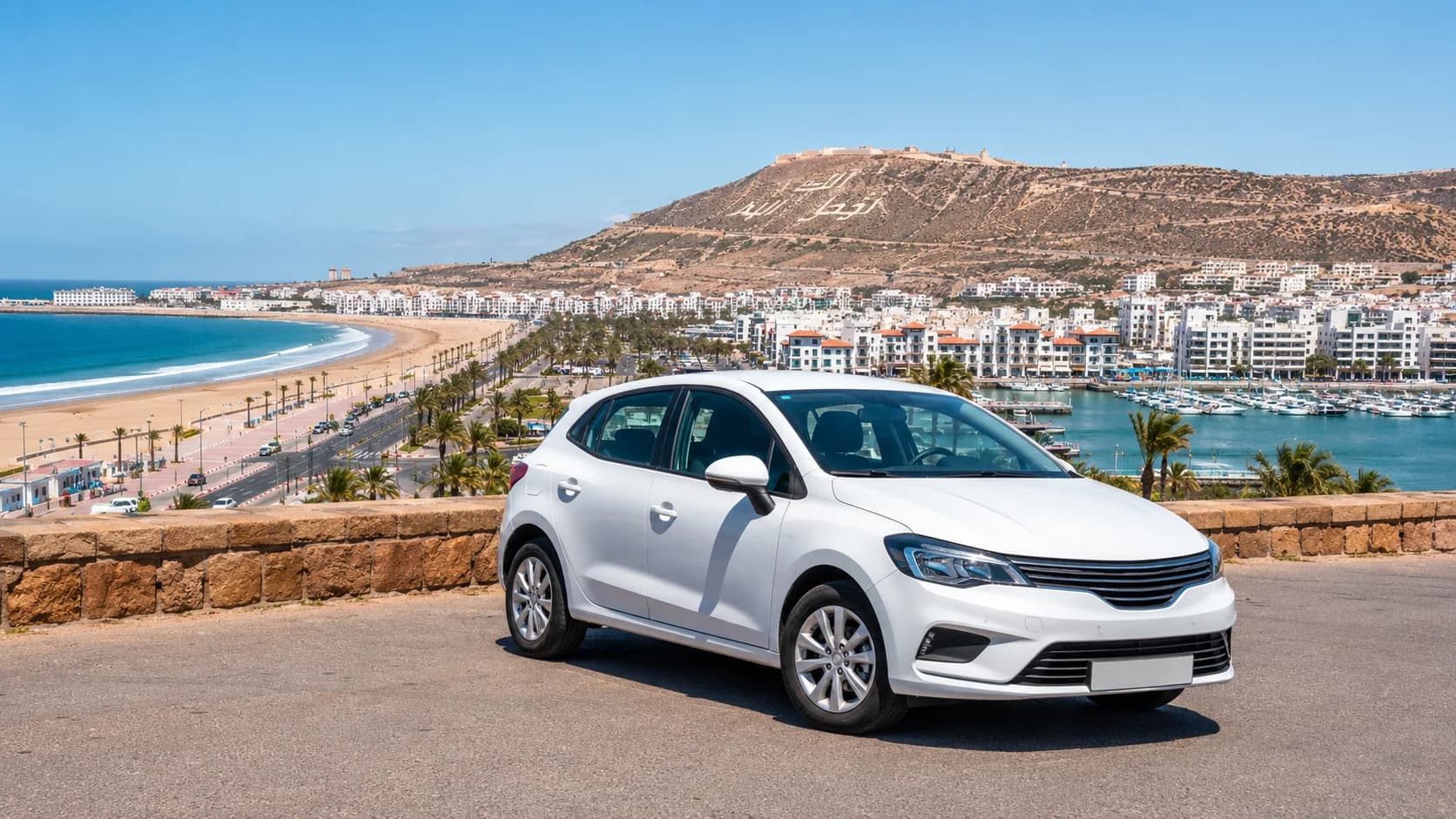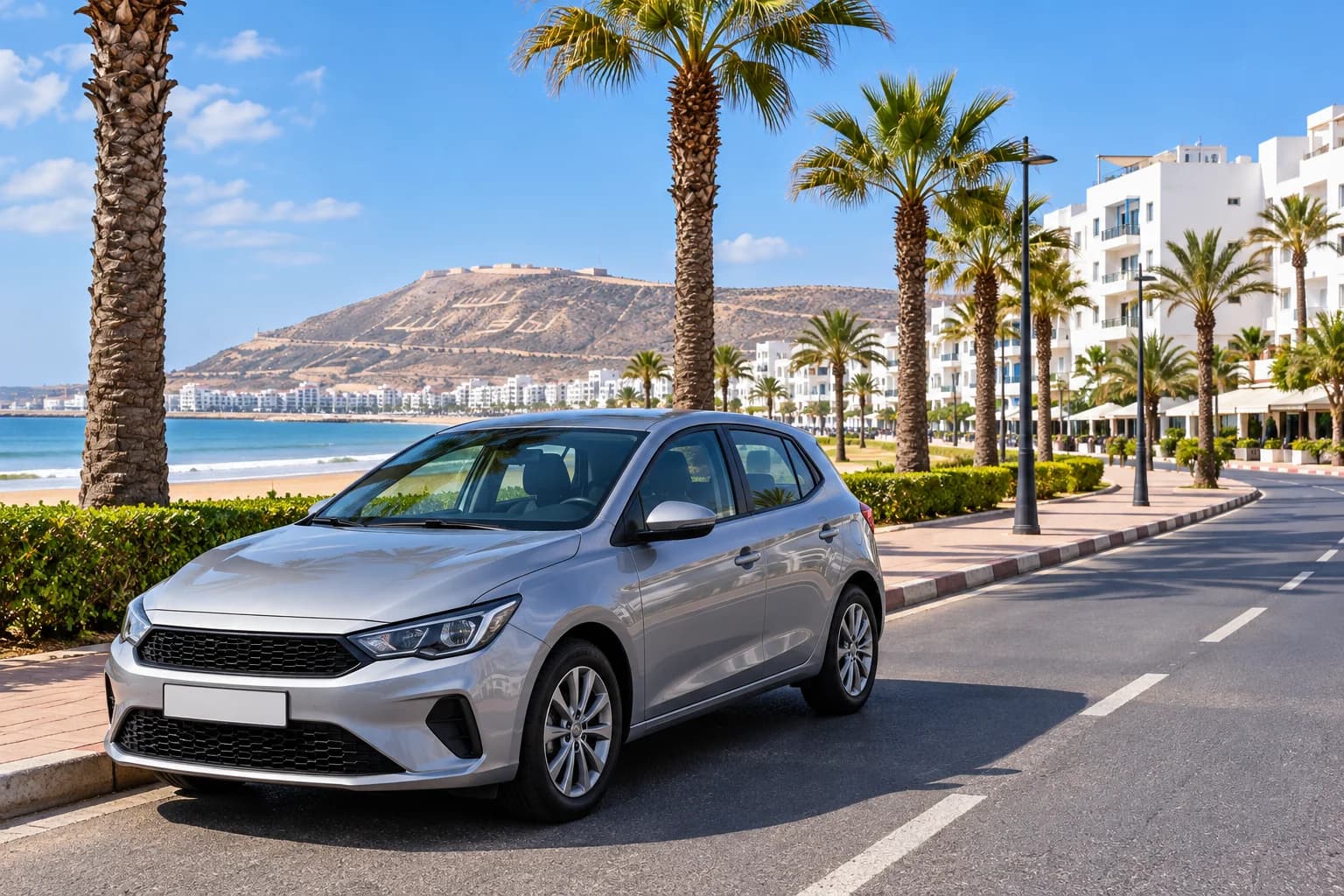









An Agadir road trip can take you from Atlantic beaches to mountain villages, historic cities and desert landscapes, but the best itinerary is not necessarily the one that covers the most kilometres.
When planning Agadir road trip driving time, the more useful question is not simply “How far can we drive today?” It is “How much driving can we comfortably combine with stops, meals, sightseeing and a relaxed arrival?”
Four hours on a modern motorway can feel very different from four hours on a winding mountain road. A 250-kilometre journey can sometimes be easier than a much shorter stage involving villages, bends, elevation changes and frequent stops.
This guide explains how to estimate realistic daily driving time in Morocco, when to break a long route into two days and how to avoid building a holiday around the inside of your rental car.
How Much Should You Drive Per Day on a Morocco Road Trip?
For many holiday itineraries, around 3 to 5 hours of actual driving in one day is a comfortable target. It leaves enough time for breakfast, breaks, lunch, viewpoints, check-in and some sightseeing.
A 5- to 6-hour driving day can still be reasonable occasionally, particularly when much of the journey is straightforward motorway driving.
Once your itinerary regularly requires more than six hours behind the wheel—not including stops—the journey can begin to dominate the holiday. Mountain roads, unfamiliar cities, children, older passengers, poor weather and late arrivals can make even shorter driving stages tiring.
Treat these ranges as planning guidance rather than fixed rules. Road type and driver condition matter more than the kilometre number alone.
There Is No Single Perfect Daily Distance
Travelers often begin planning a Morocco road trip by calculating kilometres.
That is useful, but kilometres alone can be misleading.
Imagine two days covering roughly the same distance. One follows a broad motorway for most of the journey. The other crosses mountain roads, passes small towns and includes viewpoints, bends and slower sections.
Those days may look almost identical on an itinerary spreadsheet but feel completely different from behind the wheel.
A more realistic Morocco self-drive distance per day calculation should consider:
| Planning factor | Why it matters |
|---|---|
| Road type | Motorways usually require less concentration than winding roads |
| Total wheel time | Driving hours matter more than kilometres |
| Stops | Fuel, food and rest add to the day |
| Scenery | Viewpoints often turn into unplanned stops |
| Passengers | Children and older travelers may need more breaks |
| Arrival destination | Finding a hotel or riad can take additional time |
| Weather | Rain, fog, wind or heat can slow progress |
| Daylight | Difficult roads are usually easier when approached in daylight |
Instead of setting a target such as “400 km every day,” start with the hours you want to spend traveling.
Then look at what kind of roads make up those hours.
Motorway Hours vs Mountain-Road Hours
Not every driving hour has the same physical or mental cost.
Motorway driving
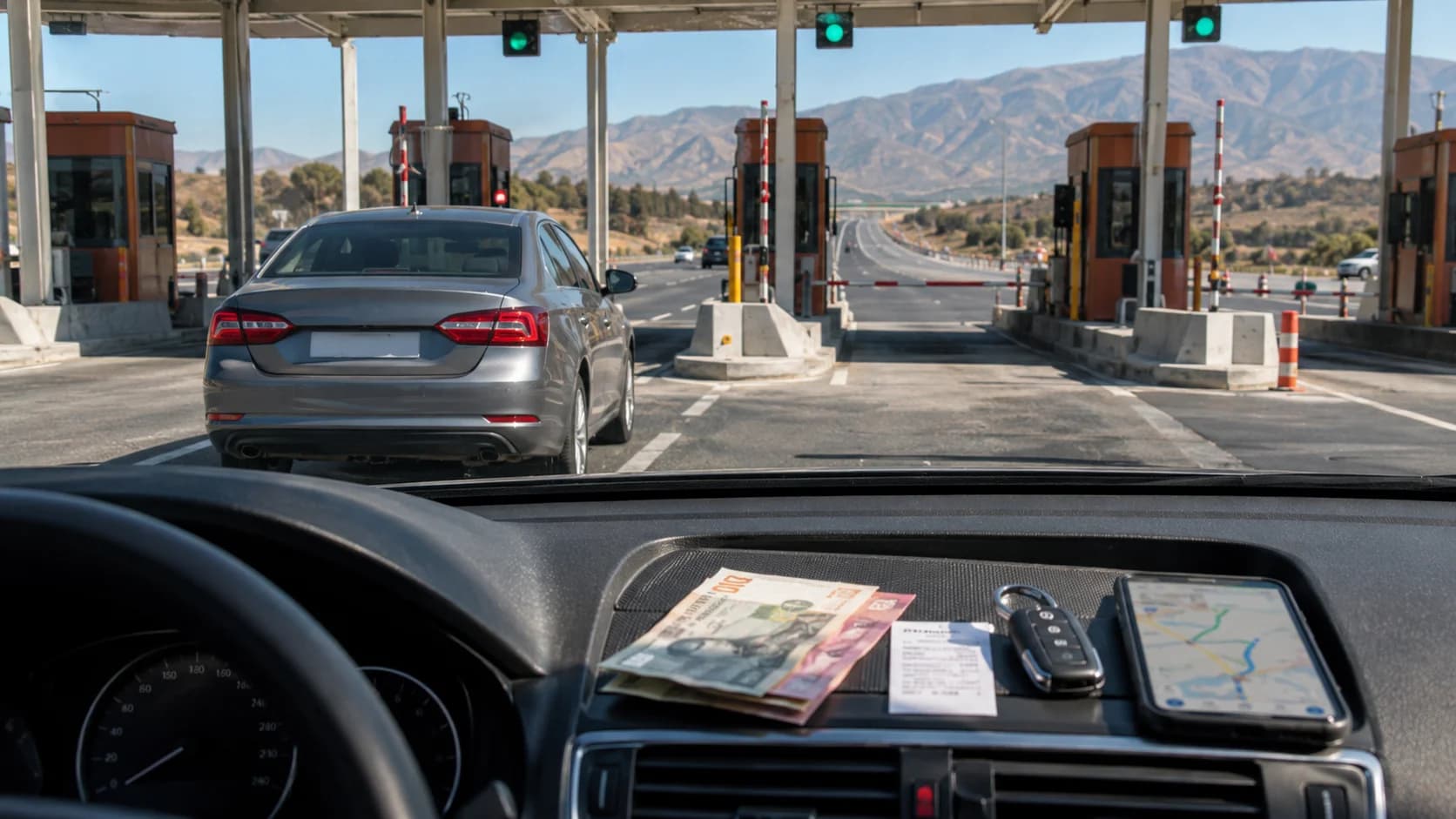
Long stretches of motorway normally allow relatively consistent progress. Lane changes, toll stops and traffic still require attention, but the route tends to be predictable.
A longer motorway stage can therefore be easier to manage than an equally long mountain journey.
For example, a road-trip day connecting Agadir with a major city using substantial motorway sections is very different from a day exploring the Anti-Atlas.
A comfortable sedan rental in Agadir can be a practical choice for travelers whose itinerary concentrates on paved roads, cities and major intercity routes.
Mountain and rural roads
Mountain driving demands more concentration.
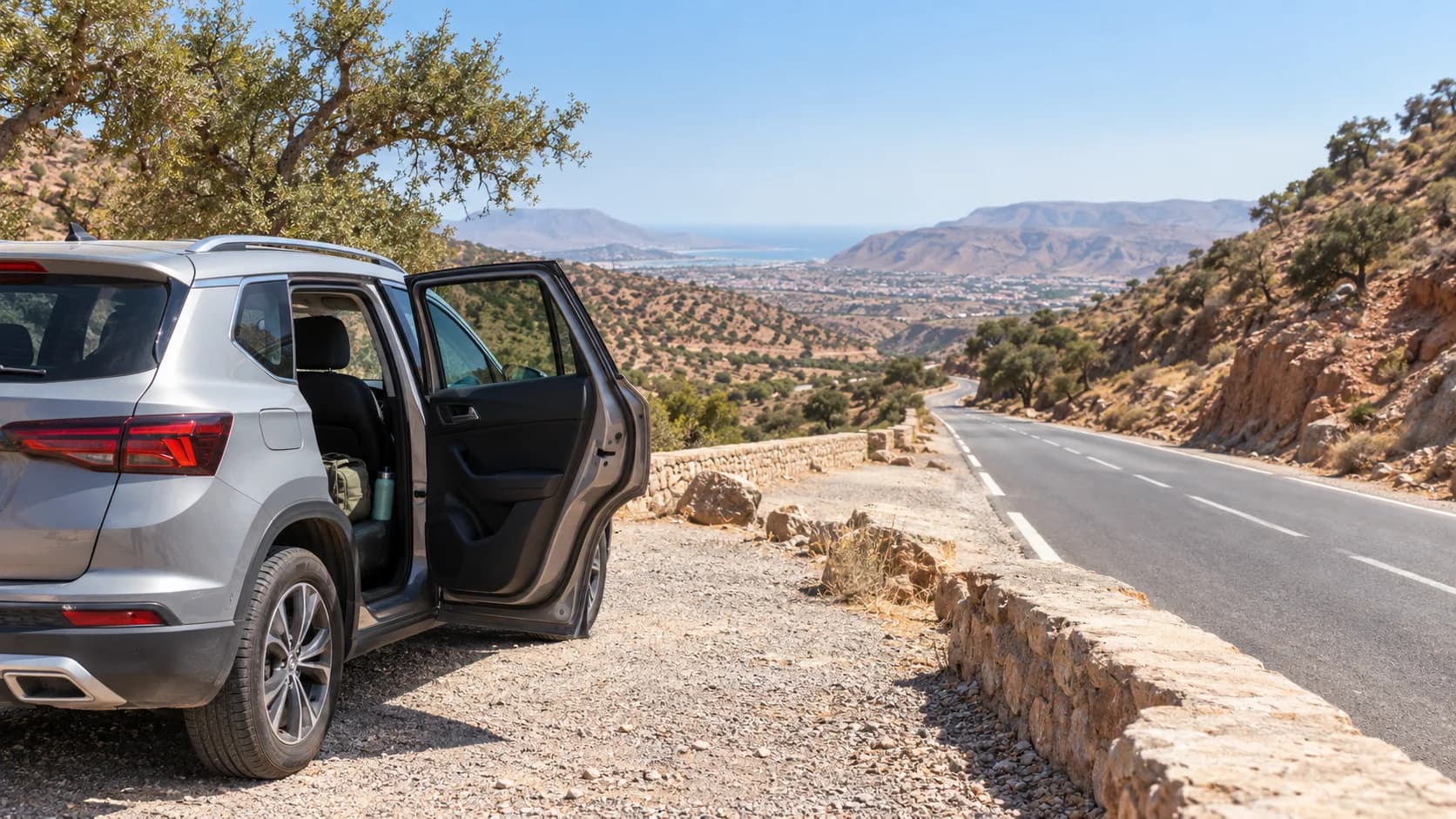
There may be tighter bends, gradients, villages, livestock, slower vehicles and scenic sections where progress naturally falls. You may also want to stop more frequently for photographs or viewpoints.
This matters on excursions toward places such as Tafraoute and other inland areas around Agadir. Morocco's official tourism material itself highlights the winding nature of routes through this region and the varied mountain landscapes surrounding Agadir.
If your itinerary contains significant mountain travel or you simply prefer additional space and a higher seating position, an SUV rental in Agadir may be worth considering.
Travelers planning routes where road conditions genuinely call for greater capability can also compare 4x4 rental in Agadir.
The important principle is simple:
Count difficult road hours more heavily than easy road hours.
A four-hour mountain stage may deserve the same amount of space in your itinerary as a considerably longer motorway journey.
Building Breaks Into Every Long Drive
A route planner might show four hours and 30 minutes between two destinations. That does not mean you should schedule exactly four hours and 30 minutes between hotel check-out and arrival.
Breaks are part of the journey.
Morocco's national motorway operator, Autoroutes du Maroc, recommends taking a break approximately every two hours during longer journeys. Its 2026 travel guidance also advises drivers to plan journeys in advance, follow traffic and weather conditions and check their vehicle before setting out.
For holiday planning, this creates a useful framework.
A route showing five hours of driving could easily become a six- or seven-hour travel day after allowing for coffee, lunch, fuel, toilets, viewpoints and unexpected delays.
That is not necessarily a problem. The mistake is pretending those stops will not happen.
Make stops part of the itinerary
Rather than treating every pause as lost time, use road-trip rest stops in Morocco to improve the trip.
Have lunch somewhere worth visiting. Stop at a viewpoint before you become tired. Refuel before the tank becomes a distraction. Let children stretch their legs before they become restless.
A good road trip is not a race between hotels.
Daylight and Arrival-Time Planning
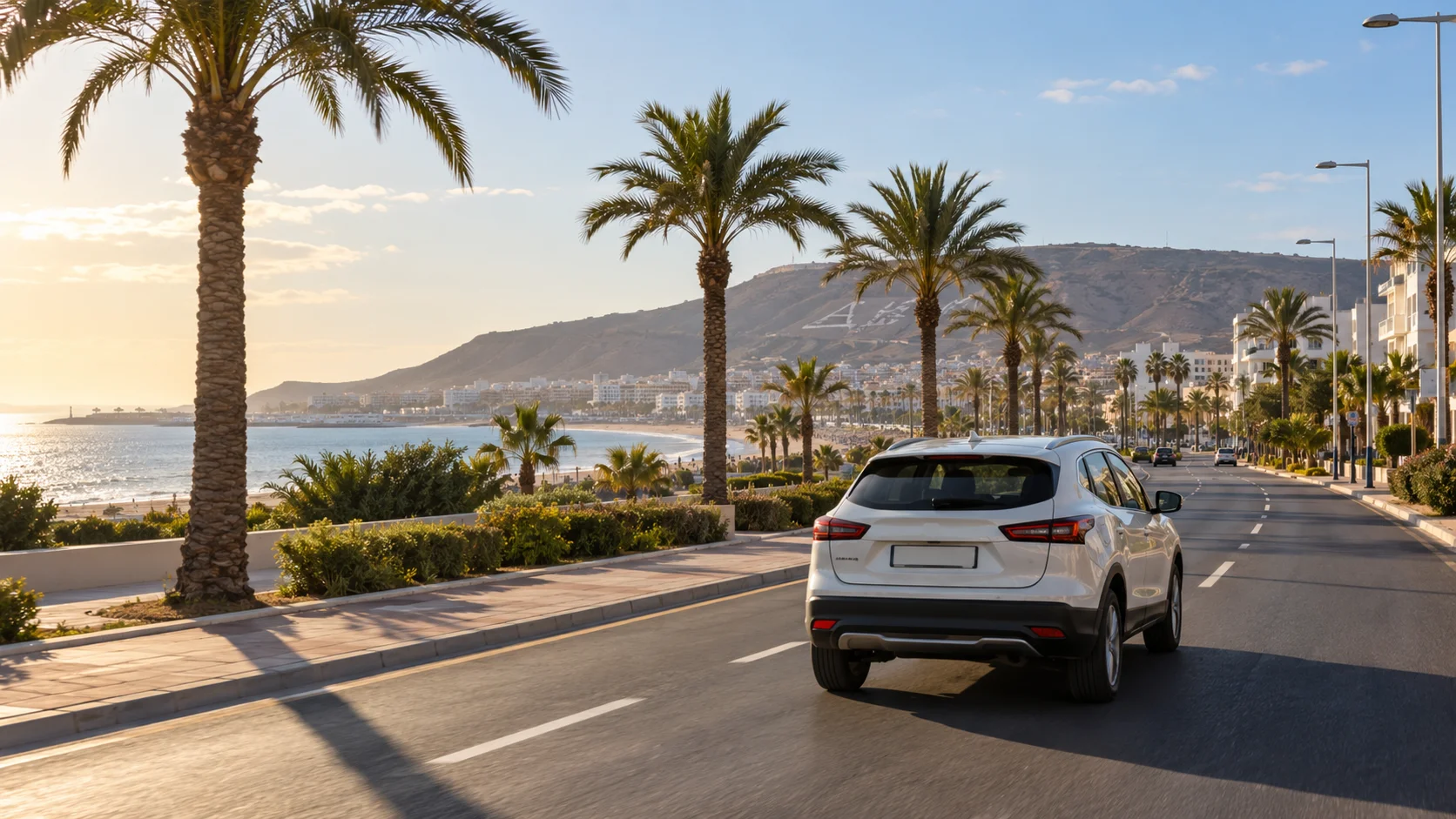
Your estimated arrival time deserves almost as much attention as your departure time.
Reaching somewhere unfamiliar at 15:30 can be very different from arriving at 21:30 after a long driving day.
During daylight you have more time to understand the surroundings, find parking, contact your accommodation and adjust if the final approach is different from what you expected.
Late arrival becomes especially inconvenient when your accommodation is inside or near an old medina where your rental vehicle may not be able to reach the front door.
For long Agadir road-trip stages, a useful approach is to work backwards from your preferred arrival time.
If you want to reach your next accommodation by 17:00 and the route requires approximately five hours of driving plus 90 minutes of stops, leaving after lunch clearly does not work.
Weather can also change the calculation. Morocco's official motorway guidance recommends checking weather alerts and taking additional care during wind, rain and fog.
Build margin into the schedule rather than relying on the fastest possible journey.
Driving With Children or Older Travelers
Families should usually plan around the least comfortable passenger, not the person who enjoys driving most.
A couple accustomed to road trips may tolerate a five-hour stage easily. The same journey with a toddler, baby or older parent may require several additional stops.
Children can need time for food, toilets, movement and unexpected breaks. Older travelers may prefer shorter periods in the vehicle and more comfortable access to restaurants and accommodation.
Instead of asking:
“Can we drive six hours?”
Ask:
“Will everyone still want to enjoy the destination after six hours in the car?”
That distinction produces much better itineraries.
For mixed-age groups, dividing one extremely long day into two moderate stages can also create an extra destination rather than simply an extra hotel night.
When to Add an Overnight Stop
An overnight stop becomes worth considering when splitting the route noticeably improves both safety and enjoyment.
Consider breaking a journey when the planned day combines several tiring elements: very long driving time, mountain roads, sightseeing, multiple meal stops and a late arrival.
The same applies when the next morning already contains an activity or another long drive.
Suppose Day 4 involves six or seven hours of driving and Day 5 starts with another major transfer. Even if each route is individually possible, the combined itinerary may become unnecessarily exhausting.
Adding an overnight stop can turn one demanding transfer into two enjoyable road-trip days.
The Moroccan National Tourist Office promotes touring Morocco through multiple stages and destinations rather than treating the journey purely as transportation, including itineraries linking coastal, inland and southern destinations.
This approach fits self-driving particularly well.
Sometimes the best road-trip planning decision is simply to travel less that day.
Sample Comfortable Driving-Day Ranges
The following framework can be reused when planning routes from Agadir or elsewhere in Morocco.
| Actual driving | Typical holiday experience | Planning approach |
|---|---|---|
| Under 2 hours | Very relaxed | Excellent for sightseeing days and short excursions |
| 2–4 hours | Comfortable | Ideal for most road-trip stages |
| 4–5 hours | Moderate | Leave time for meals and several breaks |
| 5–6 hours | Long day | Best used occasionally rather than every day |
| 6+ hours | Demanding | Consider splitting the journey or reducing sightseeing |
| 8+ hours | Very demanding | Usually worth reconsidering on a leisure itinerary |
These are not legal driving limits or guarantees. They are practical holiday-planning ranges.
Road difficulty can move a journey up a category. Four hours of winding mountain roads, for example, can be more demanding than five hours of straightforward motorway travel.
Likewise, two authorized and rested drivers may be able to share a longer journey more comfortably than one person driving the entire distance.
Road-Trip Planning Checklist
Before finalizing each day of your Agadir road trip itinerary driving plan, check:
-
Estimated driving time rather than distance alone
-
Type of roads involved
-
Planned rest stop roughly every two hours on long journeys
-
Time for fuel, meals and photographs
-
Traffic and weather conditions
-
Expected sunset and daylight
-
Desired hotel arrival time
-
Parking arrangements at your destination
-
Needs of children or older travelers
-
Whether the following day also contains substantial driving
One additional question is particularly useful:
Would we still choose this itinerary if the journey takes one hour longer than expected?
If the answer is no, the schedule probably needs more margin.
A Simple Formula for Planning Agadir Road Trip Driving Time
For most routes, begin with the navigation estimate and then add realistic travel time.
For example:
Navigation time + breaks + meals + sightseeing stops + arrival buffer = realistic travel day
If navigation suggests 4 hours 30 minutes, the real travel day might be closer to six hours once everything else is included.
That distinction is essential when comparing routes.
Do not design a 10-day Morocco itinerary containing ten days of maximum driving. Mix longer transfers with shorter scenic stages, local excursions and days when the vehicle barely moves.
That is what keeps a self-drive holiday enjoyable.
FAQs About Driving Time on an Agadir Road Trip
How many hours should I drive per day in Morocco?
For a relaxed holiday, roughly three to five hours of actual driving is a useful planning range for many days. Longer stages are possible, but they should normally be balanced with shorter driving days.
How far is too far for one road-trip day?
There is no universal kilometre limit. Road type matters more. A longer motorway journey may be easier than a much shorter mountain route with bends, villages and frequent stops.
Is 6 hours of driving too much on holiday?
Six hours is a substantial driving day, especially once meals and rest stops are added. It can work occasionally, but scheduling six-hour driving stages every day will leave much less time for the places you traveled to see.
How often should I stop on a long drive?
Autoroutes du Maroc recommends a break approximately every two hours during long motorway journeys. Stop earlier whenever you feel tired or your passengers need a break.
Are mountain-road hours more tiring than motorway hours?
Usually, yes. Mountain routes can require more steering, speed changes and concentration, so four hours on winding roads may feel considerably more demanding than four hours of straightforward motorway driving.
Should I avoid arriving in a new city after dark?
When possible, arriving during daylight makes an unfamiliar destination easier to navigate, particularly when you still need to locate parking or accommodation. It is especially useful after a long or tiring driving stage.
How should families plan long driving days?
Allow additional time for food, toilets and movement. Families with young children or older relatives may find several shorter stages more comfortable than one very long transfer.
When should I add an overnight stop?
Consider one when a route requires more than six hours of actual driving, involves difficult mountain roads, would produce a late arrival or is followed immediately by another long driving day.
Can two authorized drivers share long journeys?
If both drivers are properly authorized under the rental agreement, sharing driving can reduce the burden on one person. Both drivers should still be rested and comfortable with the road conditions.
How do I build realistic driving times into a Morocco itinerary?
Start with the estimated wheel time, identify the road type, add planned breaks, meals and sightseeing, then add an arrival buffer. If the final travel day feels too long, shorten the route or introduce an overnight stop.
Plan the Road Trip Around the Experience, Not the Odometer
The best Agadir road trip driving time is not the maximum distance your car can cover in one day.
It is the amount of driving that still leaves you with enough energy to walk through a town, enjoy dinner, explore a beach, stop at a mountain viewpoint and appreciate where you are.
Motorway stages can reasonably be longer. Mountain stages usually deserve more time. Families may need additional breaks. And sometimes one extra overnight stop transforms an exhausting itinerary into one of the best parts of the trip.
A good road trip leaves time to enjoy the places between the roads.
Compare a comfortable sedan rental in Agadir, SUV rental in Agadir or 4x4 rental in Agadir with MarHire Car Agadir, then build your route around realistic daily stages rather than maximum kilometres.
For current motorway traffic and road-travel guidance, travelers can also consult Autoroutes du Maroc (ADM) and use the Moroccan National Tourist Office when researching destinations and possible stops around the country.