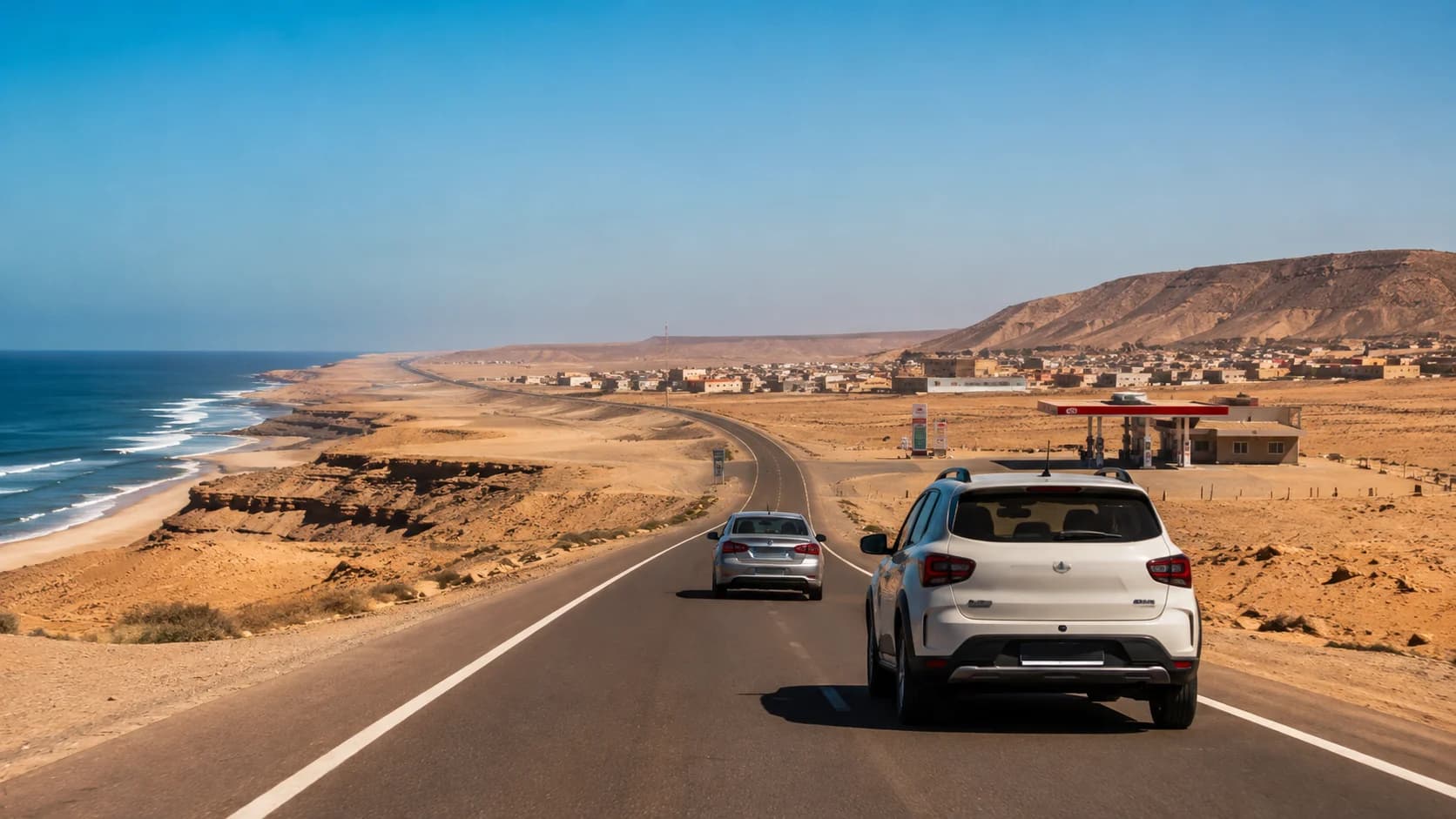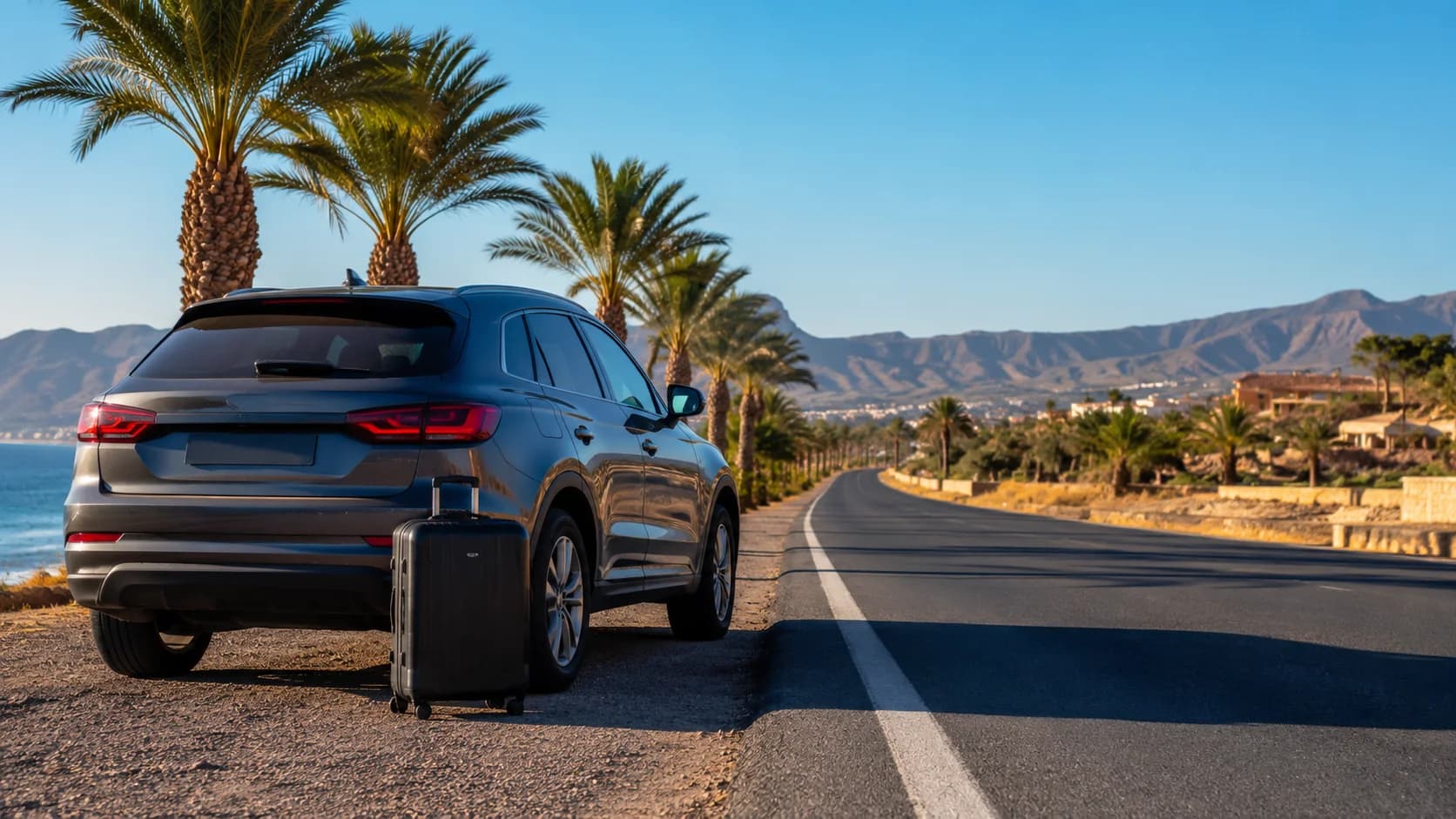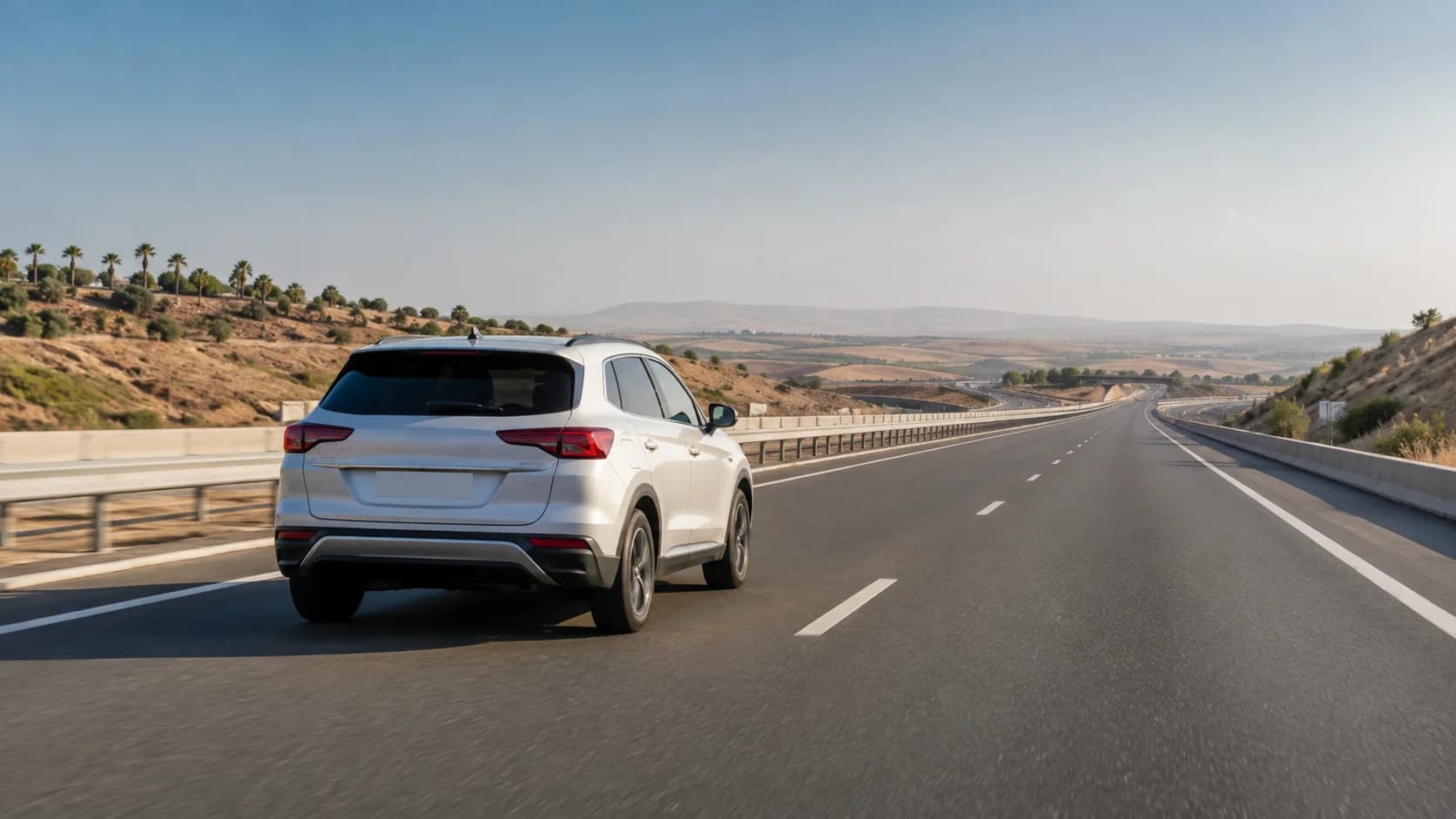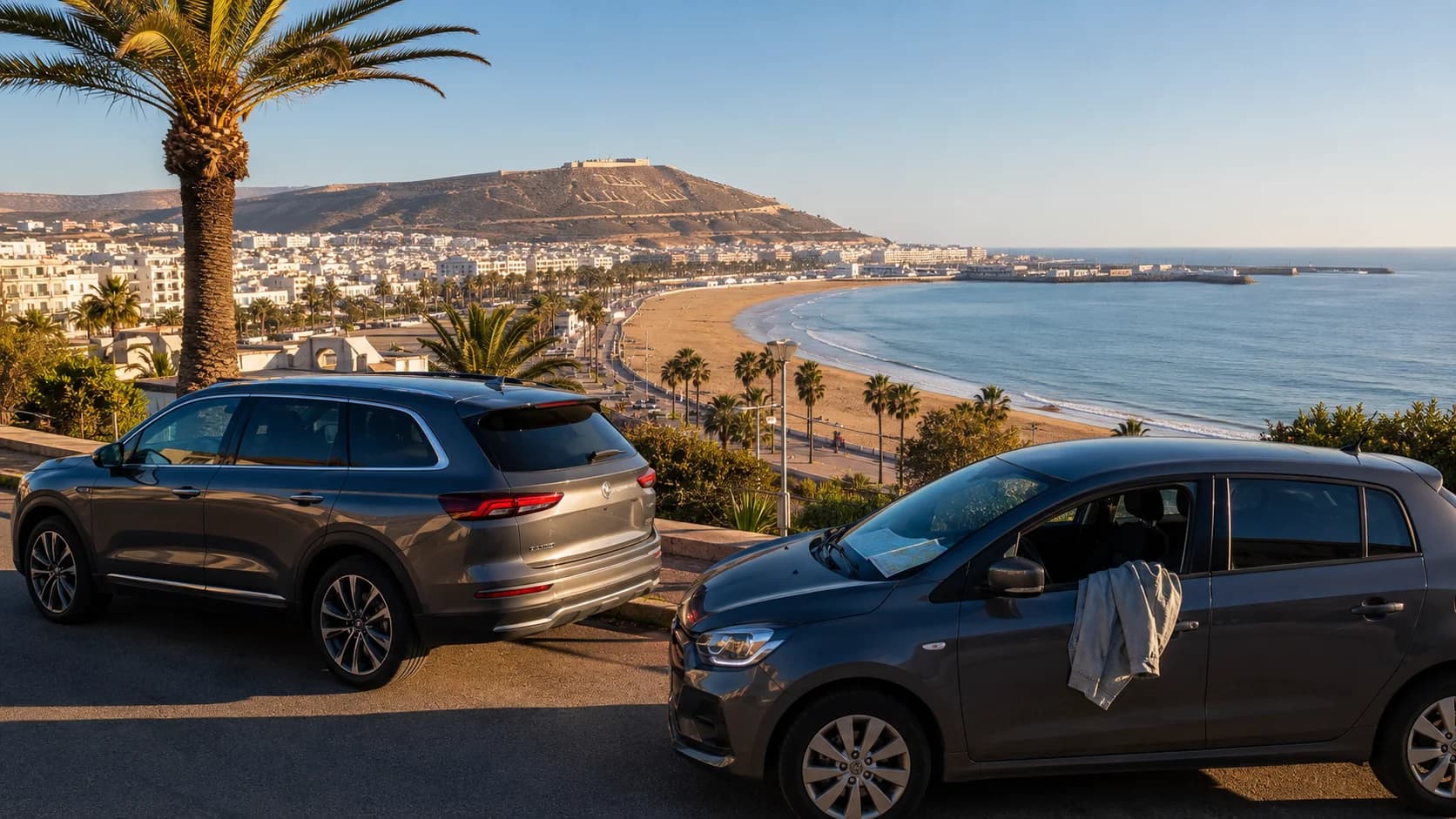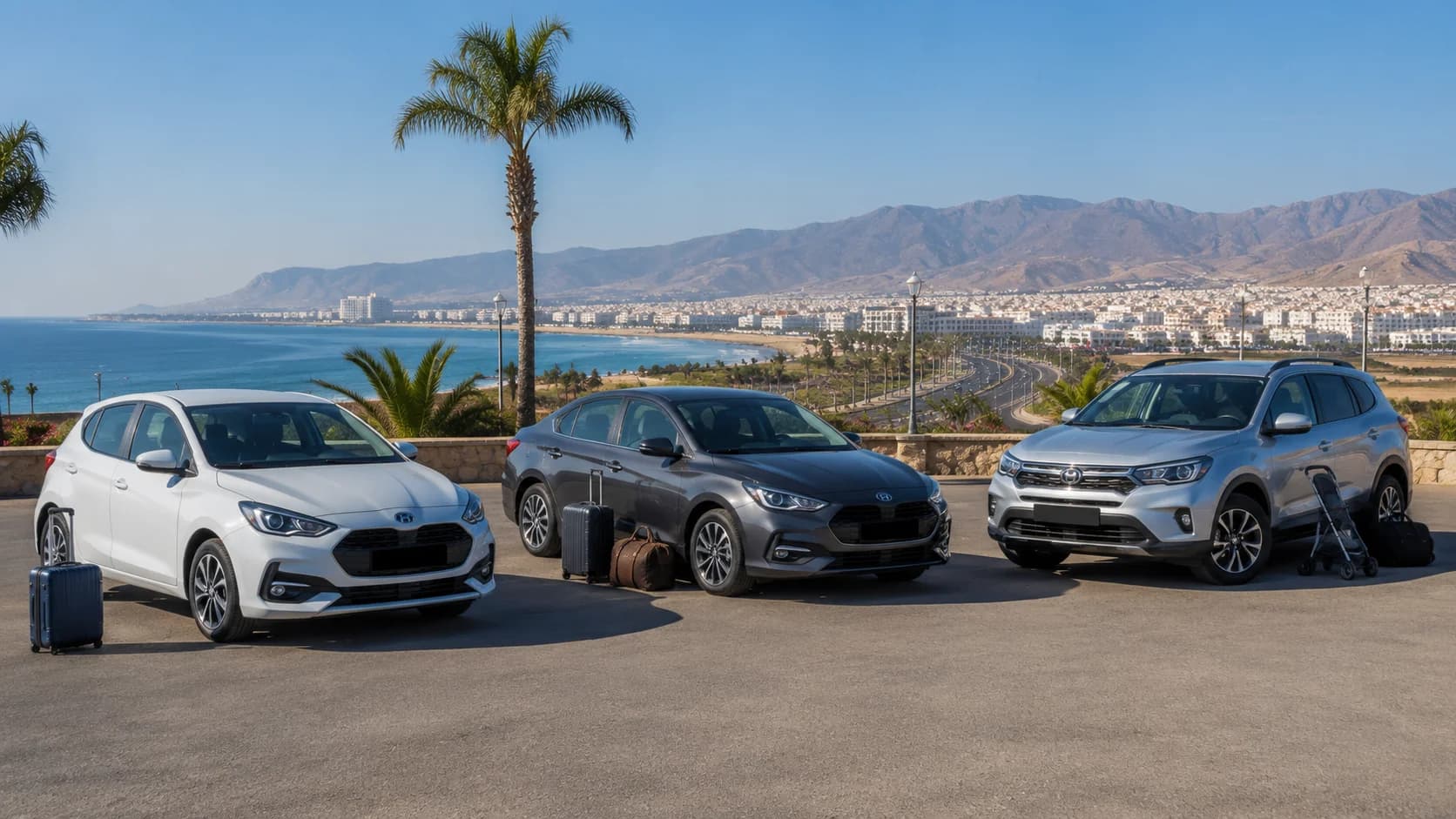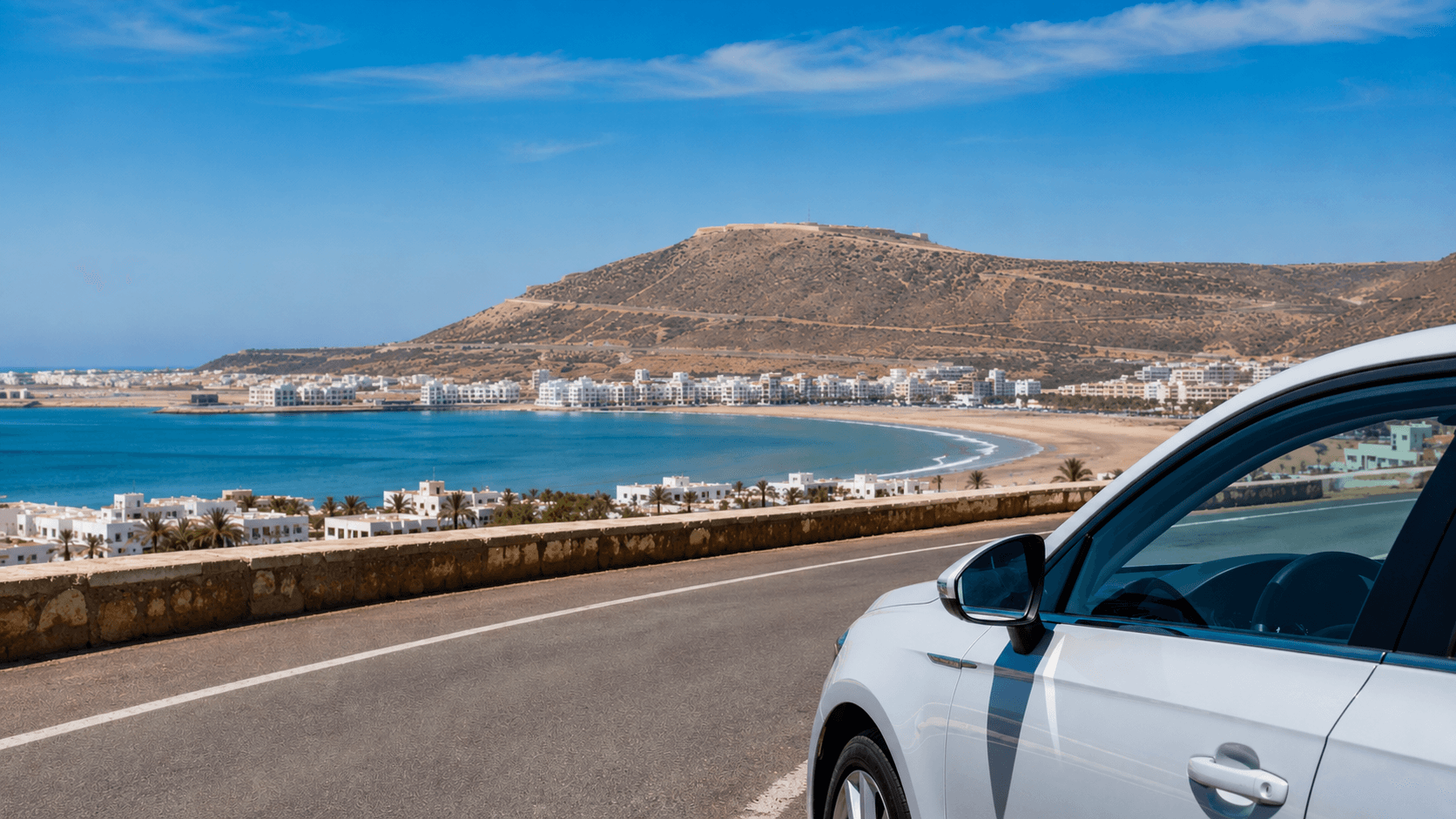









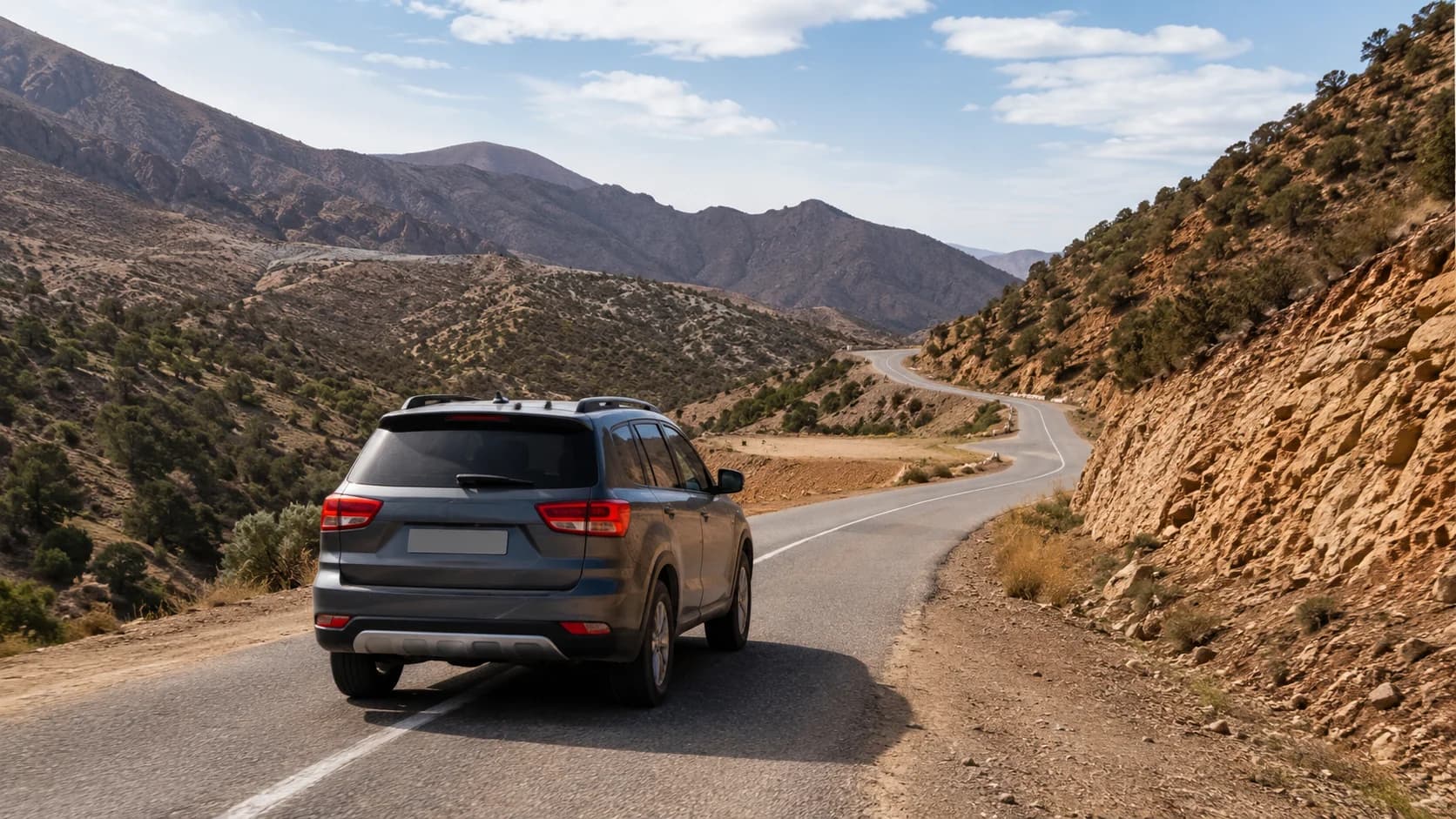
Mountain driving from Agadir can be one of the most rewarding ways to explore southern Morocco. Within a relatively short drive of the coast, the landscape changes from wide urban roads and plains to valleys, hillsides, villages, winding mountain roads and sections of the Anti-Atlas and High Atlas.
For visitors renting a car, the main question is often whether they need a sedan, SUV or 4x4. The answer depends less on the word “mountain” and more on the actual road you plan to use.
Many established mountain routes around Agadir are paved and can be driven comfortably in a normal passenger car when road and weather conditions are good. Other routes may involve rough surfaces, damaged edges, steep access roads or unpaved pistes where additional ground clearance becomes more useful.
This guide explains how to prepare for mountain driving from Agadir, choose the right rental vehicle and adapt your driving to gradients, bends, changing visibility and road conditions.
What Car Do You Need for Mountain Driving from Agadir?
For most paved mountain roads near Agadir, you do not automatically need an SUV or 4x4.
A sedan can be suitable for maintained paved roads in normal weather. An SUV provides extra ground clearance, a higher driving position and additional comfort on uneven surfaces. A 4x4 becomes more relevant when the planned route includes genuinely rough or unpaved roads and when the rental agreement specifically permits that type of driving.
The safest approach is to choose the vehicle according to the road you will actually use rather than assuming every mountain journey requires an off-road vehicle.
What Mountain Driving from Agadir Is Like
Driving away from Agadir toward mountain areas can feel very different from driving along the Atlantic coast.
Mountain roads may include:
-
longer climbs and descents
-
repeated bends
-
narrower carriageways
-
limited overtaking opportunities
-
occasional rough road edges
-
village traffic
-
cyclists, pedestrians or animals
-
changes in visibility
-
fewer fuel stations and services
This does not mean the roads are necessarily difficult.
A large proportion of commonly travelled routes connecting towns and established villages are paved. The main difference is that drivers need to reduce speed and think farther ahead than they might on a straight main road.
The most useful skill in the mountains is not aggressive acceleration or having the largest possible vehicle. It is smooth, predictable driving.
Approach bends carefully, leave additional following distance and avoid rushing simply because a navigation app gives you an estimated arrival time.
Paved Mountain Roads vs Unpaved Pistes
One of the biggest misunderstandings about mountain roads in Morocco is that “mountain road” automatically means “off-road.”
It does not.
Paved mountain roads
Many mountain roads used by residents, taxis, delivery vehicles and tourists are surfaced roads.
They may still contain:
-
uneven sections
-
potholes
-
broken shoulders
-
gravel near road edges
-
sharp bends
-
occasional roadworks
However, these conditions are very different from driving on a true unpaved piste.
If your itinerary stays on established paved roads, a conventional rental vehicle may be perfectly adequate.
Unpaved pistes
A piste is an unpaved track or road. Conditions can range from relatively firm gravel to rough surfaces requiring significantly more ground clearance and experience.
The important issue is not only whether your vehicle is physically capable of driving there.
Your rental agreement may restrict driving on unpaved roads.
Before planning a piste, confirm directly with the rental company whether the route is permitted.
Do not assume that renting a 4x4 automatically gives permission to take the vehicle anywhere.
Choosing a Sedan, SUV or 4x4
The best vehicle for mountain roads around Agadir depends on the route, passenger load, luggage and road surface.
Sedan
A sedan rental in Agadir can be a practical option when your route follows normal paved roads.
A sedan is particularly suitable when:
-
the roads are paved
-
weather conditions are normal
-
you are travelling between established towns or villages
-
you do not need unusually high ground clearance
-
you want a comfortable vehicle for both highway and mountain driving
Sedans can also be more comfortable than expected on longer intercity journeys because of their stable road behaviour and luggage capacity.
The main limitation is clearance. Very rough surfaces, deep potholes or broken access tracks may be less suitable.
SUV
An SUV rental in Agadir can provide a useful balance between everyday road comfort and additional clearance.
An SUV may be preferable when:
-
some sections could be uneven
-
you want a higher seating position
-
you are travelling with more luggage
-
you expect long mountain journeys
-
you want additional clearance without necessarily needing off-road capability
An SUV can make rougher paved sections more comfortable, but it does not eliminate the need to drive slowly over damaged surfaces.
It is also important to remember that SUV does not automatically mean four-wheel drive.
4x4
A 4x4 rental in Agadir makes the most sense when the planned itinerary genuinely requires additional traction or clearance.
Examples might include authorized routes involving rough unpaved sections or particularly demanding access roads.
However, choosing a 4x4 should not be seen as permission to attempt unsuitable terrain.
Vehicle capability, driver experience, weather conditions and rental restrictions all matter.
For normal paved Atlas or Anti-Atlas roads, a 4x4 is often unnecessary.
Braking and Downhill Control
Long descents require a different driving technique from normal flat roads.
One of the most important principles is to avoid relying continuously on the brake pedal for an extended downhill section.
Repeated heavy braking can generate heat in the braking system.
Instead, maintain a sensible speed before the descent becomes steep and use an appropriate lower gear where necessary so the engine helps control vehicle speed.
For a manual car, this normally means selecting a lower gear before speed begins increasing excessively.
For an automatic vehicle, some cars provide lower-gear, manual-selection or hill-control modes. The exact system depends on the vehicle.
Avoid shifting into neutral while descending.
Keep enough distance from the vehicle ahead so you are not repeatedly braking every time the other driver slows.
The goal is smooth speed control rather than alternating between acceleration and hard braking.
Road Width, Bends and Visibility
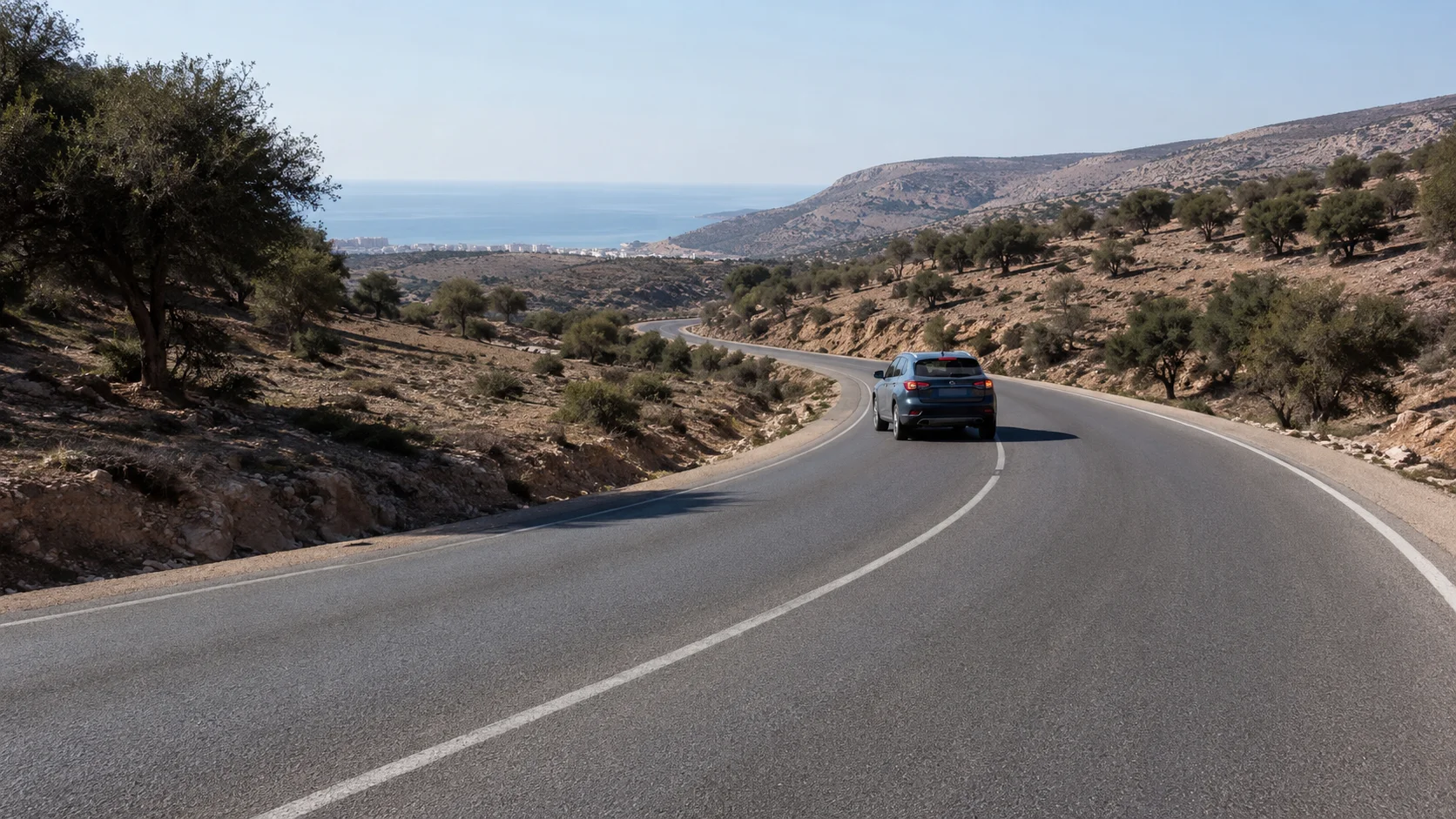
Mountain roads frequently provide less visibility than straight roads around Agadir.
A bend may hide:
-
an approaching car
-
a cyclist
-
a pedestrian
-
an animal
-
a slow truck
-
roadworks
-
stones or debris
Reduce speed before entering the bend instead of braking sharply halfway through it.
Stay within your lane and avoid cutting across the centre of the road simply because the road appears empty.
Narrow road sections
Some smaller roads can become noticeably narrower.
When approaching another vehicle, reduce speed early and identify a safe passing point rather than trying to squeeze through at normal speed.
Extra care is particularly important around buses, vans and trucks because they may need additional space through tight bends.
Overtaking
Visibility should determine whether an overtake is safe, not impatience.
If you cannot clearly see enough road ahead, remain behind the slower vehicle.
On winding mountain roads, waiting several minutes for a safer opportunity is far better than attempting to overtake near a blind corner.
Weather and Daylight Planning
Weather can change road conditions quickly in mountain environments.
Rain can reduce grip and visibility, while strong wind, fog or unusual winter conditions may make sections more demanding.
Before leaving Agadir, check the weather for the mountain area itself rather than looking only at the forecast for Agadir.
Conditions near the coast and at elevation may be very different.
Morocco's official Direction Générale de la Météorologie publishes weather information and vigilance alerts. Its vigilance information is updated during the day and covers potentially hazardous conditions including heavy rain, thunderstorms, strong winds, cold and snow.
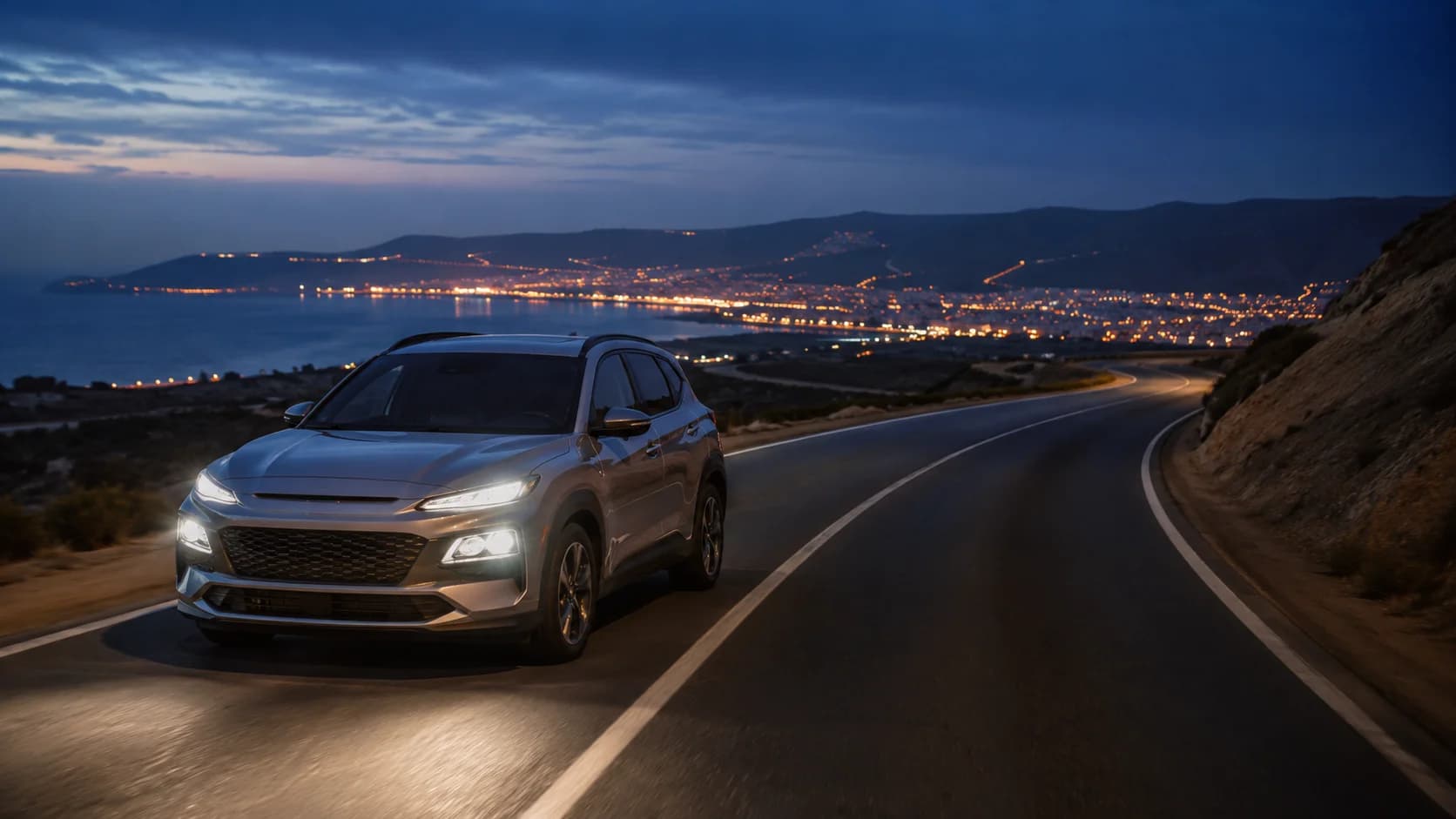
Try to arrive before dark
Drivers unfamiliar with the route will usually find mountain driving easier during daylight.
Daylight helps you identify:
-
road edges
-
potholes
-
bends
-
junctions
-
pedestrians
-
animals
-
changes in road surface
It also makes navigation easier in smaller villages.
If your journey takes longer than expected, do not feel obligated to continue simply because the original itinerary says you should arrive at a particular time.
Changing the plan can be the safer decision.
Fuel, Navigation and Stops
Preparation becomes more important as you move away from larger towns.
Refuel before you need to
Do not wait until the fuel warning light appears.
Fuel stations become less frequent on some rural routes, so beginning a mountain trip with sufficient fuel gives you more flexibility if you take a wrong turn or change your itinerary.
A useful habit is to refill whenever you have a convenient opportunity before entering a more remote area.
Download offline maps
Mobile coverage can vary.
Offline navigation is therefore valuable even if you expect to have mobile data throughout the journey.
Download the relevant map area before leaving Agadir.
However, navigation apps should be treated as guidance rather than absolute authority.
If an app suggests leaving an obvious paved road for a narrow or unsuitable track simply because it appears shorter, stop and verify the route.
The fastest route calculated digitally is not always the most appropriate route for a rental car.
Carry basic supplies
For longer journeys, consider carrying:
-
drinking water
-
a phone charging cable
-
a power bank
-
basic snacks
-
warm clothing during cooler periods
-
the rental company's contact information
For remote drives, tell someone roughly where you are going and when you expect to arrive.
Mountain-Drive Checklist
Before starting mountain driving from Agadir, run through a simple preparation check.
Confirm your route. Determine whether the journey is paved or includes any piste.
Check your rental conditions. Confirm whether unpaved driving is permitted if your itinerary includes it.
Choose the right vehicle. Do not book a 4x4 simply because the destination is in the mountains, but do not choose a low-clearance car for a genuinely rough route.
Inspect the tyres. Look for obvious damage and make sure they appear properly inflated.
Check fuel. Start remote sections with a comfortable fuel reserve.
Download offline navigation. Save the relevant region before leaving the city.
Check mountain weather. Do not rely solely on Agadir's coastal forecast.
Plan daylight. Give yourself enough time to complete unfamiliar mountain sections before dark.
Drive smoothly. Reduce speed before bends and descents instead of reacting suddenly.
Leave flexibility in your itinerary. Weather, roadworks or road conditions may justify turning back or changing route.
When Should You Change Your Plans?
Mountain driving should not become a test of whether the vehicle can physically continue.
Change or postpone your route when conditions exceed what you are comfortable handling.
Examples include:
-
very poor visibility
-
unexpectedly severe weather
-
flooding or water crossing a road
-
a damaged or blocked road
-
a navigation route turning into an unsuitable track
-
continuing after dark when you are uncomfortable with the road
-
surfaces prohibited by your rental agreement
Turning around is a normal part of responsible route planning.
FAQs About Mountain Driving from Agadir
Do I need an SUV for mountain roads near Agadir?
Not necessarily. Many established mountain roads are paved and can be driven in a normal passenger car. An SUV becomes useful when additional clearance, luggage capacity or comfort on uneven surfaces is important.
Can a sedan handle paved mountain roads?
Yes. A well-maintained sedan can normally handle paved mountain routes when road and weather conditions are suitable. Choose your vehicle according to the actual route rather than the elevation alone.
When is a 4x4 actually necessary?
A 4x4 is most relevant when the permitted route includes genuinely rough terrain or conditions requiring additional clearance or traction. It is generally unnecessary for standard paved mountain roads.
Are mountain roads near Agadir narrow?
Some are. Main roads may be relatively comfortable, while smaller rural roads can become narrower and more winding. Reduce speed and give larger vehicles enough room.
How should I drive downhill safely?
Enter the descent at a controlled speed, use an appropriate lower gear when necessary and avoid continuous heavy braking. Maintain additional distance from the vehicle ahead.
Should I avoid mountain driving after dark?
For unfamiliar routes, daylight is usually preferable. Darkness makes bends, road edges, animals, pedestrians and changes in the road surface harder to identify.
What should I do if weather changes?
Reduce speed and reassess the route. If visibility, road conditions or weather become uncomfortable, stopping, turning around or postponing the journey may be the better decision.
Is offline navigation useful in mountain areas?
Yes. Downloading maps before departure is useful because mobile coverage can vary. Always verify unexpected shortcuts before leaving an established paved road.
What should I check before a mountain trip?
Check your route, fuel level, tyres, weather, daylight available, offline maps and the rental company's rules regarding unpaved roads.
Can I take a rental car onto unpaved pistes?
Only if your rental agreement permits it and the vehicle is suitable for the route. Never assume that renting an SUV or 4x4 automatically allows unrestricted off-road driving.
Choose the Vehicle for the Road You Will Actually Drive
Mountain driving from Agadir does not automatically require a large SUV or dedicated off-road vehicle.
For maintained paved roads, a sedan may provide everything you need. An SUV can offer extra clearance and comfort for more varied road conditions, while a 4x4 is better reserved for itineraries where its additional capability is genuinely required and permitted.
The most important preparation is understanding your route before departure.
Choose a vehicle based on road surface, passenger needs and luggage rather than simply choosing the largest option available. Check the weather, carry enough fuel, download offline maps and leave enough daylight for unfamiliar mountain sections.
MarHire Car Agadir offers SUV rental in Agadir, sedan rental in Agadir and 4x4 rental in Agadir, helping you select a vehicle that matches the journey you actually plan to drive, with clear guidance and unlimited kilometres on eligible rentals.