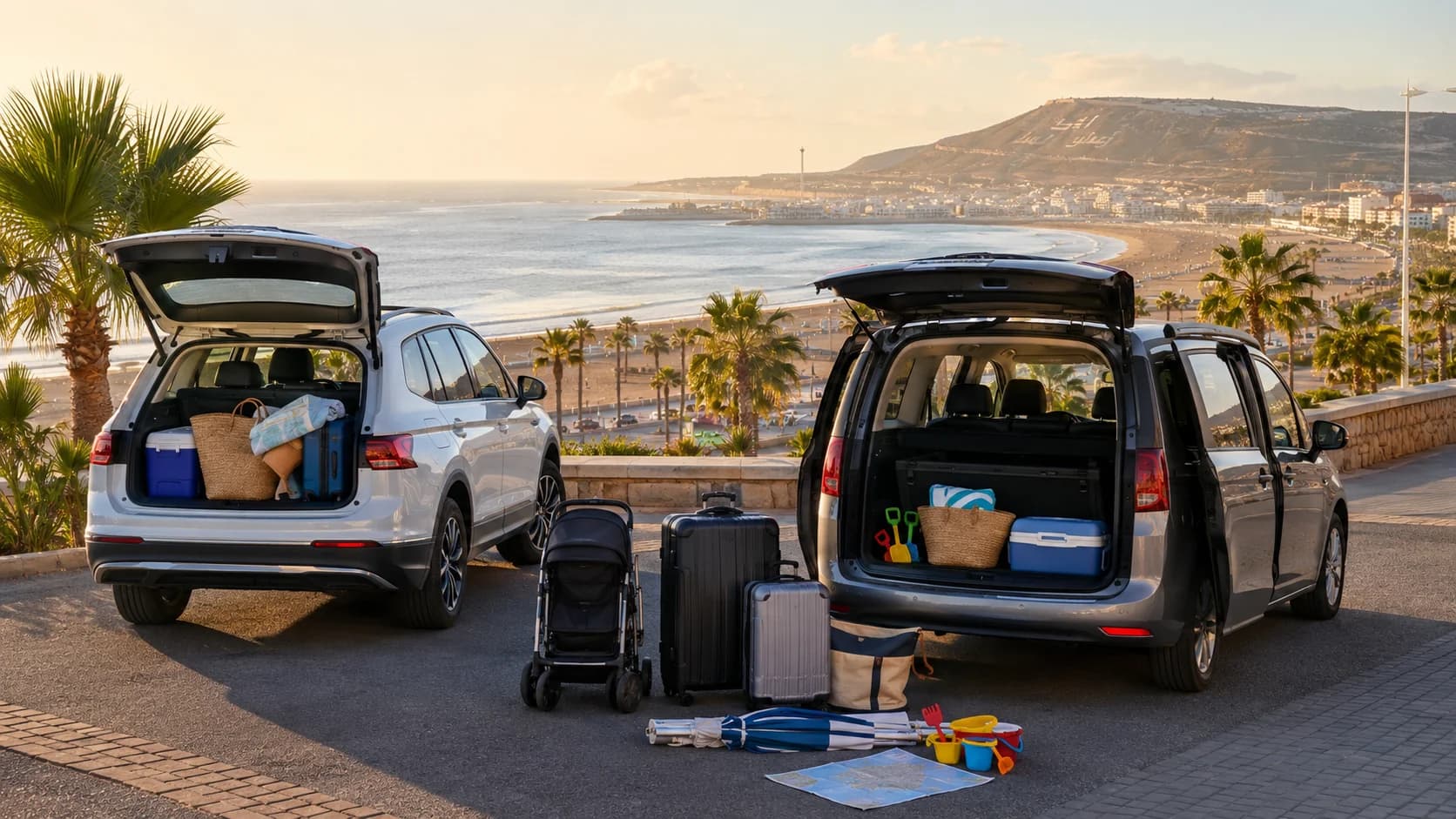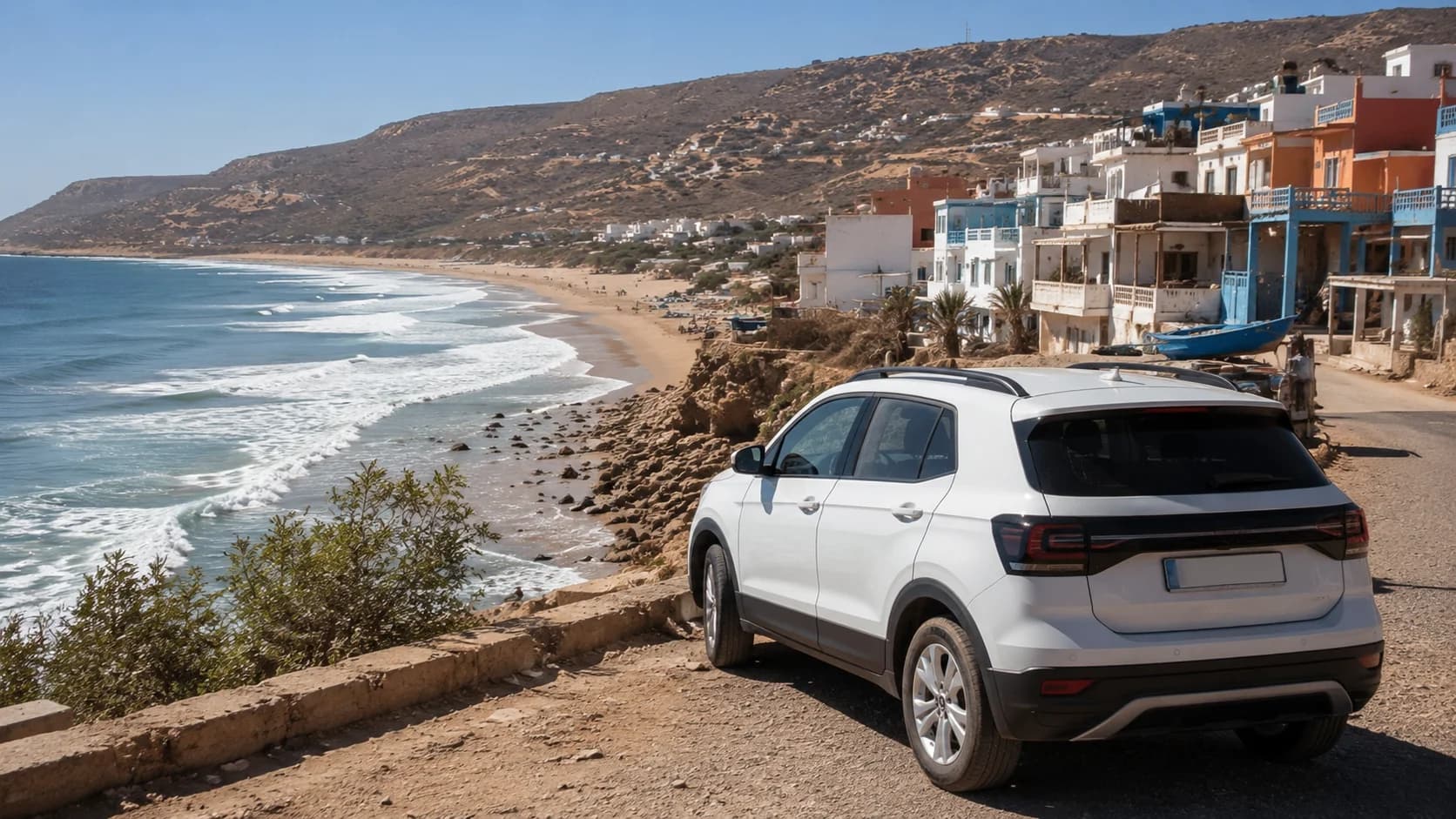





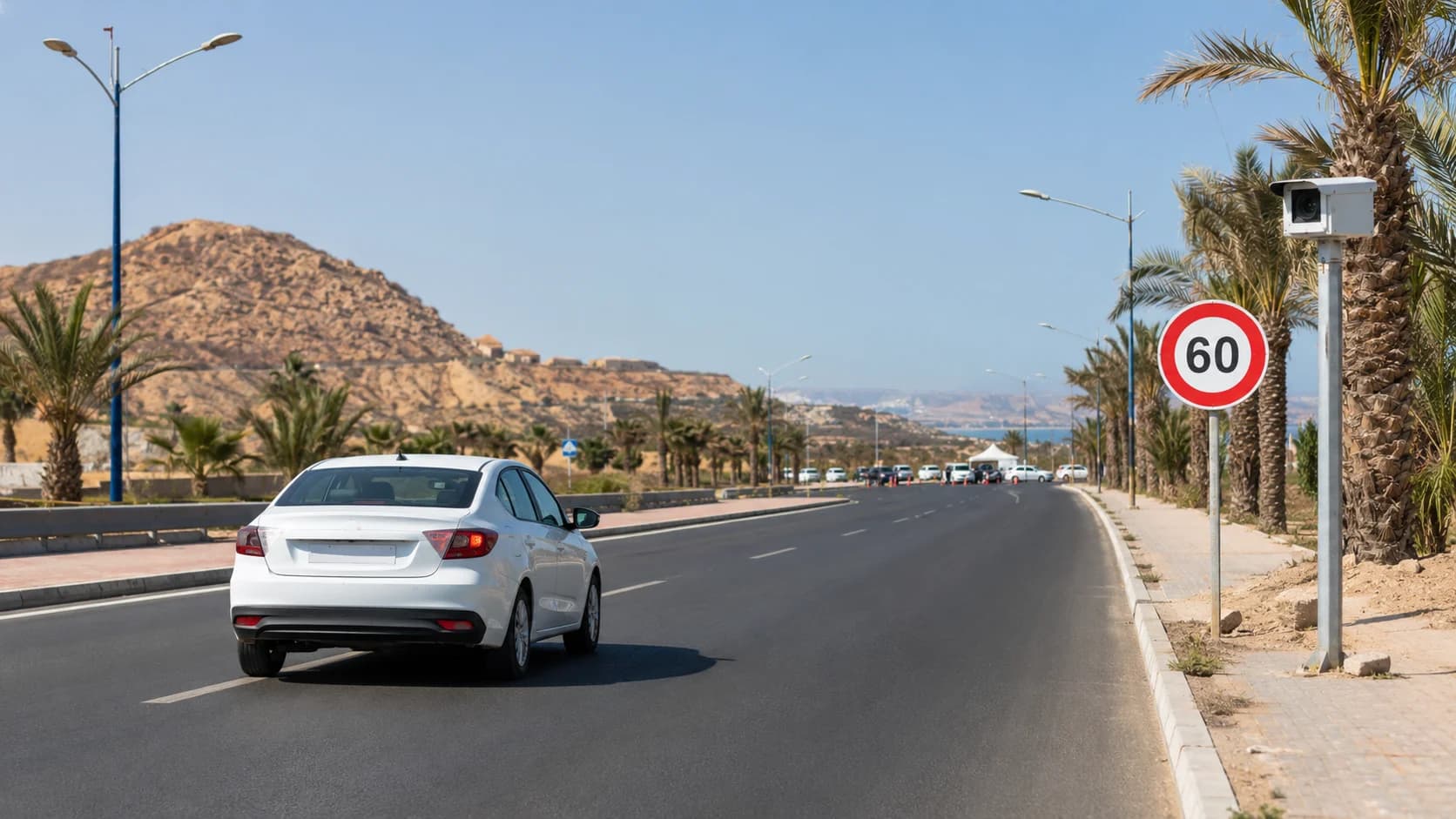
Driving around Agadir is usually calm compared with bigger Moroccan cities, but speed rules, radars and police checkpoints are taken seriously. For tourists, the key is simple: follow posted signs, slow down before towns and roundabouts, keep your rental documents ready, and never treat an open road as a reason to rush. Morocco’s standard limits are commonly shown as 20, 40 or 60 km/h in urban areas, 80 or 100 km/h on national roads depending on the route, and 120 km/h on motorways. NARSA’s road-safety material lists these common speed-limit categories, while Autoroutes du Maroc also reminds drivers not to exceed 120 km/h on motorways.
Morocco’s Standard Speed Limits
The most useful rule for visitors is to drive according to the sign in front of you, not only the general road category. Still, Morocco’s standard speed limits are easy to remember once you know the pattern.
In built-up areas, expect 60 km/h as the maximum city limit, with lower posted limits of 40 km/h, 30 km/h or even 20 km/h in tighter zones, school areas, busy junctions and residential streets. In and around Agadir, this matters near beach roads, roundabouts, hotel areas, markets, busier boulevards and entrances to nearby towns.
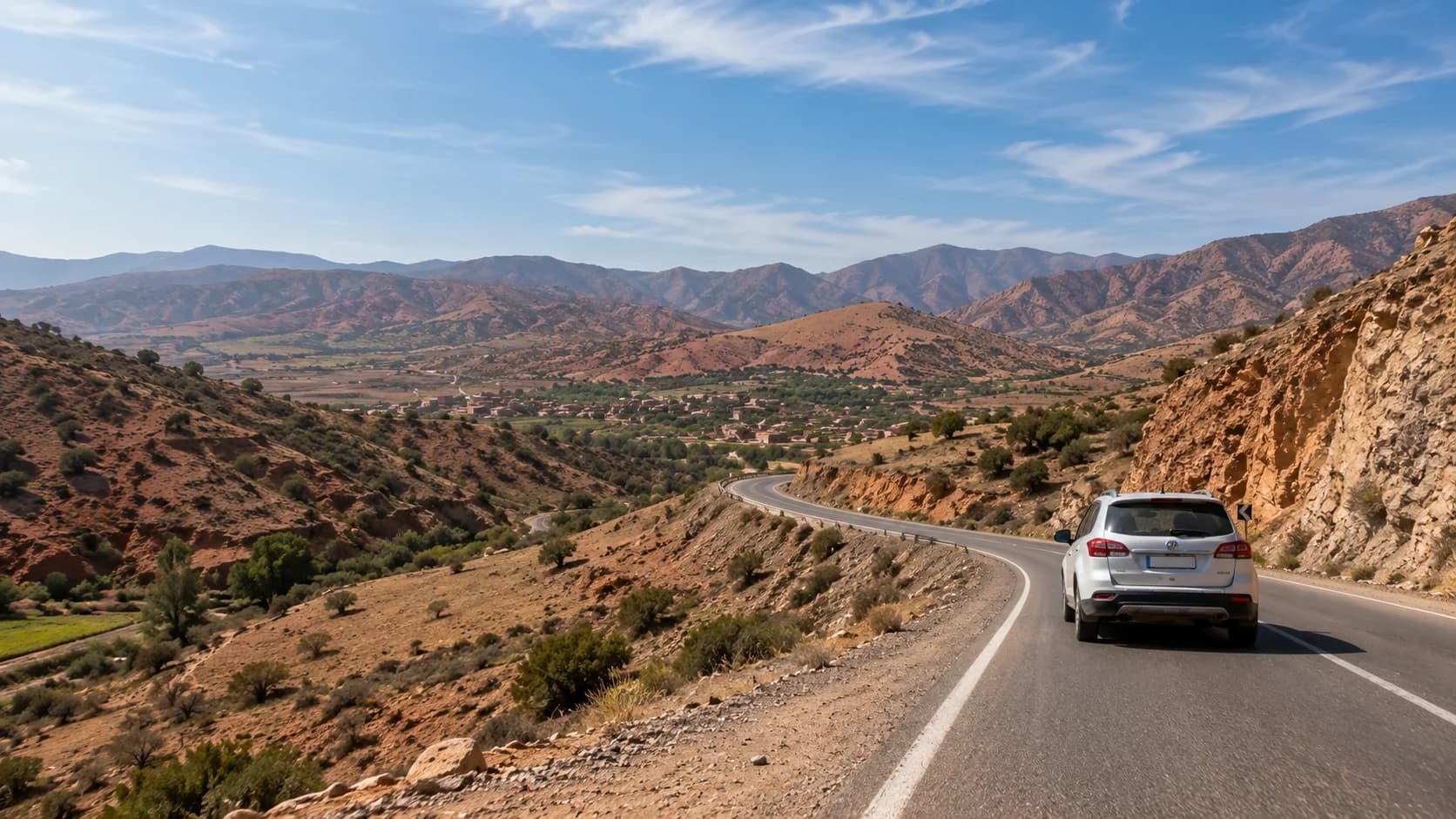
On national roads outside cities, the limit is often 80 or 100 km/h depending on the road and signage. Many tourists assume every open road is 100 km/h, but that is risky. A road can feel wide and quiet, then pass through a village, a school zone or a police-controlled entry point where the limit drops quickly.
On motorways, the common maximum limit is 120 km/h. ADM, the Moroccan motorway operator, also communicates that motorway driving should stay within safe motorway rules, including respecting 120 km/h as the maximum and 80 km/h as a lower minimum in normal conditions.
Where Limits Drop Suddenly Around Agadir
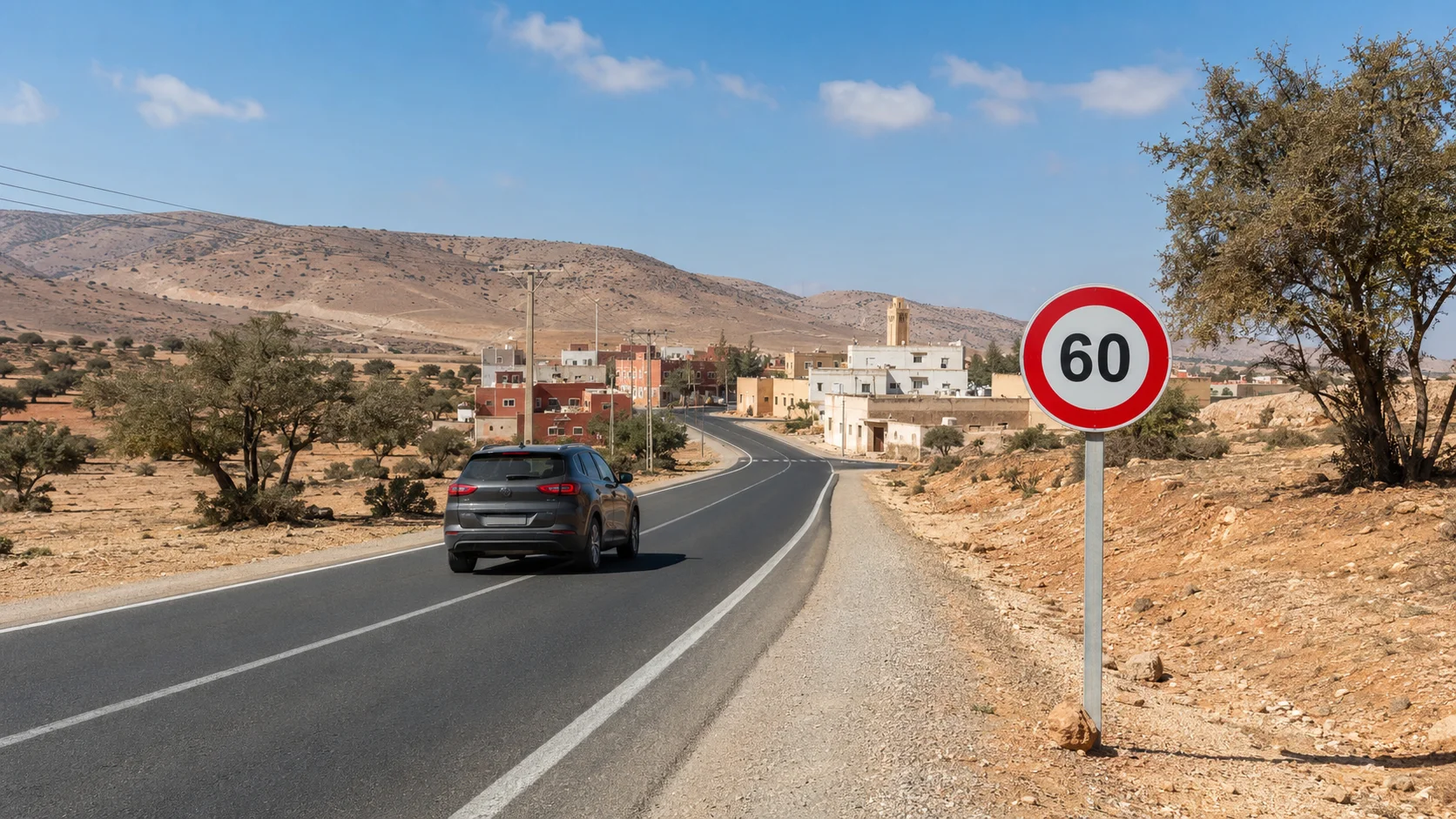
The biggest fine risk near Agadir is not usually the long road itself. It is the transition from one speed zone to another. You may be driving comfortably at 80 or 100 km/h, then enter a town entrance, roundabout, traffic-light zone or roadside market where the limit falls to 60, 40 or lower.
Inezgane is one of the most important places to slow down. It is busy, connected to many routes, and has a mix of taxis, buses, pedestrians, commercial vehicles and local traffic. Even when the road looks like a through-route, it is better to treat Inezgane as a slow urban area.
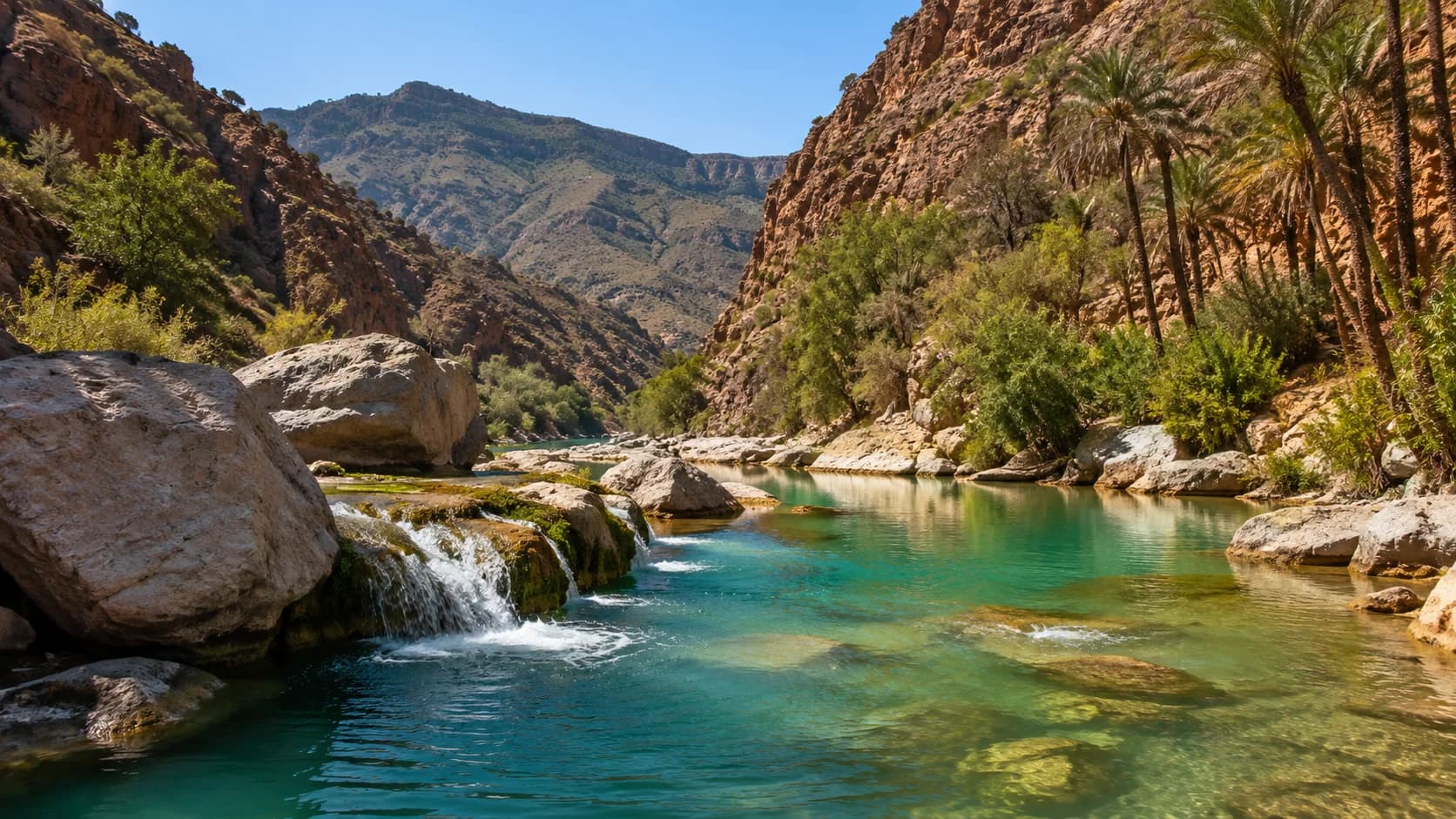
Limits can also drop near Ait Melloul, Drarga, village entries on the road toward Taghazout or Paradise Valley, and junctions leading toward Tiznit or Taroudant. School zones, mosques, markets, pedestrian crossings and roadworks are also places where you should expect slower traffic and stricter attention.
A good habit is to lift off the accelerator as soon as you see buildings, shops, speed-limit signs, a roundabout, parked taxis or pedestrians near the road. In Morocco, many speed cameras and checkpoints are placed where drivers fail to reduce speed after a faster section.
Speed Cameras and How Strictly They Are Enforced
Speed cameras in Morocco include fixed radars, mobile radars and checkpoint-linked controls. Around Agadir, you should expect enforcement on main roads, city exits, village entries, national roads and faster routes where drivers often continue above the posted limit.
Tourists sometimes think small speeding is ignored, but Morocco does enforce speed rules. NARSA Services lists speeding fine brackets based on how much the driver exceeds the limit, including less than 20 km/h over, more than 20 and less than 30 km/h over, and higher categories. The listed payment amounts vary depending on payment timing, so the amount can increase if it is not paid quickly.
Radar enforcement is not always visible. A mobile radar may be placed before a checkpoint, with officers stopping vehicles further ahead. In other cases, a fixed camera may register the vehicle and the fine can later appear in the vehicle record. NARSA’s official “Infraction Routière” app description says it can show registered radar infractions, the notice, the radar photo and payment status for vehicles registered in Morocco.
Police Checkpoints in Morocco
Police checkpoints in Morocco are normal and should not make you nervous. They are common near city entrances, roundabouts, main roads, port areas, airports and regional routes. Around Agadir, you may see checkpoints when entering or leaving busy areas, especially on roads toward Inezgane, Ait Melloul, Taghazout, Tiznit and Taroudant.
At a checkpoint, slow down early, keep both hands visible, lower your window and wait for instructions. Sometimes the officer will simply wave you through. Sometimes you may be asked where you are going. If the officer asks you to stop, pull over calmly and safely.
Do not argue, joke aggressively or try to rush the situation. A polite “Bonjour” or “Salam” is enough. If you do not speak French or Arabic, simple English is usually fine in tourist areas. Keep your tone calm and your documents easy to reach.
Most checks are routine. Officers may check the vehicle documents, driver’s licence, rental contract, insurance papers, seat belts, vehicle condition or whether the car was caught by radar earlier on the road.
Documents to Have Ready at a Stop
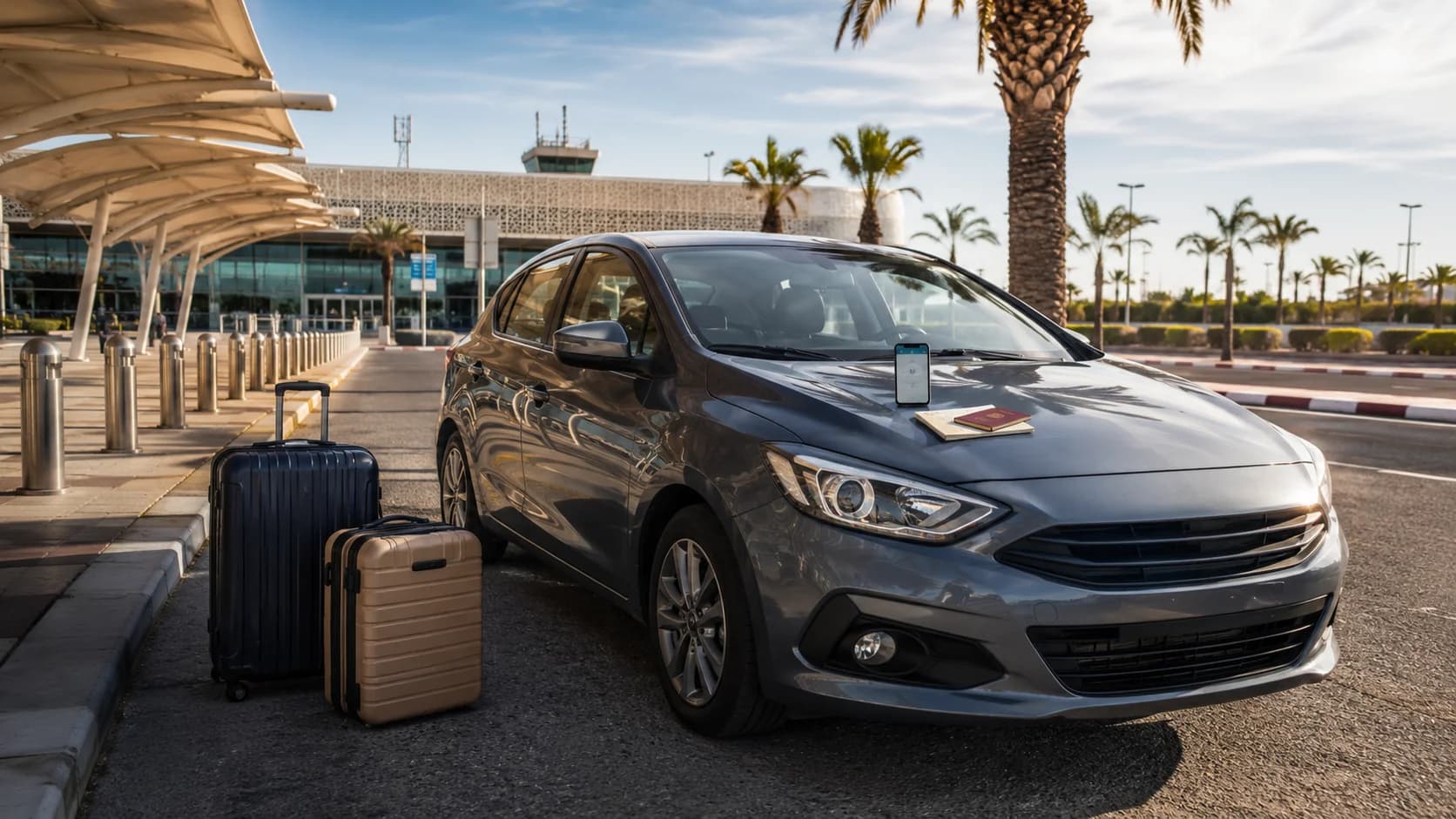
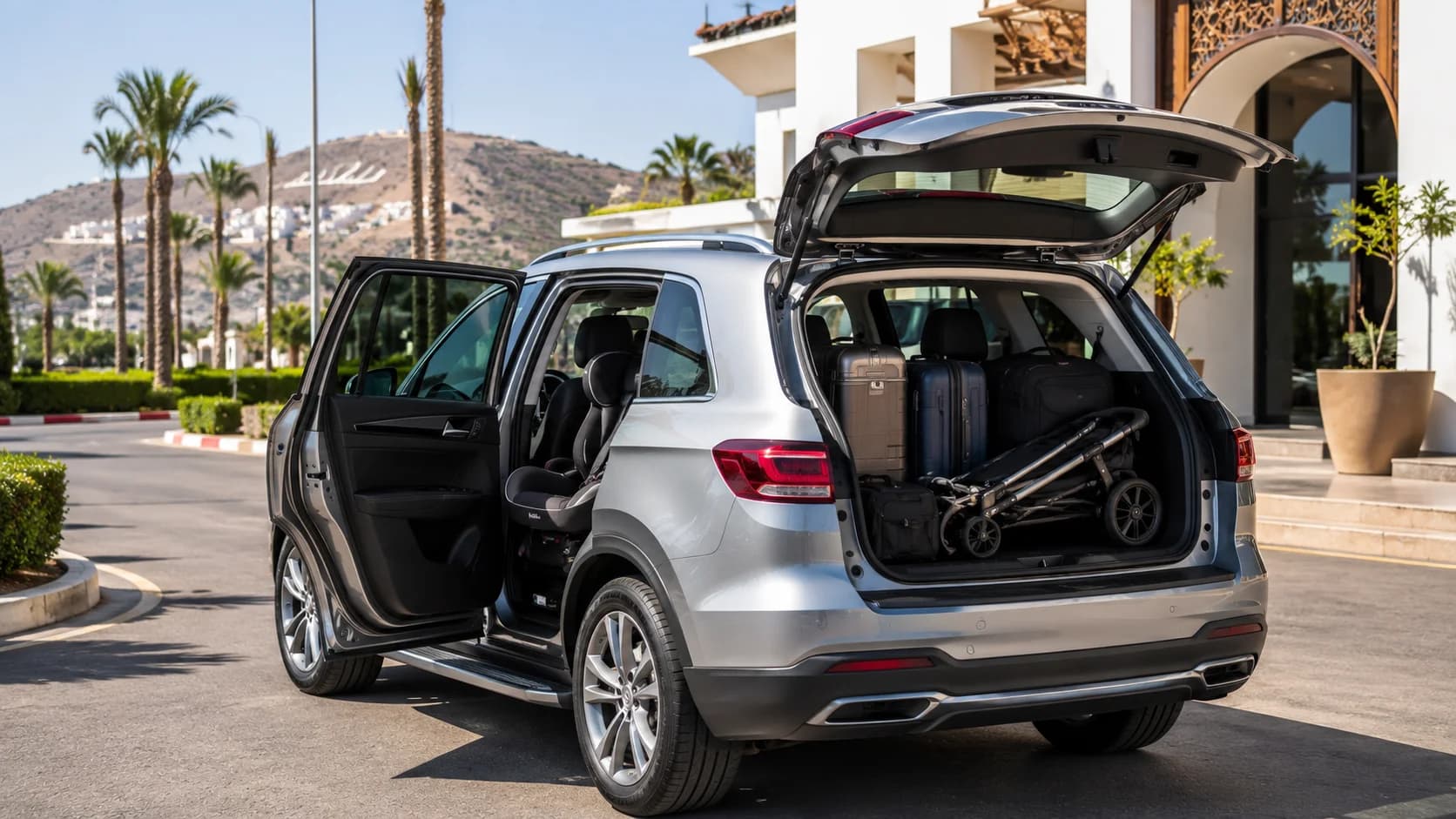
Before leaving Agadir with a rental car, keep the important documents together in the glovebox or a clear folder. You should have your passport or ID, valid driving licence, rental agreement, vehicle registration copy, insurance document and the agency contact number.
For tourists, an International Driving Permit may be useful or required when your licence is not in Latin characters. If your licence is in Arabic, English, French or another Latin-character format, the process is usually easier, but you should still check rental requirements before pickup.
This is why paperwork matters when choosing a rental. A proper agency should provide clear documents, insurance details and support contact information. If you are still preparing your trip, check the requirements to rent a car in Agadir before booking.
On-the-Spot Fines Explained
If you are stopped for speeding or another traffic violation, the officer may issue an official fine. In Morocco, some fines can be paid on the spot or through official payment channels, depending on the type of infraction and how it is processed.
For speeding, NARSA Services shows different brackets. For example, less than 20 km/h over the limit is listed with lower amounts than higher speeding categories, while more than 20 and less than 30 km/h over the limit is listed at a higher bracket. The exact amount can depend on how quickly the fine is paid.
Always ask for an official receipt if you pay. Do not negotiate a private cash amount. Do not hand over money without a proper official process. If you are unsure, contact your rental agency for guidance before making decisions, especially if the situation involves a rental car, radar notice or delayed fine.
If the vehicle is a rental, unpaid radar fines may be linked to the car and later passed to the renter. That is why it is better to handle the situation correctly at the time instead of ignoring it.
Tips to Avoid a Ticket Near Agadir
The best way to avoid a speeding fine in Morocco is not complicated. Drive slightly below the posted limit, especially when you are unfamiliar with the road. Leave a small buffer because speed zones can change quickly, and GPS speed may not always match the exact road sign.
Slow down before every town entrance, not after you are already inside it. Watch for roundabouts, speed bumps, school signs, bus stops, taxi stands and markets. If local drivers suddenly slow down, there is usually a reason.
Do not overtake near checkpoints, bends, hills, junctions or village entries. Do not assume that a quiet road means no radar. On scenic routes near Agadir, such as the coastal road toward Taghazout or the road toward Paradise Valley, it is easy to focus on the view and miss a speed sign.
Keep your documents ready, wear seat belts, avoid phone use while driving and respect stop signs fully. A complete stop is safer than a rolling stop, especially near police-controlled intersections.
For comfortable road trips, many visitors prefer a simple sedan rental in Agadir for stable driving on paved roads. Budget travellers can choose cheap car rental in Agadir, while longer mountain or family routes may be easier with an SUV rental in Agadir.
What to Do If Oncoming Cars Flash Their Headlights
In Morocco, oncoming drivers sometimes flash their headlights to warn about something ahead. It may be a police checkpoint, a speed radar, animals, roadworks, a broken-down vehicle, a hazard or simply a reminder to slow down.
Do not panic and do not brake sharply. Check your mirrors, ease off the accelerator and bring your speed safely within the posted limit. Look for road signs, pedestrians, police signals, speed bumps or stopped traffic ahead.
Never treat flashing headlights as a game of avoiding police. Treat it as a general road warning. The safest reaction is always the same: slow down smoothly, stay alert and drive correctly.
Renting a Rule-Ready Car in Agadir
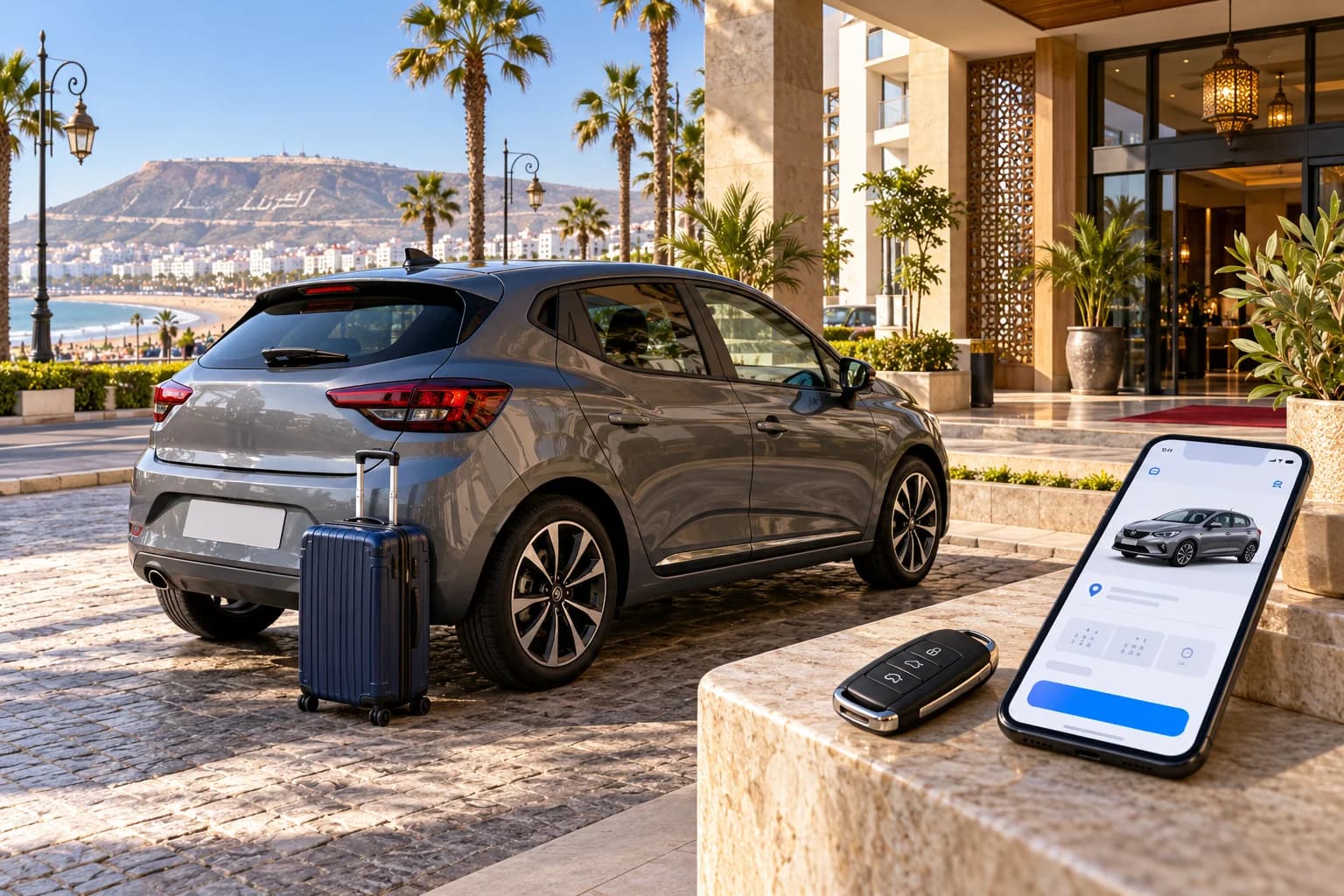
A good rental car makes driving around Agadir easier because the vehicle is prepared, documented and supported. With MarHire Car Agadir, every rental comes with clear paperwork, insurance information and 24/7 WhatsApp support if you ever have a question on the road.
This is especially useful for tourists who are new to Moroccan checkpoints. You know what documents are in the car, who to contact if you are stopped, and how to handle a fine or radar notice correctly.
Drive relaxed and rule-ready. Choose the right vehicle, keep your documents close, respect speed limits in Morocco, and enjoy Agadir’s coast, city roads and day-trip routes with less stress.
FAQs
What is the speed limit in Morocco?
The common limits are 20, 40 or 60 km/h in urban areas, 80 or 100 km/h on national roads depending on signs, and 120 km/h on motorways. Always follow the posted sign because local limits can change quickly.
Are there speed cameras in Morocco?
Yes. Morocco uses fixed and mobile speed cameras. Some are visible, while others may be linked to police checks further along the road.
What happens at a police checkpoint in Morocco?
You slow down, follow the officer’s signal and either continue if waved through or stop if asked. The officer may check your licence, rental papers, insurance documents or ask where you are going.
What documents do I need at a checkpoint?
You should have your driving licence, passport or ID, rental agreement, vehicle documents and insurance papers. For some visitors, an International Driving Permit is also recommended, especially if the licence is not easy to read locally.
How much are speeding fines in Morocco?
The amount depends on how far above the limit you were and when the fine is paid. NARSA Services lists different brackets for less than 20 km/h over the limit, more than 20 and less than 30 km/h over, and higher categories.
Do you pay fines on the spot?
Some traffic fines may be paid immediately through the official process. If you pay at the roadside, ask for an official receipt and keep it.
Are Moroccan police strict with tourists?
Police are usually professional with tourists, but traffic rules still apply. Speeding, missing documents, phone use while driving, seat belt violations and unsafe overtaking can all lead to fines.
Why do oncoming cars flash their headlights?
It often means there is something ahead, such as a radar, police checkpoint, road hazard, animals, speed bump or stopped traffic. Slow down smoothly and pay attention.
Is driving around Agadir difficult?
Agadir is generally easier than Casablanca or Marrakech, but you still need to watch for roundabouts, pedestrians, taxis, sudden speed-limit changes and checkpoints near town entrances.
What should I do if I get a radar fine in a rental car?
Contact the rental agency and ask how the fine should be handled. Do not ignore it, because radar fines can be linked to the rental vehicle record.