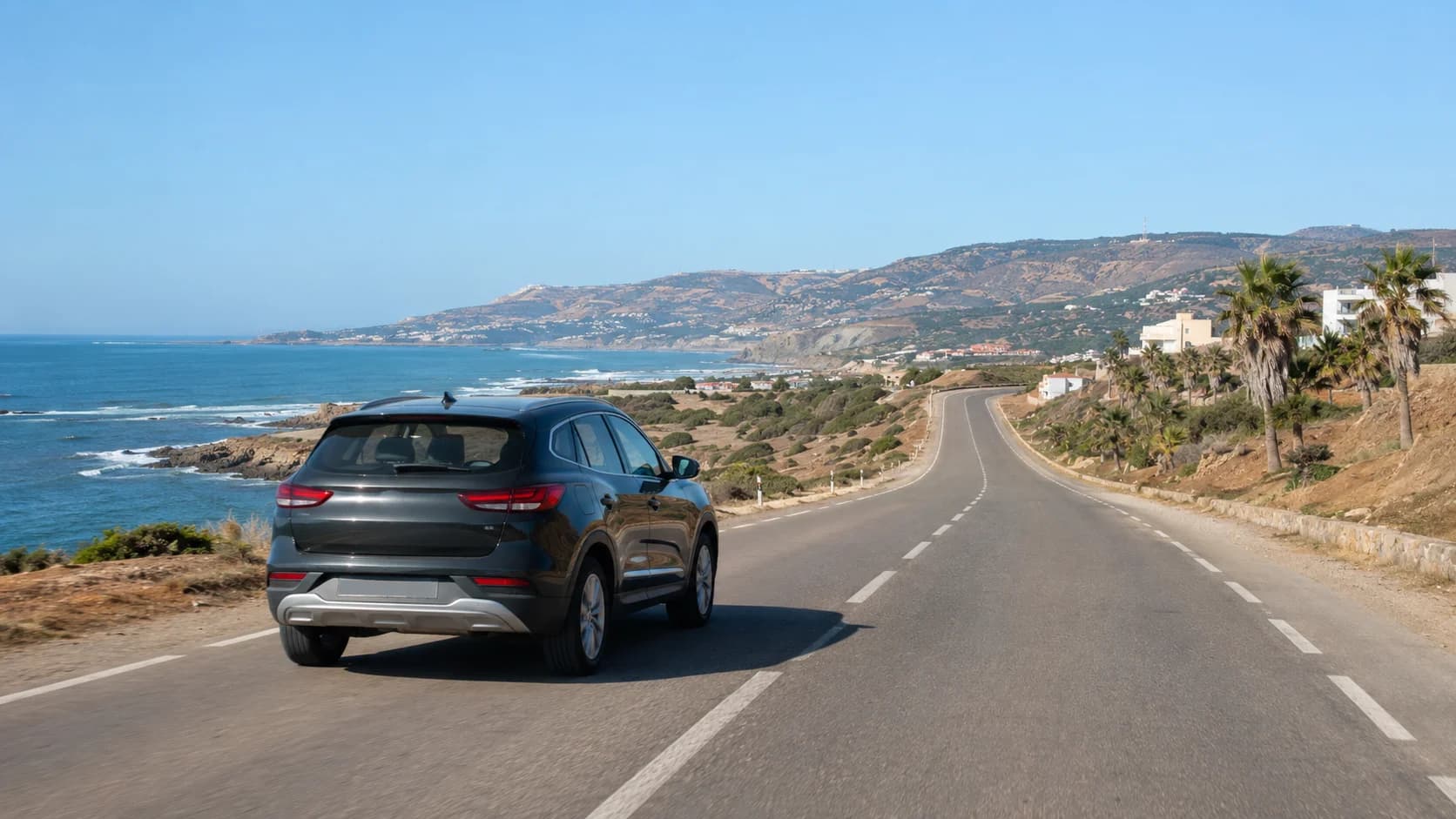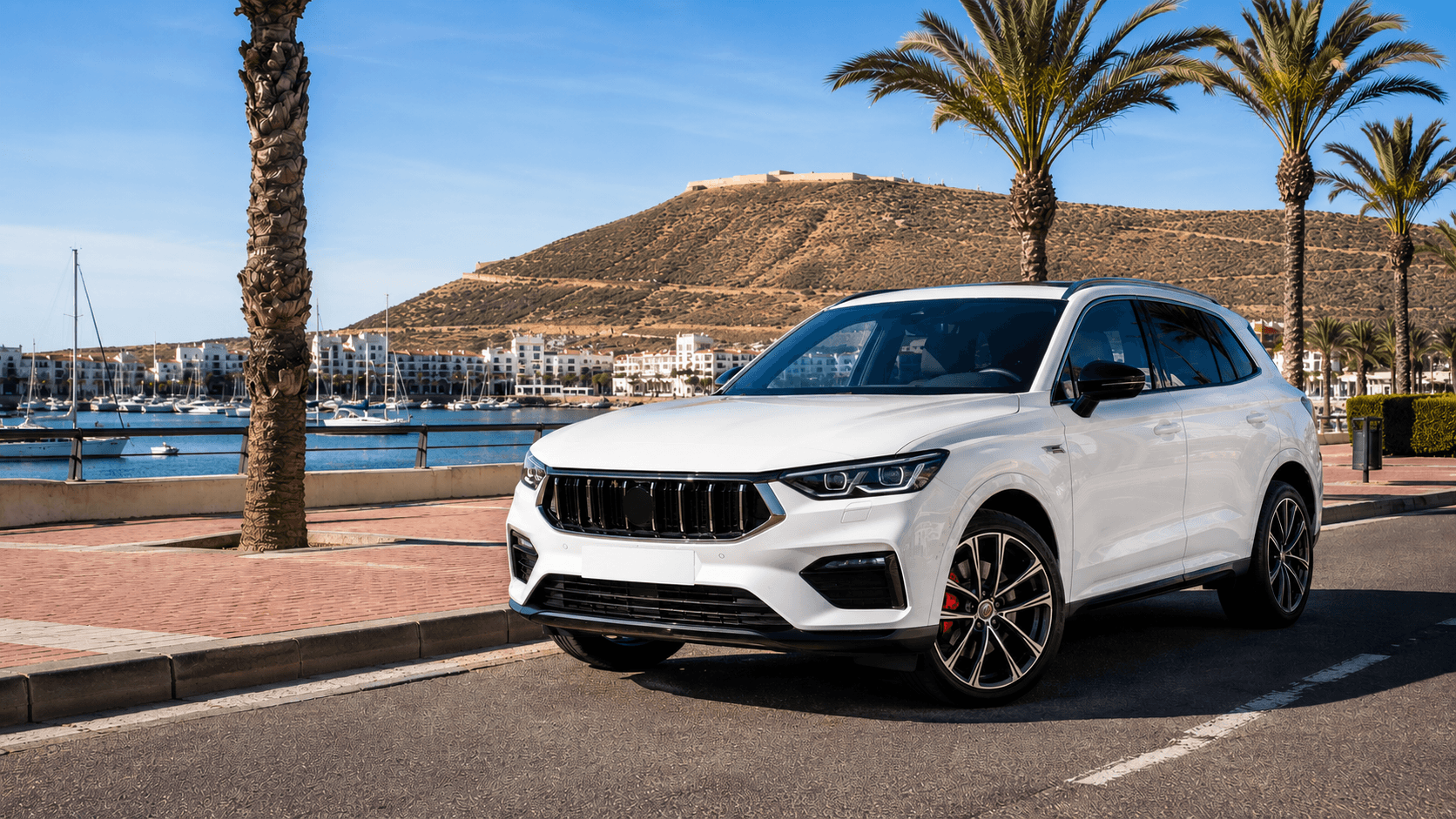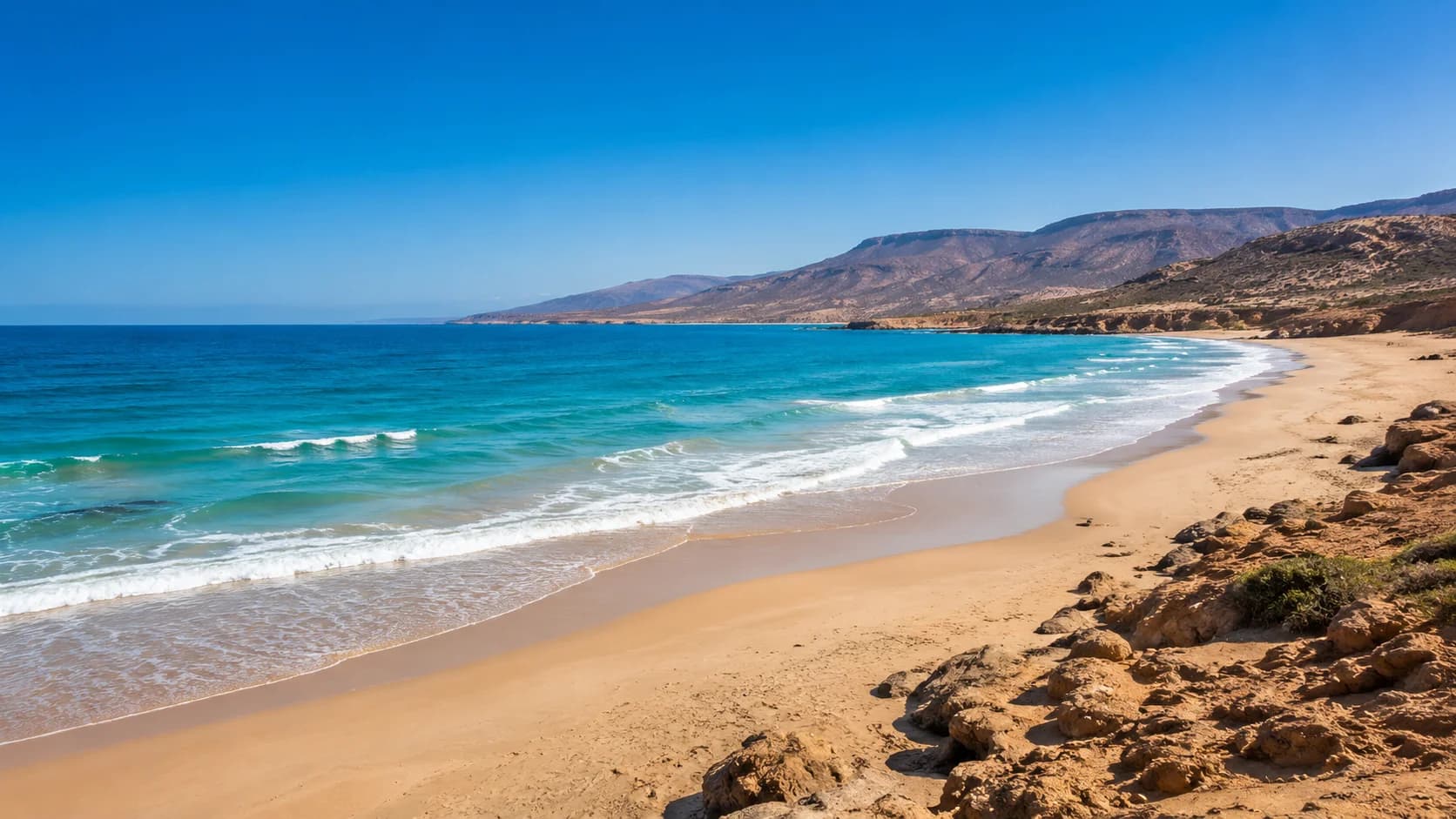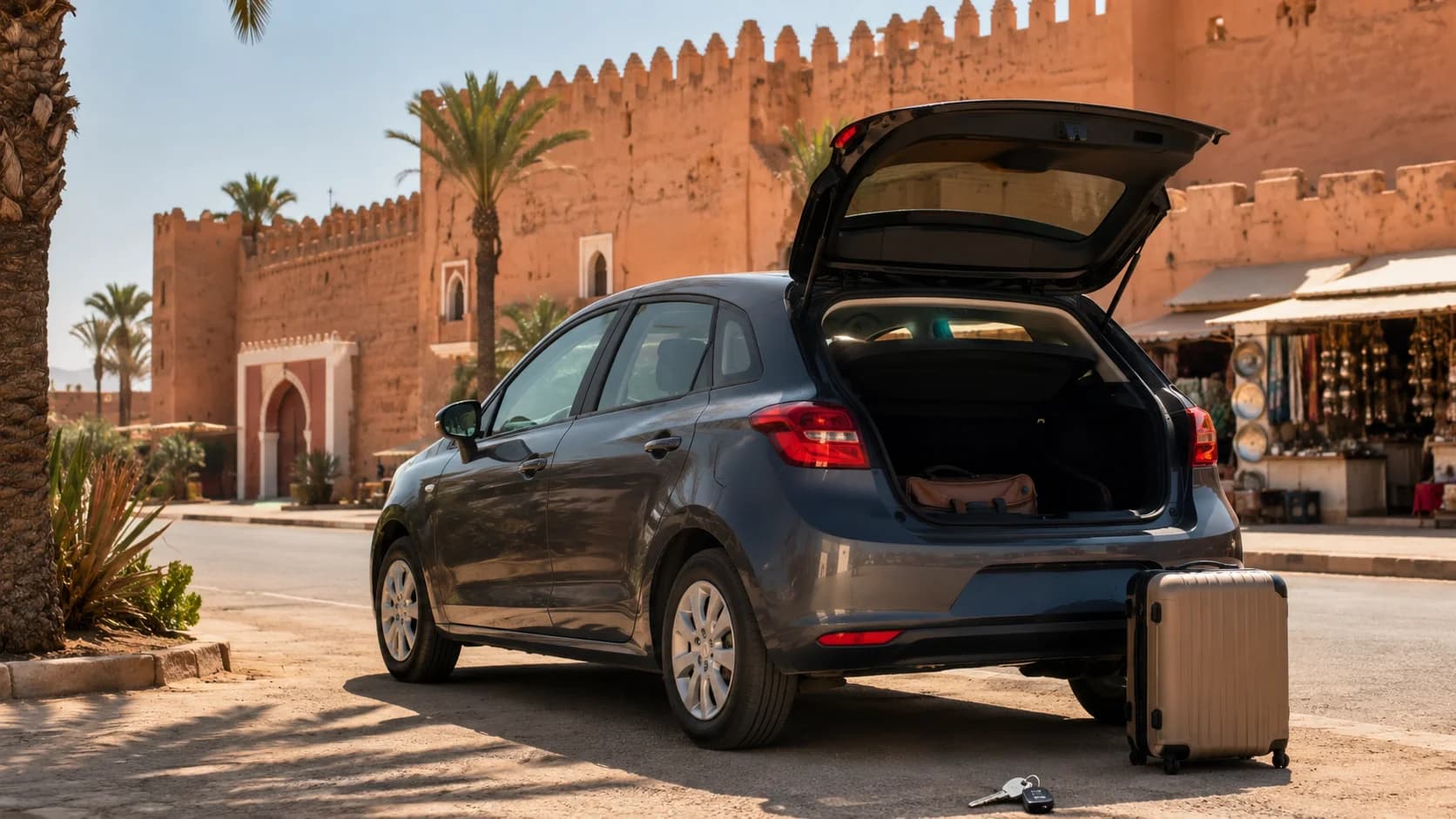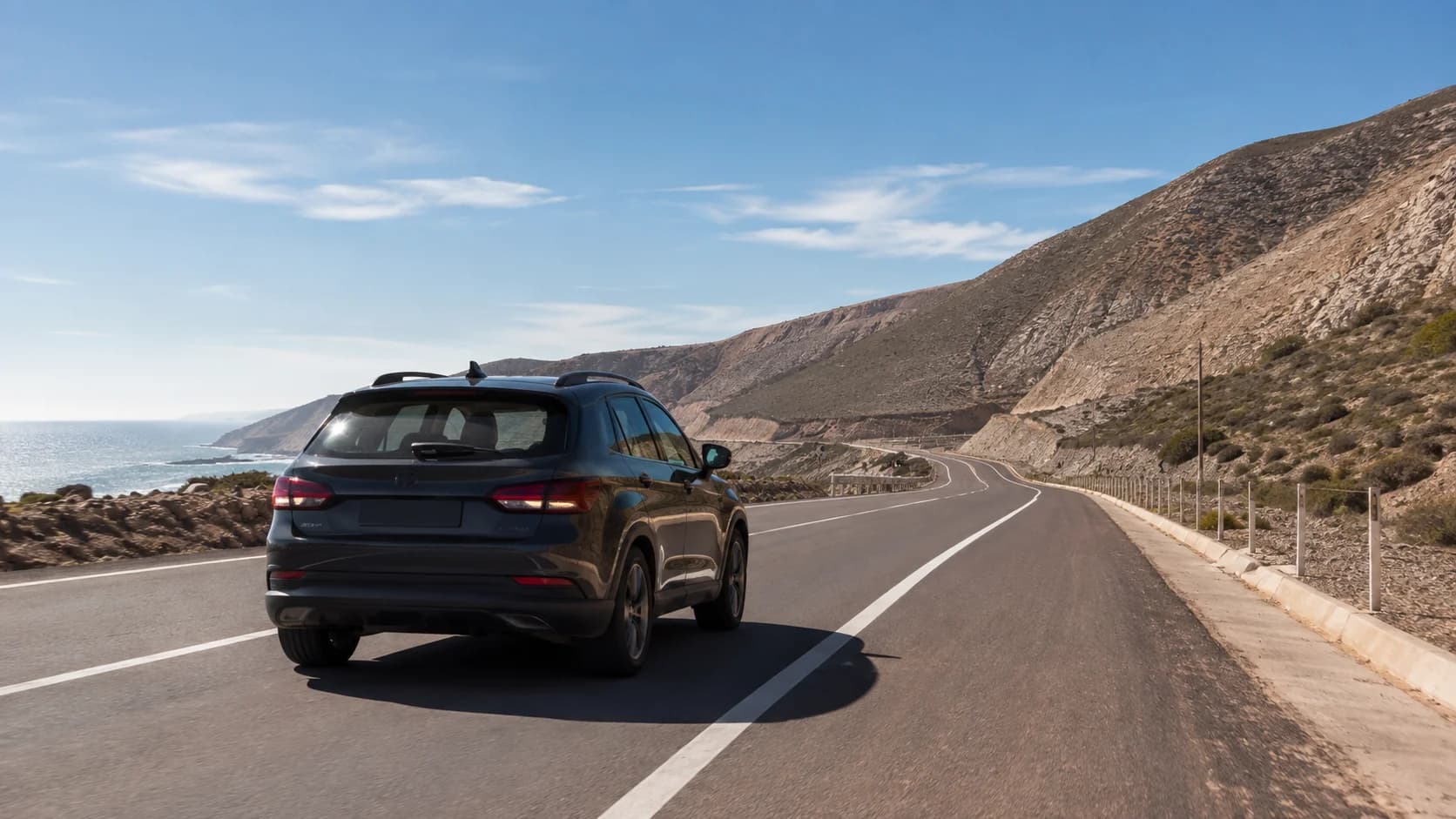









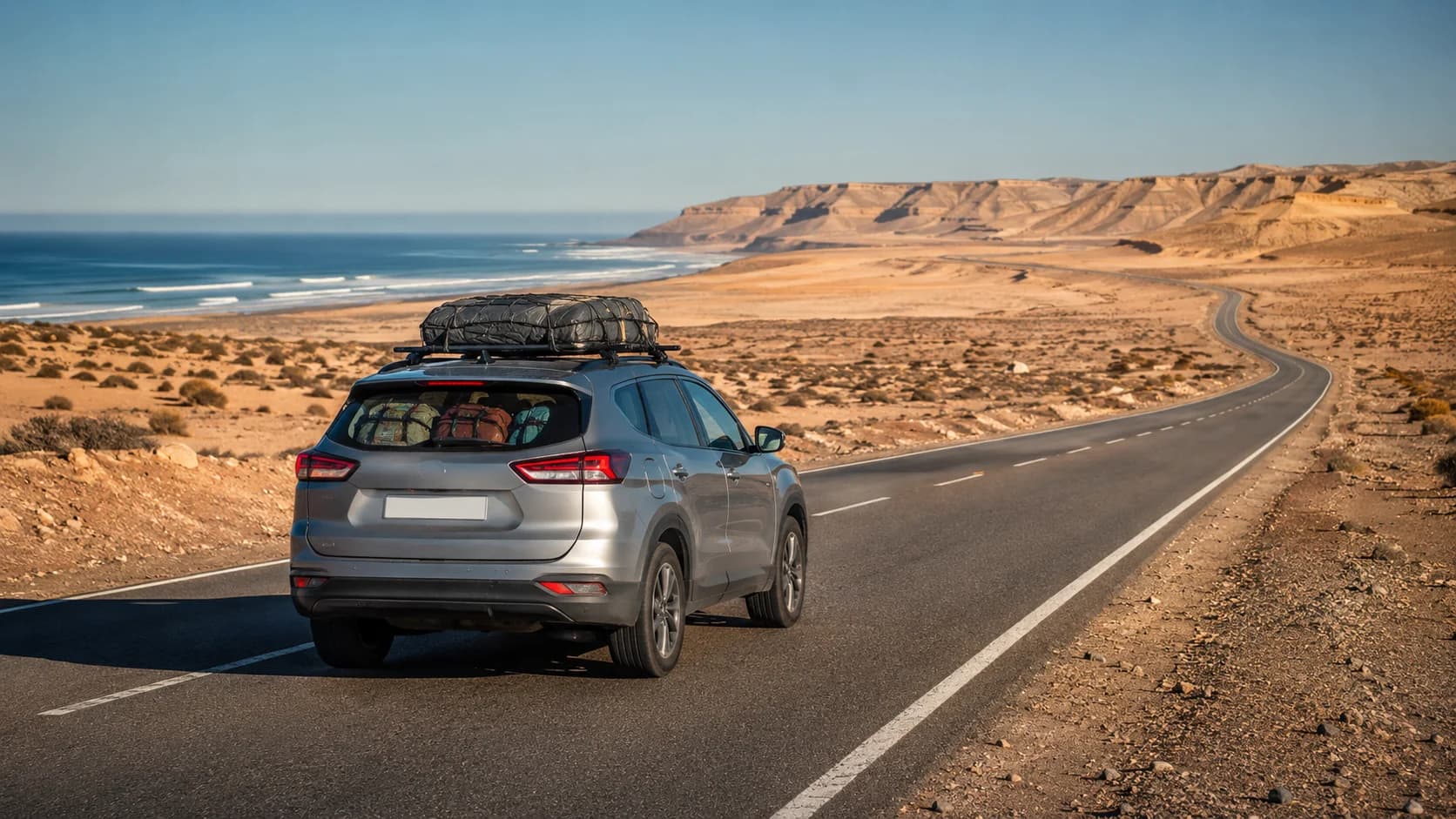
Driving from Agadir to Dakhla is one of Morocco’s most memorable long-distance road trips. The journey follows the Atlantic coast through smaller southern towns, open desert landscapes, fishing settlements and long sections of the N1 before reaching the Dakhla Peninsula.
The trip is approximately 1,150 kilometres by road. Online route planners commonly estimate around 13 to 15 hours of continuous driving, but that figure does not include fuel stops, meals, police checkpoints, roadworks, wind or driver fatigue. A comfortable journey should therefore be divided into at least two days, while three days provides a more relaxed and enjoyable itinerary.
This guide explains how to plan an Agadir to Dakhla road trip, where to stop overnight, how to manage fuel, which vehicle to choose and what to confirm before taking a rental car on such a long route.
Agadir to Dakhla by Car
The distance from Agadir to Dakhla is approximately 1,150 kilometres using the N1. Although the theoretical driving time is around 13 to 15 hours, travellers should plan two long driving days or three more balanced days.
A practical two-day itinerary is:
-
Day 1: Agadir to Laayoune
-
Day 2: Laayoune to Dakhla
A more comfortable three-day itinerary is:
-
Day 1: Agadir to Tarfaya
-
Day 2: Tarfaya to Boujdour
-
Day 3: Boujdour to Dakhla
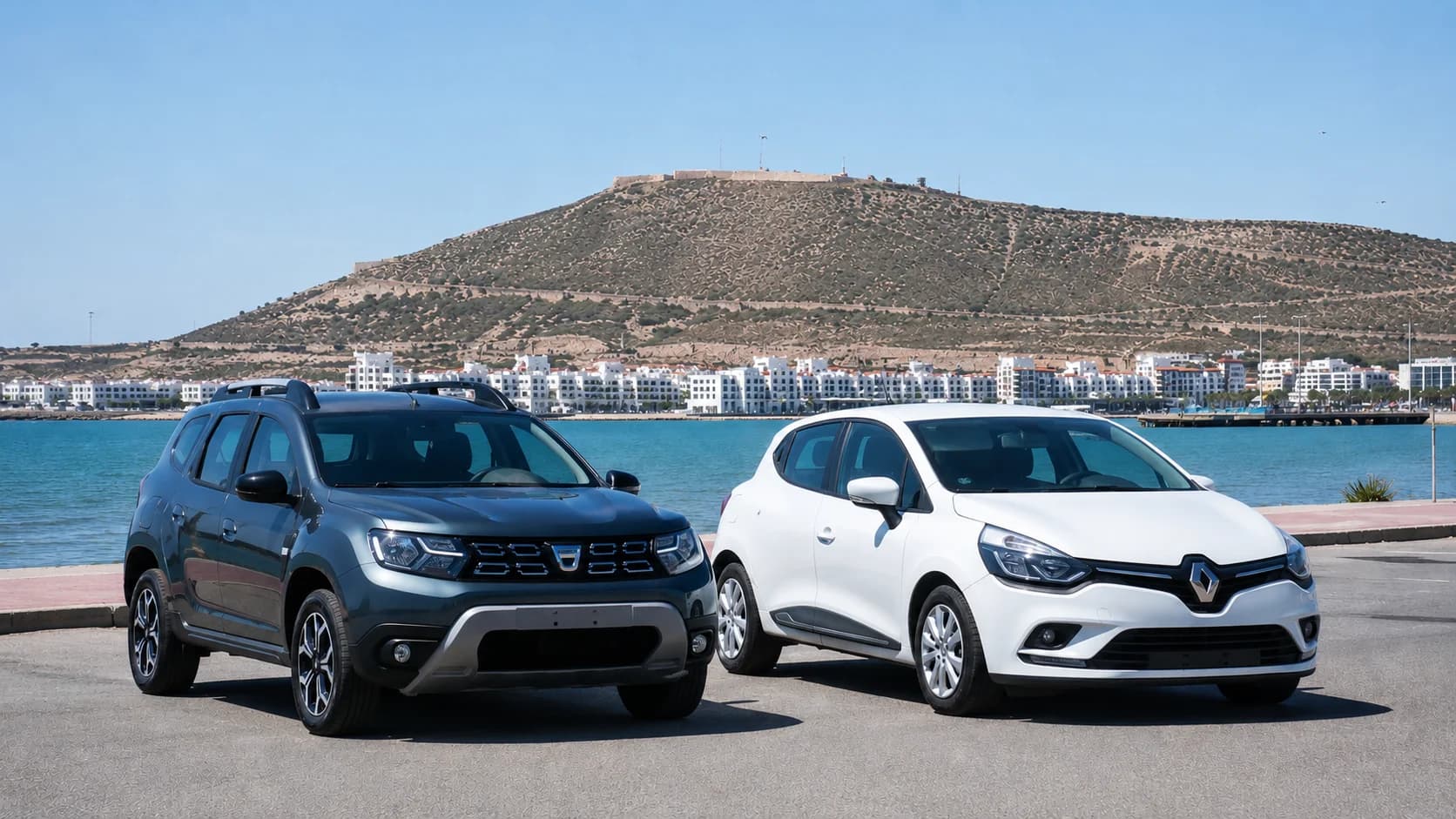
A standard sedan can complete the journey when the main road is open and conditions are normal. An SUV may offer more comfort, luggage space and stability in strong wind. A 4x4 is generally unnecessary unless your itinerary includes approved off-road locations away from the paved N1.
Before departure, confirm that your rental agreement permits travel to Dakhla, check mileage conditions, ask about roadside support and verify whether one-way return is available.
Agadir to Dakhla Route at a Glance
The main route from Agadir to Dakhla follows the N1 south along Morocco’s Atlantic side.
A typical route passes through or near:
Agadir → Tiznit → Guelmim → Tan-Tan → Akhfenir → Tarfaya → Laayoune → Boujdour → Dakhla Junction → Dakhla
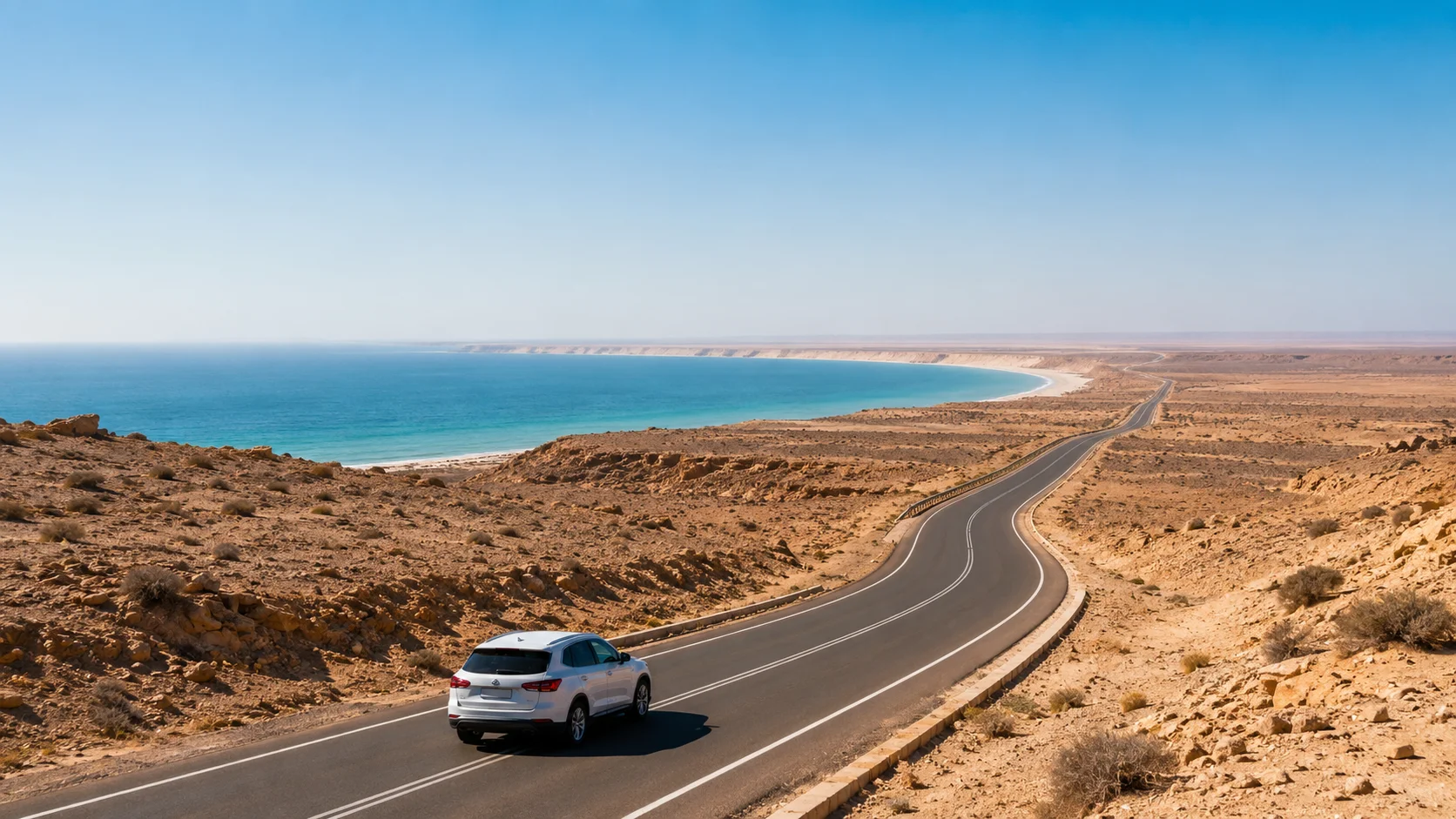
The journey changes noticeably as you travel south. The first part passes through established towns and varied coastal terrain. After Tan-Tan and Tarfaya, the surroundings become increasingly open, dry and sparsely populated.
South of Laayoune, the road continues through long stretches of Atlantic Sahara. Services are still available, particularly around towns and established roadside stations, but they are farther apart than around Agadir.
Dakhla itself lies on a peninsula. Near the end of the journey, drivers leave the main north-south corridor at the Dakhla junction and continue toward the city.
Essential route facts
| Route detail | Practical estimate |
|---|---|
| Total road distance | Approximately 1,150 km |
| Continuous driving estimate | Around 13–15 hours |
| Comfortable duration | 2–3 driving days |
| Main road | N1 |
| Best overnight hubs | Tarfaya, Laayoune or Boujdour |
| Standard 4x4 required | No, not for the paved main route |
| Recommended departure | Early morning |
| Best vehicle priority | Reliability, comfort and sufficient range |
These figures should be treated as planning estimates rather than guaranteed journey times. Weather, checkpoints, construction and stops can significantly change the schedule.
Total Distance and Recommended Duration
The road distance between Agadir and Dakhla is generally calculated at approximately 1,150 to 1,155 kilometres. The exact number depends on your pickup location in Agadir, accommodation in Dakhla and any diversions made along the route.
Trying to cover the entire journey in one day is not recommended. It would require many hours of concentration on long, exposed roads, and arrival could easily fall after dark.
Two days: possible but demanding
A two-day plan works for experienced drivers who are comfortable with long distances and who share the driving.
One practical division is:
-
Agadir to Laayoune
-
Laayoune to Dakhla
This creates a long first day followed by another substantial stage. The Laayoune-to-Dakhla section alone is commonly estimated at roughly 620 kilometres, so it should not be treated as a short final drive.
Three days: the better balance
Three days allows more time for food, fuel, photography and short rest stops. It also reduces pressure if wind, roadworks or checkpoints delay the journey.
A balanced plan can use Tarfaya and Boujdour as overnight stops, or Laayoune as the main central stop with a shorter stage added elsewhere.
Four or more days: a sightseeing road trip
Travellers who want to explore the Atlantic route rather than simply reach Dakhla can add stops around:
-
Tiznit
-
Guelmim
-
Tan-Tan
-
Akhfenir
-
Tarfaya
-
Laayoune
-
Boujdour
Extra days are especially useful when combining the drive with coastal viewpoints, local meals or nature-related stops that are legally and safely accessible from the main road.
A Realistic Multi-Day Itinerary
Option 1: Two-day express itinerary
Day 1: Agadir to Laayoune
Leave Agadir early, ideally after breakfast and with a full tank. Continue south through Tiznit, Guelmim and Tan-Tan before following the Atlantic corridor toward Tarfaya and Laayoune.
This is a demanding driving day. Plan several short breaks rather than relying on one long stop. Refuel before the tank becomes low, even when the car appears to have enough range to reach the next large town.
Laayoune is one of the most practical overnight locations because it offers a broader choice of accommodation, restaurants, fuel stations and vehicle services than smaller settlements.
Day 2: Laayoune to Dakhla
Start early again. The road runs south toward Boujdour before continuing through long, open sections to the Dakhla junction.
Boujdour is approximately 350 kilometres by road from Dakhla, making it an important final refuelling and rest point before the remaining stage.
After reaching the Dakhla junction, follow the road onto the peninsula. Avoid planning a late-night arrival, particularly on your first visit.
Option 2: Comfortable three-day itinerary
Day 1: Agadir to Tarfaya
This first day passes through Tiznit, Guelmim, Tan-Tan and Akhfenir. It is still a significant drive, but it is more manageable than continuing directly to Laayoune.
Tarfaya can work as an overnight stop for travellers who want to divide the route evenly and experience a smaller Atlantic town.
Day 2: Tarfaya to Boujdour
Continue through Laayoune, where you can stop for lunch, fuel and supplies. Then drive south to Boujdour for the night.
This arrangement places you within approximately 350 kilometres of Dakhla the next morning.
Day 3: Boujdour to Dakhla
The final day is shorter but should still begin early. Fill the tank in Boujdour and purchase water and snacks before departure.
Drive conservatively, monitor the fuel level and allow time for checkpoints. After turning toward the Dakhla Peninsula, continue to your hotel, apartment or lagoon accommodation.
Option 3: Slow Atlantic itinerary
A slower itinerary could be arranged as:
-
Day 1: Agadir to Guelmim or Tan-Tan
-
Day 2: Guelmim or Tan-Tan to Tarfaya
-
Day 3: Tarfaya to Laayoune
-
Day 4: Laayoune to Boujdour
-
Day 5: Boujdour to Dakhla
This version is suitable for travellers who prefer shorter driving periods and more time in each destination.
Where to Stay Along the Route
The best overnight location depends on your daily distance, departure time and preferred comfort level.
Guelmim
Guelmim is useful for a short first day from Agadir. It works well for travellers who collect their rental car later in the morning or who do not want to begin with a very long stage.
However, stopping here leaves most of the journey for the following days.
Tan-Tan
Tan-Tan provides another early overnight option. It can be used in a slower itinerary, especially when travellers want to avoid rushing through the first section.
Tarfaya
Tarfaya is a strategic coastal stop between Tan-Tan and Laayoune. It is particularly useful in a three-day itinerary.
Accommodation choices may be more limited than in Laayoune, so reservations should be confirmed before departure rather than left until late evening.
Laayoune
Laayoune is the most practical major overnight hub on the route. It has more accommodation, restaurants, fuel stations and general services.
It is the logical stop for a two-day journey, although both driving days remain long.
Boujdour
Boujdour is a strong choice for the final night before Dakhla. The road distance from Boujdour to Dakhla is approximately 350 kilometres.
Staying there creates a manageable final stage and reduces the risk of arriving in Dakhla late at night.
Book before leaving Agadir
Do not depend entirely on finding accommodation after arrival. Availability can vary due to local events, business travel, public holidays and seasonal demand.
Save the hotel name, address, telephone number and map location offline before starting each stage.
5. Fuel and Roadside-Service Planning
Fuel planning is one of the most important parts of driving from Agadir to Dakhla.
Fuel stations operate along the N1 and in the principal towns, but services become more widely spaced as you travel south. Reports from experienced Atlantic-route drivers indicate that fuel remains available along the corridor, but exact operating hours and availability should never be assumed.
Use the half-tank rule
A useful long-distance habit is to refuel whenever the tank approaches half full, particularly after Laayoune.
Do not continue past a functioning station simply because navigation shows another station farther ahead. Online listings may be outdated, temporarily closed or incorrectly positioned.
Important refuelling points
Depending on your itinerary, practical fuel stops include:
-
Agadir
-
Tiznit
-
Guelmim
-
Tan-Tan
-
Akhfenir
-
Tarfaya
-
Laayoune
-
Boujdour
-
Dakhla junction area
-
Dakhla
This is a planning list, not a guarantee that every station will be open or stocked at the time of travel.
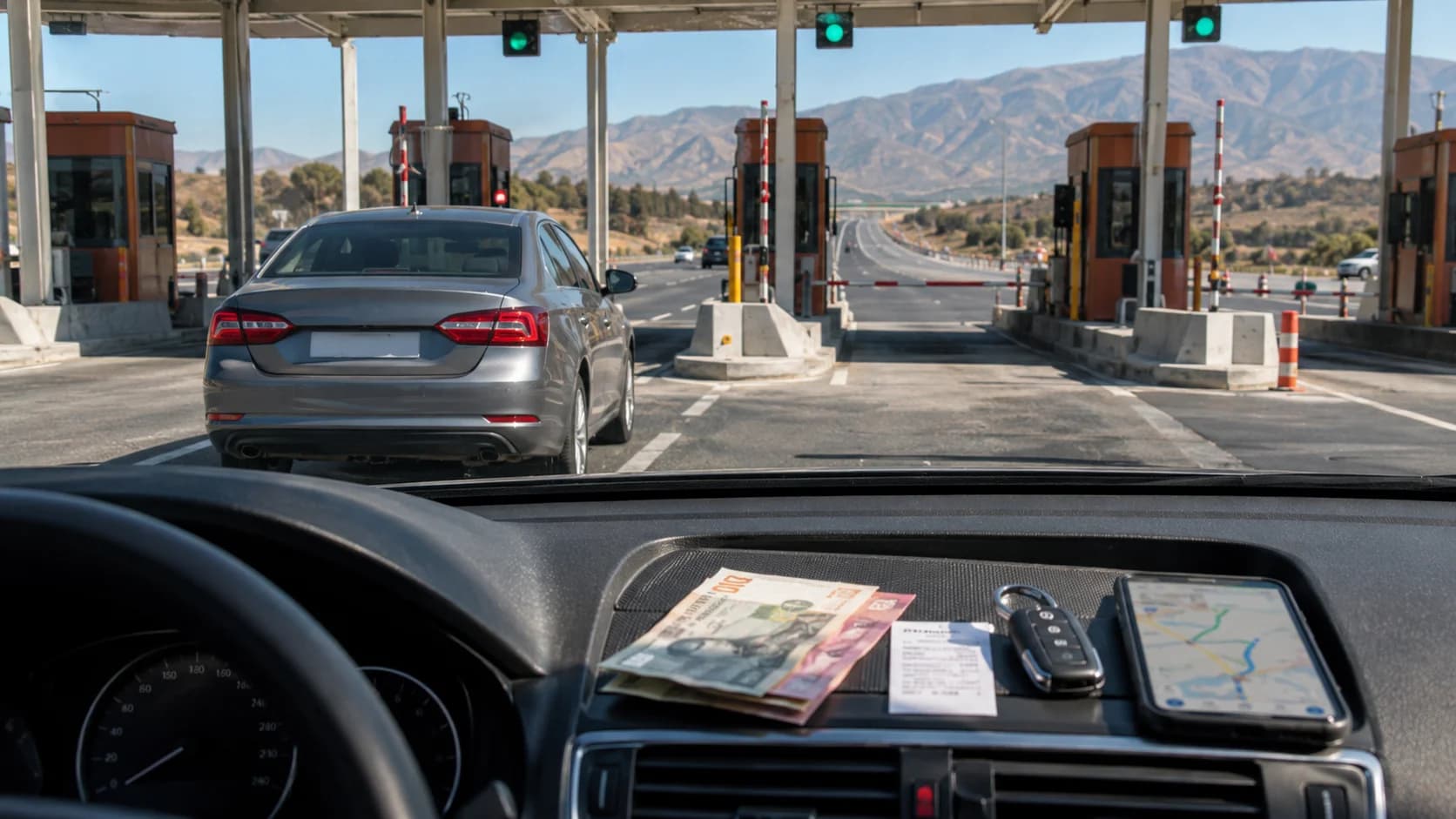
Carry more than one payment method
Bring sufficient Moroccan dirhams even when you plan to pay by card. Card terminals can fail because of connectivity or technical problems.
Many larger Moroccan fuel stations accept cards, but cash remains an important backup.
Check the car before departure
Before leaving Agadir, inspect:
-
Tyre pressure and visible tyre condition
-
Spare wheel or approved repair kit
-
Jack and wheel tools
-
Engine oil and coolant indicators
-
Windscreen washer fluid
-
Headlights and indicators
-
Air conditioning
-
Windscreen wipers
-
Fuel level
-
Emergency contact details
Do not begin the trip with a warning light showing on the dashboard.
Road Conditions, Wind and Sand
Most of the Agadir-to-Dakhla journey follows a paved national road. Infrastructure on the southern corridor has undergone substantial improvement, but construction, lane changes and unfinished sections may still appear. Recent travel reporting has also described continued investment in the southern highway and wider regional infrastructure.
Strong Atlantic wind
Wind can be one of the most tiring features of the journey.
Crosswinds may affect:
-
Overtaking
-
Steering stability
-
Fuel consumption
-
High-sided vehicles
-
Driving near exposed coastal sections
Keep both hands on the steering wheel, reduce speed and leave additional space when passing trucks or buses.
A strong headwind can also increase fuel consumption, reducing the distance available from a full tank.
Blowing sand
Sand may move across exposed sections of road. Visibility can decrease, and small accumulations may appear near the edges of the carriageway.
Avoid abrupt steering or braking. Slow down gradually and remain on the established paved road.
Night driving
Night driving should be minimized. Long unlit sections, animals, pedestrians, parked vehicles and changing road conditions can be harder to see after dark.
The safest itinerary is built around daylight departures and arrivals.
Checkpoints
Drivers should expect police or security checkpoints along the southern route. Slow down as soon as a checkpoint becomes visible and follow instructions calmly.
Keep the following documents accessible:
-
Passport or accepted identification
-
Driving licence
-
Rental agreement
-
Vehicle registration and insurance documents supplied by the agency
Checkpoints are another reason not to rely on a navigation application’s uninterrupted driving estimate.
Stay on the main road
Do not leave the paved route to explore remote desert tracks without reliable local guidance and permission. Travel advisories for Western Sahara warn travellers to research local conditions carefully and to check insurance and vehicle-hire restrictions before entering the region.
Choosing a Sedan, SUV or 4x4
The best rental car is not automatically the largest vehicle. It should match your passenger count, luggage, comfort requirements and planned road use.
Sedan rental for paved-road efficiency
A modern sedan is suitable when:
-
You will remain on the paved N1
-
Two to four people are travelling
-
Luggage fits securely in the boot
-
Fuel efficiency is a priority
-
Weather conditions are normal
A comfortable sedan with air conditioning can complete the main route without difficulty when properly maintained.
Explore sedan rental in Agadir for efficient long-distance options.
SUV rental for comfort and luggage
An SUV may be preferable when:
-
Several passengers are travelling
-
You have large suitcases or sports equipment
-
You want a higher seating position
-
Additional cabin comfort is important
-
You prefer greater stability and ground clearance
An SUV does not remove the need to drive carefully in crosswinds. Larger vehicles can still be affected by strong gusts.
See available SUV rental in Agadir for spacious road-trip vehicles.
4x4 rental for approved off-road plans
A 4x4 is not normally required for the paved road between Agadir and Dakhla.
Consider one only when your confirmed itinerary includes legal, agency-approved travel away from paved roads. The rental provider must explicitly permit that use.
A 4x4 should never be treated as permission to enter unmarked desert areas. Remote terrain requires local knowledge, route approval and appropriate safety planning.
Browse 4x4 rental in Agadir when your itinerary genuinely requires additional capability.
Automatic or manual?
Choose the transmission you normally drive. This is not a good route for learning an unfamiliar gearbox.
An automatic vehicle can reduce fatigue in towns, checkpoints and slow-moving sections. A manual car may offer a lower rental price or wider availability, but comfort over more than 1,000 kilometres should remain the priority.
Mobile Coverage and Navigation
Mobile coverage is generally strongest around towns and developed corridors, but interruptions are possible on long, remote sections.
Do not depend on constant mobile data.
Before leaving each overnight stop:
-
Download the next route for offline use
-
Save your hotel location
-
Screenshot important junctions
-
Save fuel stations as reference points
-
Charge all phones
-
Carry a working charging cable
-
Keep a power bank available
-
Share the planned route with a trusted contact
Google Maps or another navigation application can help with general routing, but it should not be treated as a real-time guarantee of road quality, station availability or mobile coverage.
Remain on the N1 unless a confirmed diversion is required.
One-Way vs Return-Rental Considerations
The distance makes rental logistics especially important.
Returning the car to Agadir
Driving the same vehicle back to Agadir may be the simplest arrangement contractually, but it doubles the road distance.
A return journey can exceed 2,300 kilometres before local sightseeing is added. You therefore need enough rental days, sufficient mileage allowance and a realistic return itinerary.
One-way rental to Dakhla
A one-way rental may be possible only by prior agreement. It is not a standard option with every car or provider because the vehicle may need to be collected and returned over a very long distance.
Possible considerations include:
-
One-way relocation charge
-
Minimum rental duration
-
Vehicle-category restrictions
-
Dakhla drop-off location
-
Inspection arrangements
-
Advance booking requirements
Never assume you can leave an Agadir rental car in Dakhla simply because the company operates elsewhere in Morocco.
Confirm the permitted travel area
Ask the rental provider to confirm in writing:
-
That Dakhla is permitted
-
Whether the route enters any restricted rental zone
-
Whether roadside support extends to the full route
-
Whether unlimited kilometres are included
-
What happens after a breakdown
-
Whether replacement vehicles are available
-
Whether off-road driving is prohibited
-
Where the car must be returned
Unlimited kilometres, when included, can be valuable on this journey. However, “unlimited” does not remove geographical restrictions or prohibited-use clauses.
Long-Distance Road-Trip Checklist
Documents
-
Passport or valid identification
-
Driving licence
-
Rental agreement
-
Insurance documents
-
Vehicle registration documents
-
Accommodation confirmations
-
Emergency telephone numbers
Vehicle equipment
-
Spare wheel or repair kit
-
Jack and wheel tools
-
Warning triangle
-
Reflective vest
-
Working air conditioning
-
Phone charger
-
Power bank
-
Torch
Personal supplies
-
Drinking water
-
Food and snacks
-
Sun protection
-
Basic first-aid supplies
-
Any necessary personal medication
-
Cash in Moroccan dirhams
-
Warm layer for cooler evenings
Navigation preparation
-
Offline route downloaded
-
Accommodation saved
-
Fuel stops identified
-
Check-in times confirmed
-
Daily destination shared
-
Alternative overnight stop noted
Before every morning departure
Walk around the vehicle and check the tyres, lights, windows and bodywork. Confirm that luggage is secured, the tank is sufficiently full and no dashboard warning lights remain illuminated.
Frequently Asked Questions
How far is Dakhla from Agadir by car?
Dakhla is approximately 1,150 kilometres from Agadir by road. The exact distance depends on your starting point, accommodation and any stops or diversions.
How many days do I need to drive from Agadir to Dakhla?
Plan at least two days. Three days is more comfortable because it creates more balanced stages and allows time for fuel, meals, checkpoints and rest.
Can I drive from Agadir to Dakhla in two days?
Yes. A common plan is Agadir to Laayoune on the first day and Laayoune to Dakhla on the second. Both stages are long, so early departures and more than one insured driver are preferable.
Where should I stay between Agadir and Dakhla?
Laayoune is the most practical major overnight hub. Tarfaya and Boujdour are useful alternatives for a three-day itinerary. Guelmim and Tan-Tan work for slower trips.
Do I need a 4x4 for the Agadir-to-Dakhla road?
No. A 4x4 is not normally needed for the paved N1. A sedan or SUV is suitable when the vehicle is reliable and you remain on the main road.
Are there fuel stations on the route to Dakhla?
Yes, fuel is available in the principal towns and at established stations along the route. However, distances between services become longer in the south, so refuel early and carry cash as a backup.
Is the road to Dakhla safe for tourists?
Many travellers complete the route, but it is a very long drive through exposed and sometimes remote areas. Travel during daylight, follow official instructions, remain on the main road and check current government travel advice and rental coverage before departure.
Can I take a rental car from Agadir to Dakhla?
Only when the rental company permits it. Ask for written confirmation that Dakhla is inside the permitted travel area and that the insurance and roadside-support conditions remain valid.
Is one-way car rental to Dakhla available?
It may be available by special arrangement, but it is not guaranteed. A relocation fee, minimum rental period or vehicle-category restriction may apply.
What should I carry for the road trip?
Carry identification, rental documents, water, snacks, cash, charging equipment, offline maps, accommodation details and basic emergency supplies. Check the spare wheel or repair kit before leaving Agadir.
Plan Your Agadir-to-Dakhla Road Trip
Driving from Agadir to Dakhla is not a routine day trip. It is a major Atlantic journey requiring realistic daily stages, early departures, careful fuel planning and clear rental conditions.
For most travellers, a three-day southbound itinerary offers the best balance. A sedan is sufficient for normal paved-road use, an SUV adds luggage space and comfort, and a 4x4 should be selected only for approved itineraries that genuinely require it.
Take the Atlantic route with a realistic plan. MarHire Car Agadir can help you choose a suitable long-distance vehicle, confirm the rental conditions and prepare for a multi-day journey with unlimited kilometres where included.